Tagged: mindfulness Toggle Comment Threads | Keyboard Shortcuts

  • Unknown's avatar

    hardie karges 3:38 am on December 23, 2023 Permalink | Reply
    Tags: , , , , mindfulness, , , ,   

    Buddhism and Non-Possession  
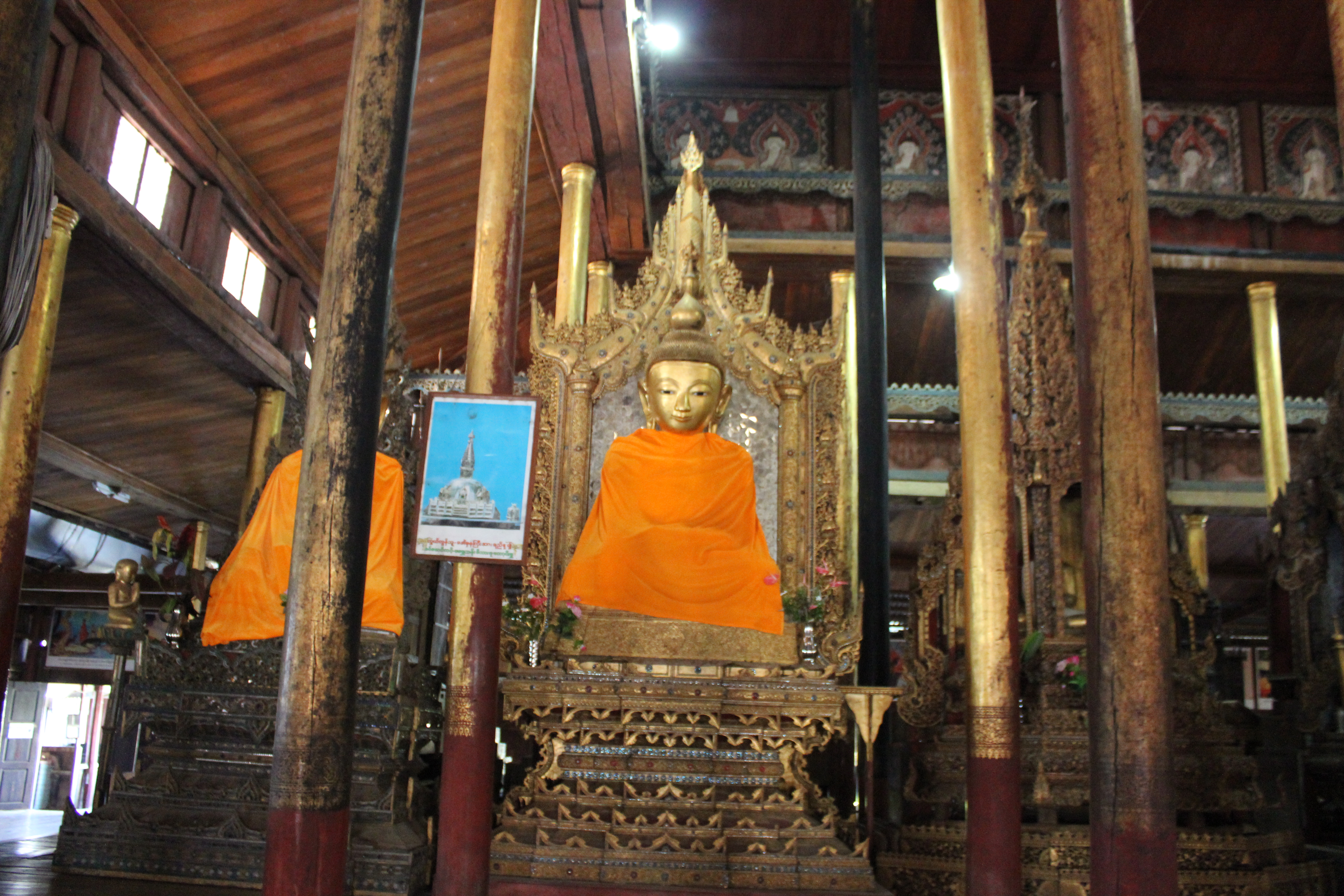
    I travel these lands as if I owned them, when in fact I own nothing, not even my own body parts. And that’s good, because if I owned anything really and truly then I’d be attached to them, till death do us part. That’s no good, because attachments are tantamount to craving, and clinging, Buddhist no-no’s from the word ‘go’. Why? Because they’ll always cause suffering, later if not sooner, and that’s gospel, according to the Buddha. But that’s a sharp contrast, of course, to the typical Western habit of consumption and possession, as if the more we purchase, then the happier we’ll be. 

    Nothing could be further from the truth, of course. In fact, the truth is probably just the opposite: the more we possess, the more miserable we are. But don’t try to convince a rich person of that—or a poor one. Because the truth is not to be found in stats or specs, but in the internal subjective application of deep feeling to the miscellaneous circumstances of life. Scientific proof, and much less truth, can only go so far. You can’t prove happiness, any more than you can prove compassion. But you can feel it. And you’ll know it when you feel it.  

    So, that’s what’s important, and that’s all that we should expect from any religion or philosophy. Because science is better equipped to tell us what the universe is composed of, and how it works, so Buddhism probably shouldn’t waste its time rehashing old themes and memes from two to three thousand years ago as if deep introspection were capable of the same rigorous experiments as science. It’s not. Buddhism is here to tell us how to live our lives. Be kind. Reduce suffering by reducing craving. That’s all. Merry Christmas… 

     
  • Unknown's avatar

    hardie karges 2:53 am on August 6, 2023 Permalink | Reply
    Tags: , , , , , , mantra, , mindfulness, , , , , , ,   

    Space is the Place–to Meditate…  

    The one who can control himself, can control the world—his world…

    You don’t have to go anywhere to meditate, except inside. Much is made in the modern New Age movements of all the different kinds of meditation, which, according to the books and blogs can easily number into the dozens, if not hundreds. But most of those sources aren’t really Buddhist, not in any strict sense. Still, a quick survey reveals a plethora: mindfulness, spiritual, focused, movement, mantra, transcendental (TM), progressive, loving-kindness, visualization, guided, mantra, present moment, Vipassana, chakra, yoga, and ‘candle-gazing.’ That’s a lot of bliss, and we’re only getting started. 

    And that’s the problem, of course, that meditation is often marketed as some kind of bliss machine, when nothing could really be further from the truth. With the possible exception of Vipassana, i.e. ‘insight,’ none of the above could really even be considered Buddhist, which seems to originate with ‘anapanasati,’ awareness of breath, before subdividing into ‘samatha,’ calm abiding, and the aforementioned Vipassana, which puts the goal first and foremost, the insight that one expects to get from the practice.  

    Now, I’m not sure where ‘guided meditation’ originated, but that is unheard of in strict Theravada Buddhism, where silence reigns supreme and strict stillness is the foundation for that. Now, I suspect that guided meditation is chiefly a modern Western-promoted permutation, for Westerners who just can’t stand silence, but will happily sit for a story, but I could be wrong, since Tibetan meditation seems very eclectic and certainly could incorporate some spoken word(s).  

    But for me meditation is silent, emptiness incarnate, and guided meditation is a hybrid form which incorporates a ‘dharma talk’ into the practice itself, certainly not a bad thing, BUT: silence is still golden, at least in my book. If you have a problem with silence, then you should really work on that if you really want to delve deep into Buddhism. Because, as I said in the opening statement, “you don’t have to go anywhere to meditate, except inside.” And that’s the trick, to go inside yourself, where thought becomes anti-thought and talk becomes anti-talk. Thus, everything is shown to be the opposite of what it seems, and that is not a bad thing. “Meditate for at least twenty minutes a day, unless you don’t have time, and then meditate for an hour.” That says it all. 

     
  • Unknown's avatar

    hardie karges 9:17 am on April 15, 2023 Permalink | Reply
    Tags: , , , , , , mindfulness, , , ,   

    Buddhist Mindfulness: No Shortcuts to Salvation  

    Mindfulness, sati, requires some awareness of the unpleasant details, also, unfortunately or fortunately, for this is the nature of existence, the existence of suffering and the ways to ameliorate it, on a path to cessation, if not the twenty-five-dollar cure that we’ve grown so accustomed to expect, in some binary fashion, now you see it and now you don’t, as if there were indeed magic bullets that can hit every target, with never a miss—at least in theory. 

    But, until someone can bio-engineer us with eternal life or create us a Virtual Reality so perfect that we can’t tell the difference, then the (not-so?) harsh reality is that each and every one of us will die, later if not sooner, peaceably if not in agony. And this is the truth of Buddhism, that suffering is ubiquitous, and implacable, if not the all-embracing disastrophe that it so recently was. But that was likely due to the dubious emboldenment of patriarchy, in distinct contrast to the previous matriarchal survivalists that sustained us for so many millennia. 

    But the point is that Buddhism is not pessimistic, but realistic, and the obvious corollary would be that the silly-eyed optimism of capitalistic Christianity is itself the cause of many of our problems, especially global warming, for which it is singularly unprepared to offer a credible solution, given the demands of economic growth. But Buddhism can offer that solution: conscious mindful existence that accentuates self-sufficiency, not the excesses of abundance and infinity that capitalism and Christianity demand.  

    In other words: less can indeed be more, in quality if not quantity, and that is the important consideration, now, isn’t it? Yes, I think that it is. And that is also the cautionary tale with so-called ‘mindfulness.’ Be careful which way you turn your gaze of awareness, because you will have to deal with the circumstances in your field of vision. And that is good. Buddhism in its origins never pretended to transcendence. This is the real world we find ourselves in, and that is the challenge… 

     
  • Unknown's avatar

    hardie karges 12:06 pm on November 13, 2022 Permalink | Reply
    Tags: , , , , , , , , mindfulness,   

    Buddhism and Survival of the Species 

    Buddhism is more than just a religion or philosophy. It is a method for planetary survival, and that’s why we’re here right now. Because I care about planetary survival, and I hope that you do, too. And by ‘planet,’ I specifically mean the human race, since I have no doubt that the rock itself can continue to provide for itself, regardless of whether humans had ever shown up to sully the mix. But we are like DNA, and DNA is like language, and so we must cross our T’s and dot our I’s and make sense of random mutations.

    As soon as our survival was assured, we humans set about killing each other. And the coincidence of this with the invention of language may have not been so coincidental at all. Thus, once adopted, language has somehow become intrinsic to our existence, and so it is necessary to make our peace with it. Buddhism is famous for meditation, of course, and so that is one way of dealing with language, by losing it—powerful. Because for all the rap about insight, mindfulness, and ‘calm abiding,’ the one thing common to all meditation is silence. Guided meditation is something else.

    Christianity was fine when the human race was still young, and the need to breed was still arguably extant. But with eight billion people (and counting), the passion of Christ has long since been replaced by the passion of mice, breeding like rabbits and eating like wolves. This is not what the world needs right now. We’re a successful species, unless we continue to kill ourselves. I don’t think a species has ever gone extinct by mass suicide. But we could become the first, regardless of stated intents. Buddhism is one way to resolve this issue favorably, by choosing inner peace over mass consumption…

     
  • Unknown's avatar

    hardie karges 2:31 pm on October 23, 2022 Permalink | Reply
    Tags: , , , , , mindfulness, , ,   

    Buddhism and McMindfulness… 

    There is nothing mystical about meditation. It is a practical and helpful tool for self-improvement. It gets the woo-woo treatment big time, though, from the wannabe pandits and acharyas matching it up with ‘mindfulness’ and ‘lovingkindness’ for the big Buddhist-Christian one-two punch guaranteed to put McMindfulness in your sacred space and muesli in you breakfast nook. Did someone mention the New Age and/or Wellness communities?

    Because that’s what Buddhism is, of course, to the average American and/or Western European, one of a dozen or two systems (dare I say ‘disciplines?) on tap to inspire you to the next level of awareness, sati, which is precisely the same word so often translated as ‘mindfulness’ for its salutary effect on the brain’s language centers. And at the same time, it also guarantees a course to be taught somewhere in the cool part of town, thereby guaranteeing the acceptance and continuance of such a tradition regardless of its intrinsic connection to Buddhism—or not.

    Because, in the debate over just how much of Buddhism can be downloaded to the surrounding community without concern over cultural appropriation or misappropriation of intent and purpose, meditation is the one thing that definitely CAN be offloaded for the layman’s typical—even commercial—applications. Like yoga for Hindus, meditation is the one aspect of Buddhism which is truly universal, and which does NOT require a secret handshake. You simply follow certain techniques for certain effects.

    The names can be confusing and causes and effects can be conflated and even reversed, such that one technique is called by its desired effect, but the techniques are generally similar, just sit down, STFU, and concentrate—on not much, either some one thing internally or the whole broad spectrum externally. Some techniques uses mantras, as made famous by Maharishi Mahesh Yogi’s Transcendental Meditation™ (pun intended), but many Theravada Buddhists simply repeat the name “Buddho, Buddho, Buddho.”

    As Carlos Castaneda’s Don Juan character often said: “Stop the internal dialogue.” When that happens, then you have returned to proto-consciousness and thereby recover something which you had lost with language, sati and samadhi, awareness and concentration (one-pointedness). In the process, then, you will hopefully receive samatha, calmness, or vipassana, insight, but the technique is similar. What you do with it is up to you. Being nice to people is always a good place to start.

     
    • SoundEagle 🦅ೋღஜஇ's avatar

      SoundEagle 🦅ೋღஜஇ 4:42 pm on November 5, 2022 Permalink | Reply

      Dear Hardie Karges,

      Your post entitled “Buddhism and McMindfulness…” is very enjoyable to read and definitely timely and topical. Thank you very much. I concur with you about the issues regarding McDonaldization and appropriation.

      I would like to inform you that one of my latest posts can be of considerable interest to you, for I have distilled a great deal of observations and conclusions along similar themes. It concerns being present in the moment with awareness and (engaged) mindfulness. This highly engaging and expansive post is entitled “🔄📈📉 Change Rules and Moment Matters: How to Stay in the Moment 🔖🕰️🔂“, published at

      🔄📈📉 Change Rules and Moment Matters: How to Stay in the Moment 🔖🕰️🔂

      The said post opens with this paragraph:

      A spiritual outlook with a minimalist perspective on life that is conducive to happiness is often predicated on living in the present moment through mindful awareness emancipated from the vagaries of the subconscious and the itinerants of the mind.

      This post discusses mindfulness, meditation, spirituality, religion, Nature and so on. I welcome your input since I am curious to know what you make of my said post as well as your perspectives on those matters discussed in my post. I look forward to savouring your feedback there!

      There are many quotations distributed throughout the post. The quotees include Buddha, Thích Nhất Hạnh, Jon Kabat-Zinn, Werner Hans Erhard, Jack Kornfield and Elizabeth Thornton.

      Thank you once again for your pertinent and cogently written post.

      Wishing you a mindful and suitably productive November doing or enjoying whatever that satisfies you the most, both intellectually and spiritually!

      Yours sincerely,
      SoundEagle

      • hardie karges's avatar

        hardie karges 11:52 am on November 13, 2022 Permalink | Reply

        Thanks for your comments. Sorry to get back to you so slowly, but I’ve been traveling (and my laptop is dying). I’ll try to take a closer look at this now. Thanks!

        • SoundEagle 🦅ೋღஜஇ's avatar

          SoundEagle 🦅ೋღஜஇ 4:23 pm on November 13, 2022 Permalink

          Dear Hardie Karges,

          You are welcome. The 13th of November is World Kindness Day! Wishing you a productive November and a wonderful week doing or enjoying whatever that satisfies you the most, whether intellectually, artistically, physically, spiritually or emotionally!

          I look forward to your submitting a comment to my said post as a token of your visit.

          Yours sincerely,
          SoundEagle

  • Unknown's avatar

    hardie karges 10:06 am on August 14, 2022 Permalink | Reply
    Tags: , , , , mindfulness, Occam's Razor, , , , ,   

    Buddhism for Dummies, Hold the Salsa… 

    My 6th grade teacher was correct: our mouths cause most of our problems. Samma Vaca is Right Speech, part of the Buddhist Eightfold Path. Of course, Ms. What’s-her-name knew little or nothing of Buddhism but that makes no difference. Buddhism is at its best as common sense, and that’s what the Eightfold path is all about. Three of the paths that comprise the Eightfold Path you might already know from the Franz Ferdinand song ‘Right Action,’ which also trumpets (and guitars) Right Thoughts and Right Words.

    The other components of the path include Right Intention, Right Livelihood, Right Effort, Right Mindfulness, and Right Concentration (meditation), depending on translations and personal proclivities. For example, ‘mindfulness’ is all the rage in online Buddhist circles, but ‘awareness’ or even ‘consciousness’ might be a better translation of the Pali word sati (Sanskrit smrti), since they’re easy to use in any normal conversation, while ‘mindfulness’ is rarely used outside of Buddhist or meditation circles (though ‘mindful’ might be).

    And that’s the way I like my Buddhism, down-to-earth and easy to understand. Zen tries to get all Dadaesque, in its effort to go beyond language, but only confuses many people in the process. And Vajrayana puts the magic in the wand for those who need that, but none of that is really necessary for the Buddhism that the Buddha envisaged. And those early guys admittedly tried to make it more complicated, too, even grouping the Eightfold Path into a three-part collection of ethics, meditation, and wisdom, without really changing anything in the process. Sometimes the simplest way is the best, just like Occcam’s Razor, for a smooth close shave, haha…

     
  • Unknown's avatar

    hardie karges 10:39 am on July 3, 2022 Permalink | Reply
    Tags: , , , mindfulness, , , smrti   

    Buddhist Mindfulness is more than Mind Fun… 

    As a practical matter ‘mindfulness’ is probably best described as ‘awareness,’ conscious deliberate thought, one thing at the time, not ‘monkey mind,’ i.e. not mindlessness. That’s a direct translation of the Pali word sati, Sanskrit smrti, from which the associated terms originally derive. Despite the parody of ‘McMindfulness,’ it’s sometimes nice to have an almost strictly Buddhist term to stand alone on its own, even if it’s almost equally a curse.

    Because this is where the common sense often ends and the superstitions begin, the minute that you shift away from the common-sense definition and toward one that seems to carry meaning beyond which that was originally intended. But that’s what religion often does, for reasons good or bad, depending on your outlook and orientation. But just because we can give names to certain mental states and conditions doesn’t mean that they actually exist, just because we thought it so. This is one of the problems of language.

    Still, we all know what it means to ‘lose consciousness,’ and that’s exactly what it means to lose ‘sati’ in at least a couple of modern SE Asian languages. Conversely to be conscious, small letter ‘c,’ is exactly what it means to ‘have’ sati in those same languages. I think that it’s good to know that, to know that ‘mindfulness’ was never originally intended as some transcendental transect or shortcut toward bliss, but a normal state that has always been healthy and desirable.

    Because that is the ultimate goal of Buddhism: little ‘b’ bliss, aka ‘happiness,’ alive and awake and oriented toward the simple goals of health and wholesomeness. If some people think it’s negative, that’s only in relationship to Christianity with its half-full cup always overflowing, while Buddhism acknowledges straight-up that we’re all gonna’ die, ain’t no ‘ifs,’ ‘ands,’ ‘buts,’ nor ‘whys.’

    That simple difference means that Buddhism is yer better bet in the fights against Global Warming and poverty, since, if there’s less that runneth over, then there’s more to go around. I’d say that’s a helluva deal, no extra charge for the ‘to go’ cup, haha. And that’s what we really want, isn’t it, a solution to some real-life problems in the real world of beauty and imperfection? Of course, it is…

     
  • Unknown's avatar

    hardie karges 4:11 am on November 21, 2021 Permalink | Reply
    Tags: , , , , , mindfulness   

    Buddhism at the Crossroads: First Do no Harm… 

    ‘First do no harm’ is part of the Hippocratic Oath. It should also be part of the Buddhist Oath, or fundamental precepts. ‘Primum non nocere’ as later formulated, this is more than just a cute little saying. This is fundamental to Buddhist principles. Because there really is no call to action. If anything, the reality is almost the exact opposite. The cute aphorisms are numerous: ‘A wise man once said nothing.’ ‘Don’t just do something! Sit there!’ You get the idea. Buddhism is first and foremost a religion of renunciation, and that is a fact of history. Nothing can change that. Meditation is the practice of Buddhism, no matter your sect or sex.

    Other things do change, though, and Buddhism is an ongoing dialog and dialectic, which I think is good, for the most part, though, if it doesn’t Christianize Buddhism totally, haha. It goes both ways. There is Christian mindfulness now, also, just as there is Buddhist ‘lovingkindness.’ The world is getting small as populations grow and grow, and soon there will be no place to hide. Buddhism is made for an over-expansive world. It shows how to find peace within, even when there is little peace without. We are a young species and prone to failures. Time will only tell if we will eventually survive and thrive, now by doing less, rather than doing more. The hard stuff was easy. The easy stuff will be hard.

     
  • Unknown's avatar

    hardie karges 12:37 pm on November 29, 2020 Permalink | Reply
    Tags: , , , , mindfulness, , , , ,   

    Buddhist Mindfulness and the Myth of Multi-Tasking… 

    Multi-tasking is a myth, aka ‘monkey mind’. Mindfulness is not a myth. Think one thought at the time. ‘Mindfulness’ is a difficult word to translate, and may or may not be the best translation of the Pali/Sanskrit word ‘sati,’ but that is the historical path of Buddhism, so that is the word with which we are left, and that is the task before us.

    I think that the Christians have even borrowed the term now, and so it has taken on a life of its own. But what does it really mean? The term ‘sati’ originally meant something like simple ‘awareness’ or ‘consciousness,’ small ‘c’, almost certainly, (as it still means in modern standard Thai).

    But even more certain would be to simply posit it as the inverse of its negation, and so ‘mindfulness’ is simply the opposite of ‘mindlessness’ and put the onus of exposition upon its protagonists, since the word ‘sati’ worked just fine for millennia, and its simple translations are more than sufficient.

    But the quest for religion is the quest for transcendence, if not magic, and if that means creating holy words with extraordinary definitions, then ‘mindfulness’ is one of those, in the modern post-New-Age reinvention of our spiritual necessities.

    And if that seems tired and trite, then rest assured that the most traditional Buddhists are in on the game, too, they also anxious to liberate terminology from the ordinary humdrum of daily existence, add some hype, aka ‘wu-wu.’

    And one of the easiest ways to do that is simply to redefine terms and double them up. So Sanskrit ‘mudita’ becomes not just ‘joy’ but ‘sympathetic joy.’ And ‘metta’ becomes not just ‘kindness’ but ‘loving-kindness.’ And the Asians do this, too, Thais long combining ‘metta’ and ‘karuna’ (compassion) into one comprehensive ‘mettakaruna.’ Likewise ‘sati’ and ‘panya’ (knowledge) can become ‘satipanya’ for extra emphasis and expansion.

    So beyond all the back-stories and linguistic back-formations, what does the word ‘mindfulness’ now really mean in the Buddhist epistemological sense? As stated originally, probably the best interpretation is focused thinking, i.e. one thought at the time, since there truly is not the ability to hold two thoughts equally and simultaneously, but simply to switch between them constantly, so a trick in itself, but perhaps not conducive to a peaceful mind.

    But I think that a better notion is to think in terms of non-linguistic thought altogether, what I call ‘proto-consciousness’ or ‘paleo-consciousness,’ in the sense that this was once normal, no doubt, before the advent of language some 50,000 years ago, almost simultaneous with the demise of our competitors homo Denisova and Floresiensus, and finally Neanderthalensis.

    That is no coincidence, and no cause to celebrate. But that was then, and this is now. God knows that we are nothing if not a young species, and all should be forgiven. Bottom line: Cooperation is better than competition, community better than individualism. And mindfulness is more than a simple agreement of terms.

     
  • Unknown's avatar

    hardie karges 7:50 pm on June 16, 2019 Permalink | Reply
    Tags: , , mindfulness, William of Ockham   

    Mindfulness and Consciousness, splitting hairs with Occam’s razor… 

    Consciousness itself is neither good nor bad. It depends on what you do with it. The word itself is neutral, and so is the activity, no matter that mindfulness has taken on an air of otherworldliness. It is synonymous with consciousness, or awareness. nothing more or less. That is ‘sati’, stripped of all its excess Buddha baggage and allowed to be free, like a child without a care in the world, just like the Buddha intended. Let the adults worry about the subtle nuances of higher hermeneutics and advanced metaphysics, zeitgeists and weltanschauungs, windowless monads and digital nomads. To just be is an accomplishment in itself. To do no harm is even better. Enlightenment is invisible if you look too hard. Everything is clearer if you use a softer focus. Concentration doesn’t have to be so hard. At some point the only thing I ask of life is that it be simple…

     
    • quantumpreceptor's avatar

      quantumpreceptor 12:11 am on June 18, 2019 Permalink | Reply

      It is sad but we somehow have to take the word mindfulness back away from those weekend courses and certificate slinging puffs who sell it for 99$ a month. Know what I mean?

      QP

    • hardie karges's avatar

      hardie karges 5:53 am on June 18, 2019 Permalink | Reply

      yep

c
Compose new post
j
Next post/Next comment
k
Previous post/Previous comment
r
Reply
e
Edit
o
Show/Hide comments
t
Go to top
l
Go to login
h
Show/Hide help
shift + esc
Cancel