


Submission to Fear is the Death of the Individual…
Worse than a life of fear is a life of willing submission to that fear. Because fear is normal, after all, and can be a valuable survival instinct, especially when you’re swimming in the ocean and the sharks just happen to be biting that day. In other words, fear can save your life. The problem is irrational fear, fear for the sake of fear, fear that has no meaning outside of the singular fact of its existence, disembodied with no antecedents and no outside connections beyond itself. And for many people, this is all too real, that fear becomes a way of life, and acquiescence a way of self-deceit, the belief that certain things are pre-ordained and that certain kings will rule domains regardless of any attempt to limit them. This defeatism thus becomes a self-fulfilling prophecy, the idea that nothing can be done, so nothing is worth doing. This was once a stumbling block for me with Buddhism, the perception based on certain SE Asian countries that they were too passive, that they would give up important liberties without even a fight. The problem is self-correcting, though, of course, by Buddhism’s own middle path, neither too passive nor too aggressive being the brilliant compromise. After all, I certainly know of a few Western countries that I wouldn’t care to emulate, whether Christianity is the problem there or not. But many of the judgments are superficial, based on superficial readings of transient situations, white noise that crackles loudly, but means little. Bottom line: many of the world’s problems would be solved if people listened more and talked less, and that is a relative certainty…
 hardie karges and
  Tim are discussing.


 Intent is the elephant in the courtroom of modern justice, beyond forensics and beyond genetics, the need to know what someone was thinking and why they thought it, at such-and-such a time and such-and-such a place. But isn’t this a system doomed to failure? And is it really necessary?
 You’ve got something pretty special when you put friendship and compassion together, and something pretty simple. Even people who profess to believe in nothing, and categorically reject use of that word ‘belief’ can surely believe in friendship and compassion. And friendship, universal friendship, is a very important concept, easy to forget in our day and time that at some time in the not-so-distant past anyone who was not part of the family was suspect and an object of great fear and suspicion…
 The godlike Robert and
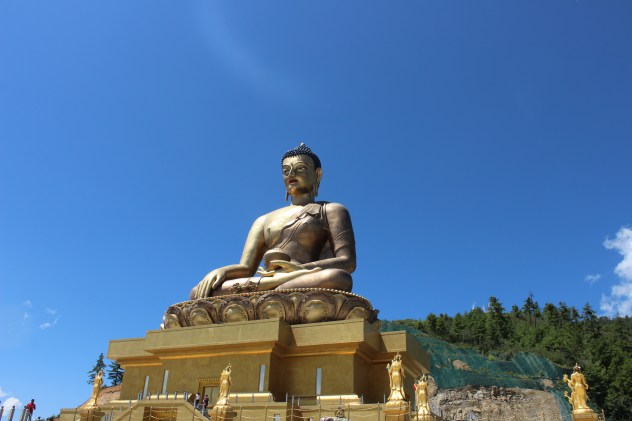 ” The born metaphysician is a person…astonished at the fact that there is anything at all.”
 All three major international religions have carried their original premises to ridiculous extremes, along with their adherents, whether cause or effect, those original premises all quite similar, and compatible, variations on the themes of love, righteousness, and perseverance, each with a different focus, Christianity on the love, Islam on the righteousness, and Buddhism on the perseverance…


Tim 12:46 am on September 2, 2019 Permalink |
Too true. I don’t know if you are familiar with Robert Wright’s ‘Why Buddhism is true’. I followed his online e-course, offered by Yale, called Buddhism and Modern Psychology. The term that I fell in love with was ‘catastophization’ (I’m using the American spelling here). Anything and everything becomes ‘catastrophied’ and therefore loses any fundamental meaning beyond its self reference.
hardie karges 1:10 am on September 2, 2019 Permalink |
Catastrophization? I like that term. Yes, gradually I’m learning what the term ‘mental formations’ means, I think, after 2 years of Buddhist studies, always a mystery to me until now. Thanks for your comments, Tim…