

Buddha Talk 2026: the case for a Modern Unified Buddhism
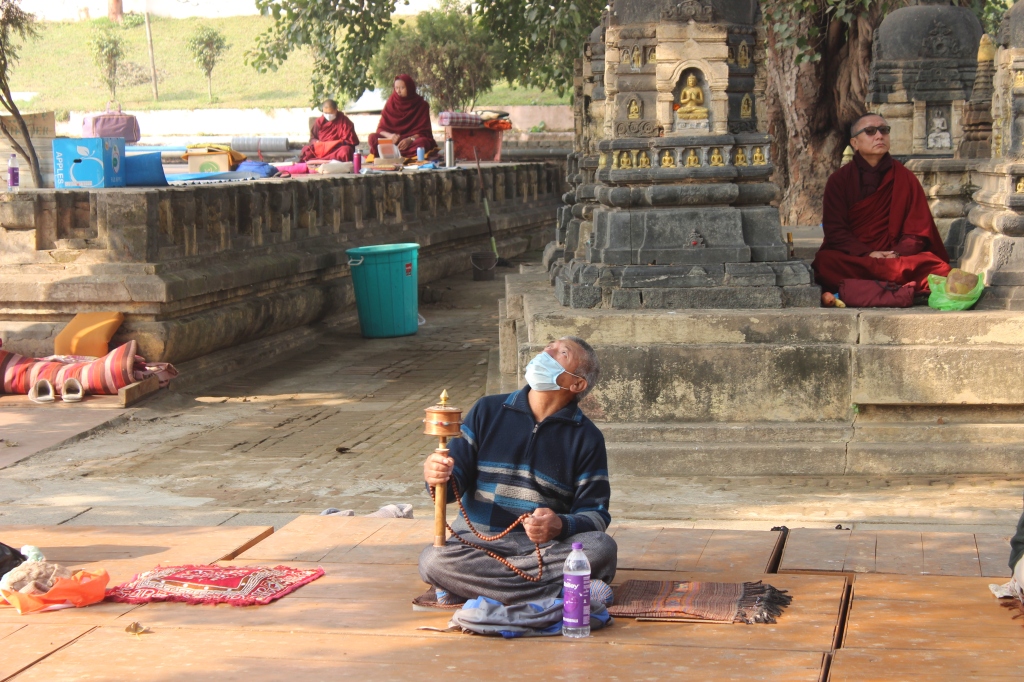
Hi, I’m Hardie and I’m here to talk about the possibilities for a new modern Buddhism, based on the original ancient principles, but free of any superstitions, and thus perfectly compatible with science. At first glance, that may sound like Secular Buddhism, but that would only be partially true. Because secular Buddhism places little value on religious experience, i.e. feelings, which can be a very valuable addition to any religion, and very important to most. Philosophy is a good substitute for religion, of course, but that doesn’t always help when your life is in danger, and you’re clinging desperately to hope. At times like those it’s nice to believe in something, almost anything will do sometimes. But that is superstition, magic, and sometimes pleading to an extra-terrestrial God to appear in the flesh to interfere in conditions upon our beloved terrestrial Earth. And there is no scientific basis to that, of course. Or is there?
Many Asians act like that is normal, while many Westerners are repelled by the thought, but what did the Buddha believe? It always revolves around karma and rebirth, and while it is clear that the Buddha accepted much of that, it is also clear that those were not his ideas, but borrowings, mostly from the Jains of his place and time, India c. 500 BCE. And you certainly can’t blame him, given the popularity of the notion, which persists to this day. Buddhists hem and haw about what it is that is ‘reborn’ without ever really answering the question, given the strong no-self anatta sentiment, which is central to Buddhism, especially in comparison to the Brahmanistic ‘Hindus’ of his time, who elevated Atman to the Cosmic Self that rules supreme with Brahman. So, if the celebrated Middle Path of Buddhism was a path between luxury and lack, asceticism and celebration, it was also a path between Hinduism and Jainism.
And from that humble beginning, Buddhism divided and conquered until it had spread to almost all Asian countries and became the majority religion of at least seven, which is considerable even if not as many as its rivals Islam and Christianity, and not counting China, Japan, Taiwan, Tibet, and Korea(s), all with sizeable numbers and percentages, but not a clear majority. But that may not be as impressive as it sounds at first if you consider that Buddhism has had longer to develop than most other religions. But that is not what matters now. What matters now is that Buddhism is on a rapid rise, and just when we need it most. Because the earth is in crisis, and the representatives of Buddhism are not pontificating (pun intended), nor sitting idly by. They are walking thousands of miles and even more kilometers. You know who I’m talking about. Yes, I’m talking about those monks walking for peace who caused such a stir in the USA recently.
Their timing was spot on, and their PR was even better, since they managed to win the hearts and minds of many, with their fresh approach and non-political orientation. The politics were always in the background, of course, but fortunately, that’s where it has stayed, for the most part. Others quickly followed suit, since this is part of an age-old tudong tradition in Thailand, if now expanded beyond the original pilgrimages to more symbolic excursions. The best part is that this is more what I call ‘soft Buddhism’, a la Thich Nhat Hanh, i.e. meditation and mindfulness, than the fire and brimstone of Tibetan Buddhism, i.e. Karma (of retribution) and Rebirth (reincarnation). Because the issues of karma and rebirth have always divided modern and traditional Buddhists, just like modern Christians can still believe in Heaven and Hell (as long as they don’t talk about it too much).
Because there is not much difference in the ‘soft Buddhism’ of TNH and W4P’s Bhikku Pannakara, even though the former is from Zen and the latter Theravada, even though the latter also talks about his dog Aloka being reborn as a human. That’s not even Buddha-flavored ‘rebirth’. That’s Hindu reincarnation, just like Tibetan Vajrayana Buddhism, while I favor the Christian ‘rebirth in Spirit’. A Godless world does not have to be an evil place, if Buddhism can unite with Christianity and Hinduism to provide a sympathetic approach to society and politics. Just leave the Karma and the dogma behind. Buddhists have already borrowed ‘lovingkindness’ from Christianity, just as Christians have borrowed meditation from Buddhism and Hinduism. So, Buddhism gets warmer, while Christianity gets cooler, helluva deal. It’s already happening. Stay tuned. Join us.



 I only know that it is more appropriate for these self-engorged capitalistic end-times than the prevailing paradigm, which is probably the cause of this effect. The original teachings of JC and the Buddha are almost superfluous at this point, anyway, what with so much cultural baggage added on over all the years, much of it far from the original teachings…


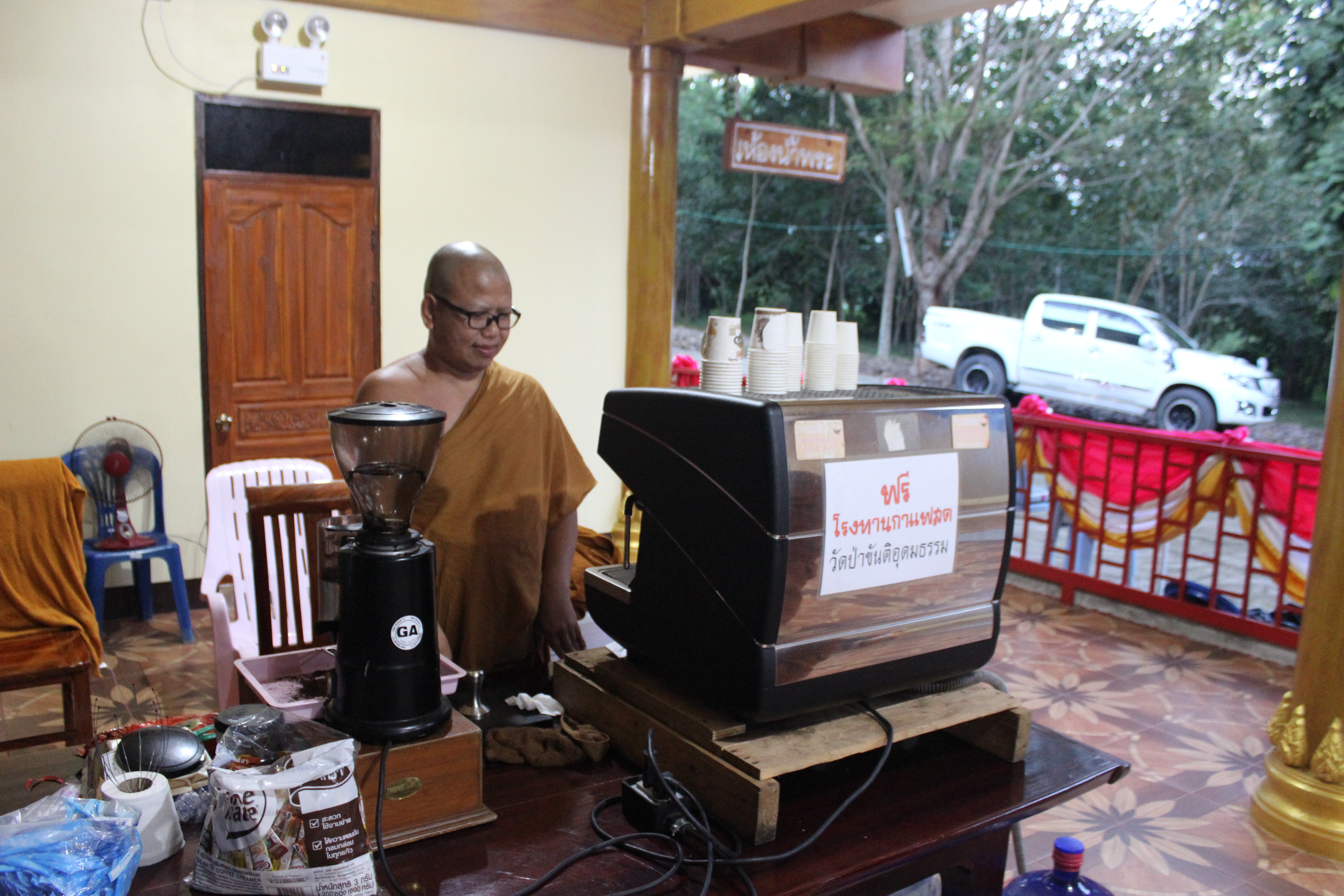 Okay, so I admit it: I’m going through a crisis of confidence with my newfound love of Buddhism, and all that entails. The devil is in the details, of course, as even the ever-tricky Buddha himself well knew, just like Jesus after him, that you pick and choose what to tell the initiates and laypeople at any one time, subject to their capacity to comprehend, assimilate, or even fathom, concepts which may just be a bit difficult to swallow at first, or maybe forever…
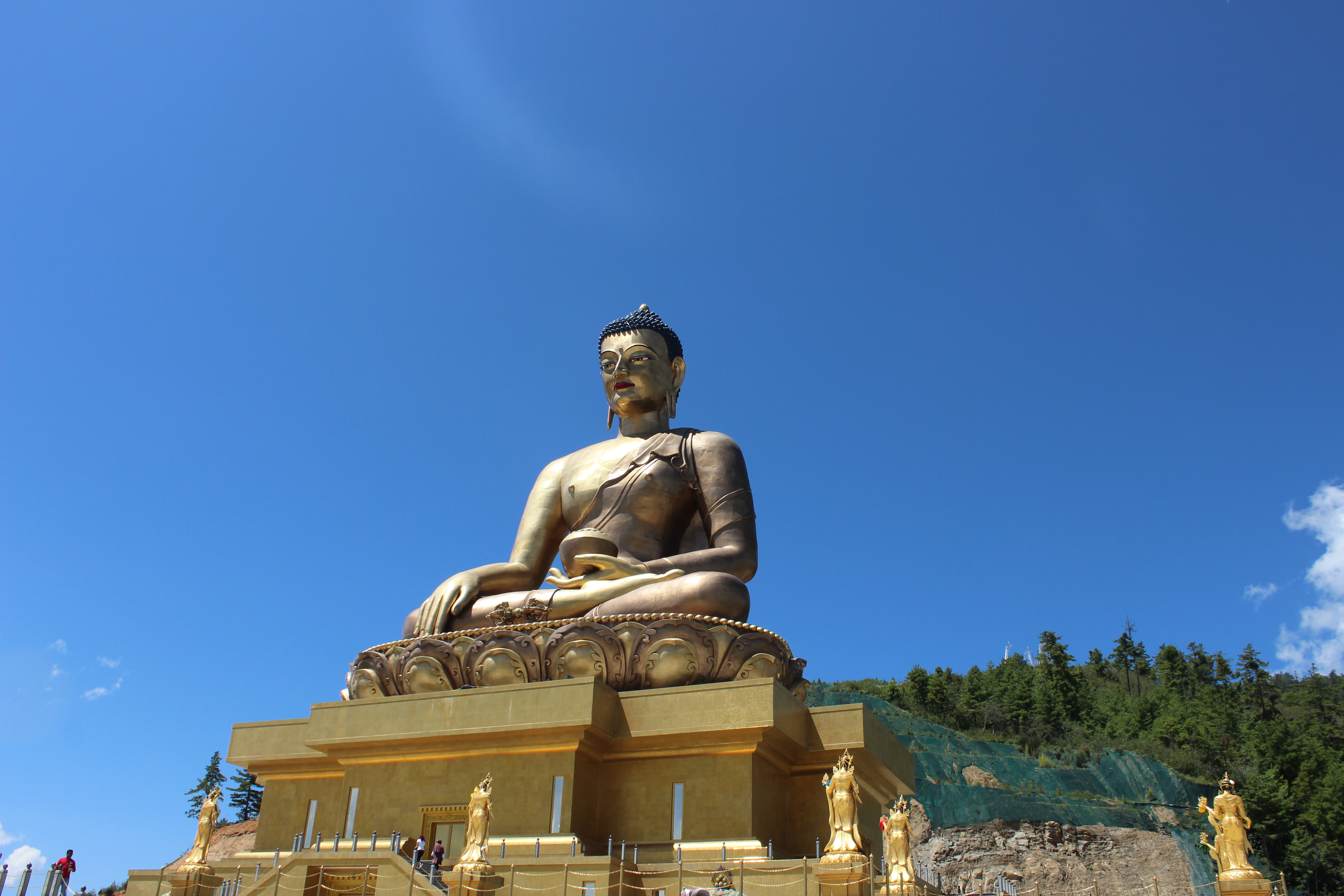 I’m not trying to win any popularity contests, but if I were I’d be telling you things like: “You are the masterpiece! You are connected to every molecule, every atom, and every quark that has ever existed and ever will exist in this or any other universe! You are the dharma! You are the Christ! You are the reason that the sun rises in the morning and goes to bed at night…
 It has long been predicted that Buddhism’s future is in the West, and for better or worse, that may very well be true. So the question then becomes: what kind of Buddhism would that be? For purposes of dialog and dialectic, I see the two chief protagonists to be the Thai Forest Tradition and Zen, both of which have numerous and faithful adherents in the West, and both of which can claim some purity of faith and doctrine…
 Theravada Buddhism has it easy, when it comes to dhamma (dharma) talks, just pull out the old mind-kilesa-breath-nose-navel-‘Buddho Buddho Buddho’ playbook, rinse and repeat, hard to screw up unless you want to get into the murky afterbirth of past lives and kamma (karma), doing Yogic headstands and plotting Ptolemaic cosmic epicycles, trying to explain how anatta (non-self) somehow gets reborn, when there really is nothing there to begin with. But still they do. It’s embarrassing, especially when some of the same ones…


Reply