Tagged: Buddhism Toggle Comment Threads | Keyboard Shortcuts

  • Unknown's avatar

    hardie karges 4:59 am on April 21, 2024 Permalink | Reply
    Tags: Buddhism, , , , , , , , ,   

    Buddhism 202: Nature is the Law of Life  

    Nature is a law, not a mountain. Rivers and oceans have no more independent existence than you or I. But this is a bone of contention among religions, now, isn’t it, and possibly the main point of division between competing philosophies? Because, if an eternal soul divides Hinduism from Buddhism in India, then the same issue is what divides almost all Western religions from their secular counterparts. After all, isn’t that why most Asians become Christians? Eternal life is Christianity’s main selling point internationally.

    But Nature tends to get a pass from such easy distinctions. Mountains are sacred and rivers aren’t bad. Beaches draw the riffraff, but sublime locations can still be had, if one cares to take a walk and distance oneself from the madding and maddening crowds. And isn’t that what makes a place spiritual, anyway, the silence and the solitude and the serenity implicit in such sublime locations? Bring in the tourist hordes, and the nicest places can quickly go downhill fast, training wheels optional. 

    But that’s neither here nor there from the standpoint of the law that is dharma. The only important thing from the standpoint of dharma is the fact that these phenomena occur in regular and predictable ways, subject to certain causes and conditions. Thus, nature is not random, not entirely, anyway, and not within the time scales utilized by human perception. The implicit beauty is just eye candy for hungry hearts. More important are the principles that govern such relationships. In Thai nature is ธรรมชาติ, dhammashart, the law of life… 

     
  • Unknown's avatar

    hardie karges 3:45 am on April 14, 2024 Permalink | Reply
    Tags: Buddhism, , , , , , , Heart Sutra, , , , ,   

    Buddhism 101: the Middle Path is Easy  

    Muslims don’t always seem happy. Christians sometimes seem too happy. Buddhists seem just about right, more or less, give or take, on average, all things considered. That’s the middle path, that sweet spot somewhere between extremes, of luxury and lack, surrender or attack, white and black, better multicolor than random shades of gray. And that’s foundational to Buddhism, that lack of hard doctrine, much less dogma, in favor of an all-encompassing dharma based on principles on moderation, mediation, and avoidance of extremes and attachments. 

    “My religion is kindness,” the Dalai Lama himself once famously said, and that about wraps it up, on the foundational level, when combined with meditation as the finest form of practice. Sure, there’s the ontological primacy of emptiness, still, but that makes little or no difference in the average person’s life, it itself subject to shifting connotations and lack of definition, resonant mostly as the dueling protagonist in the Heart Sutra refrain, “Form is Emptiness, Emptiness is Form,” fully transcendent but ultimately inconclusive. 

    Buddhism is first and still foremost discipline, dignity, and detachment, far from the madding crowds and seething temptations. Control your mind to control your circumstances, especially when the likelihood of changing those circumstances is minimal. Choose your battles carefully. Save yourself, then save the world. That’s the best that we can do. Do it now. 

     
  • Unknown's avatar

    hardie karges 4:08 am on April 7, 2024 Permalink | Reply
    Tags: , Buddhism, , , , , , , ,   

    Samma Sankappa: Right Thoughts in Service to Buddhism  

    Anger is an object lesson, not just about hatred, but lust, craving and mindless passion. It feeds on itself until it destroys something. And that is implicit in the Buddha’s message, that these kileshas, i.e. defilements, feed on themselves. That is why Buddhist love is not the passionate kind, and even lovingkindness better be careful, that the passionate embrace of a babe in swaddling clothes stops well short of puberty, and so finds a larger audience in brotherly and sisterly love, instead of rape, pillage, and incest. 

    Words can do that, calm passions and waylay anger, though it can often create as many problems as it solves. The point is that it’s a tool, and that implies choice, and skill, in the manner of its execution. That is why they are such a double-edged sword, but a steel-edged sword at that, rugged and durable and thorough in its prohibitions. The only question is how to apply those prohibitions with justice and fairness and forethought in its planning. 

    If words can devote themselves, at the insistence of consciousness, to the cessation of anger and hatred, then it will go a long way toward solving the problems of the world. If that mission can be extended to lust, craving, and mindless passions, then it will go a long way toward solving the problems of the self. Because the problem of self is not just an abstract point of doctrinal dispute between Buddhists and Brahmins. It is a problem of selfishness in the lives of men and women. Lose the self and save the world. 

     
  • Unknown's avatar

    hardie karges 3:49 am on March 31, 2024 Permalink | Reply
    Tags: Buddhism, , , , , , , , , , , thoughts,   

    Buddhism 499: Thought as Language and Memory…  

    The things we’re most attached to are our memories. If you can let go of them, then you can let go of anything. But the attachment here is insidious, because it is not strictly voluntary, but more customary, even essential. Because, like computers, we are in many ways defined by speed and memory, the two measurements which simultaneously both limit us and liberate us. What is more basic to our ability to think than language? Memory, of course, even if it’s always the past. Language is optional in the proto-consciousness of our lingo-less ancestors. Memory is not. 

    That’s the strict definition of thought, or awareness, but the sentimental attachments are more problematic. That’s when we become attached to our memories for purely sentimental reasons, or even worse: craving. Craving has long been identified as the chief cause of suffering in the Buddhist worldview, and that isn’t likely to change any time soon. The memories themselves aren’t usually the source of craving, of course, but the objects they represent are, insomuch as all memories are memories OF something. 

    So, here we are, featherless bipeds with a difference: we think like crazy, literally, mostly through the medium of language. In fact, in some people’s eyes, thought is indeed identified with language, as if no thought existed prior to language. I’m not sure how to prove it one way or the other, but I take it as an act of faith that that is not the case. Surely the animal kingdom conducts activities that can only be regarded as thought-driven, given the logic and forethought inferable.  

    Certainly, they have memories, and just as certainly, they have no language. But can we say that they are happier because of their lingo-less existence? Maybe. As always, the sweet spot lies somewhere in the middle. Dogs won’t cure cancer, but they may have less of it to begin with. Still, they’ll likely never live to the ripe old ages that we now consider normal. So, the best bet is to stop the thought stream periodically with meditation, and use memory as a substitute sometimes, but not as a practice of sentimental craving. Bingo. Sounds like an enlightened practice to me.  

     
  • Unknown's avatar

    hardie karges 4:29 am on March 24, 2024 Permalink | Reply
    Tags: Buddhism, , , , , , , , , , , y-chromosome   

    Buddhism in the Bardo: Survival of the Species…  

    Some people might laugh at a monk in meditation, wasting his life away, but I laugh at the silly fools who cause global warming. Because, after living a long time in Thailand, that’s the main reason that I was reluctant to get involved with Buddhism, the perception that it was too passive, and incapable of dealing with the issues that face the world. So, for me that was an early premonition of what I might now call something like ‘socio-spiritual bypassing,’ i.e. the avoidance of social obligations by invoking the spiritual primacy of renunciation. 

     But at some point, I realized that renunciation was probably a greater tool than all the political action in the world, and, at least on some ways, likely to produce the greater impact, also. Because, for all our sociopolitical posturing, little is accomplished along those lines, and much of the developed world may soon be crisscrossed with windmills, without any detectable difference in our addiction to rapid locomotion, despite the visible degradation of our relationship to Nature. With a population of more than eight billion souls, renunciation may soon be the only avenue of survival. 

    And, if that’s a bitter pill to swallow, then so be it. Because the writing has been on the wall for at least sixty to eighty years now, and we’ve only sunk deeper in our denial of the likely results, as Elon exhorts us to make more babies, so that he can rake in more gazillions. And that’s maybe the saddest part, that the only way that we can show our love for these people on this planet is to create more babies, who must then shoulder the burden of our conundrum.  

    So suddenly renunciation is not a bad option at all, and the disappearance of the y-chromosome only seconds that emotion. Because, whatever the numbers of our reproduction and its proliferation, or not, it’s impossible to live in a world without love. But we might need to change that meaning. And that’s where Buddhism comes in, because love comes in many forms and flavors. Metta, or lovingkindness, is the preferred Buddhist flavor, and the world community is the intended recipient. That’s Buddhism. 

     
  • Unknown's avatar

    hardie karges 8:00 am on March 17, 2024 Permalink | Reply
    Tags: , , Buddhism, , , , , , , , , turn the other cheek   

    Buddhism in a Christian World, Fighting Aggression with Non-Aggression… 

    The great Buddhist dilemma, or tetralemma, is how to deal with aggression. Do you turn the other cheek? But no Christian really did that, did they? Still, the goal is the goal, the difficulty of accomplishing it notwithstanding. And surely some Christians did just that, though Buddhists are probably better at it, given their cultural conditioning, just as some Buddhists are aggressive bullies, in some emulation of the Alpha Male Syndrome, if nothing else. Boys will be boys, and many of those are aggressive by nature. 

    But is there a better way? Aren’t we guilty of another form of spiritual bypassing, if we avoid difficult social and political situations by simply retreating into our spiritual comfort zones and letting the world degenerate into madness? After all, is that any different from using our spirituality to avoid confronting our own emotions and unresolved existential crises? In fact it might be worse, much worse. So, yes, there is an opportunity here for someone to learn a lesson if only he or she wants to put the time and effort into it. 

    But we can’t lose ourselves in the affairs of others. We can only teach what we ourselves know above and beyond question and learn from everything else. The important thing is not to react, or at least not overreact. We are all baited everyday with statements designed to inflame or instill anger when we ourselves intended no such thing at all initially and desire no such thing as result. But such is the nature of aggressive modern culture. And we are in it, regardless of whether we are truly of it or not. If turning the other cheek is to invite further abuse, then nothing has been accomplished. To simply walk away and limit future involvement with the aggressor might be a better solution. 

     
  • Unknown's avatar

    hardie karges 6:19 am on March 10, 2024 Permalink | Reply
    Tags: , Buddhism, , , , , , , , , , , , , ,   

    Buddhism at the X-roads: More Dharma, Less Drama 

    To live from sensation to sensation is to live like an animal. To follow dharma is to live like a human. Because, despite the attraction of the so-called ‘present moment,’ which may or may not be real, the Buddha prized reason and rationality above almost all else, easily verified by his insistence on recognition of the causes and conditions underlying all actions and motivations. He may or may not have said something supporting the ‘present moment,’ but I’m not sure what or when that would have been. 

    Bottom line: reason(s) and rationality are to be prized above almost all else in Buddhism, the one possible exception being the need for, and insistence upon, meditation. And, for me, this is where that ’present moment’ comes into play, it being almost the perfect metaphor for that suspension of belief and disbelief which is meditation, all thought suspended in favor of pure awareness, of breath, if nothing else, anapanasati, the original meditation of which all others have subsequently derived.  

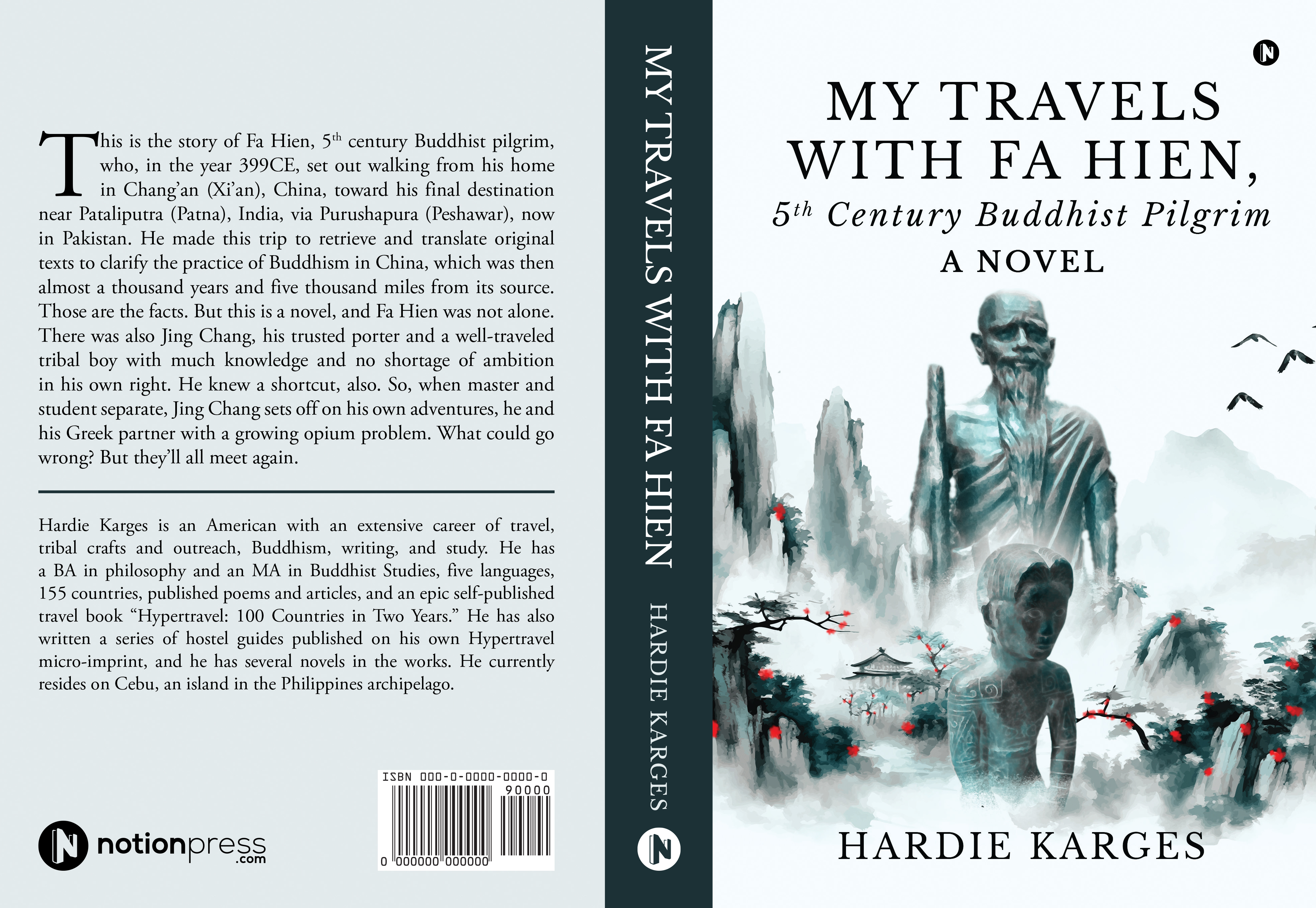
    Meditation is so fundamental to Theravada Buddhism that it has recently almost become re-branded as Vipassana, or ‘insight meditation,’ all the other disciplines involved in the practice of Buddhism notwithstanding. And this is likely what the Chinese Buddhist pilgrims Fa Xian (Hien) and Xuanzang found above all else, silent meditation, since almost nothing else was written, and was almost too heavy to carry once they had it transcribed from the original Pali or Sanskrit into Chinese.  

    But how do you transcribe meditation into any language for inclusion in a book which someone may or not read at some point in history? Meditation was largely independent of written vinaya (discipline), and that is what had sustained Buddhism for around 1000 years by that time. And that’s what sustains it today, all the opinions and debate on Facebook and elsewhere notwithstanding. Original Buddhism required only silence, and concentration, no apps or other accessories necessary. 

     
  • Unknown's avatar

    hardie karges 4:26 am on February 25, 2024 Permalink | Reply
    Tags: , Buddhism, , , , , , , , , , , , ,   

    Kindness and Compassion are the Heart and Soul of Buddhism  

    Buddhism in Bhutan

    Compassion has no expiration date. It’s never too late to make new friends with old enemies. This is one of the secrets to a good life: no grudges, no scorched earth, no retribution, and, most importantly, no regrets. It should be simple, since you don’t really have to do anything, but in fact it’s one of the hardest things ever, so attached as we are to our egos and our ‘face’ that we spend so much time and effort saving, lest someone steal it right off of our heads, haha. 

    The Dalai Lama once said that his religion was simple, and that’s kindness, which is compassion, in a word, same thing, same time, and that’s Buddhism, too, in a word. All the elaborate lists and literary expositions that comprise the Buddhist Abhidharma are unnecessary to describe the heart of Buddhism, so why waste so much time and effort when you can put it all in a word, or two? Because yes, there is another word that needs to be included, and if karuna is the first word, then metta is the second, often translated as ‘lovingkindness’ or simple ‘friendliness.’ 

    Put the two words together, and you’ve captured the heart and soul of Buddhism. In fact, modern standard Thai language does indeed often combine the two words for extra effect, so mettakaruna is a word or phrase that you will hear often there. Suffering is famously the back-story to Buddhism, that and its cessation, and that’s pretty much all you need to know. The cosmology of self and rebirth are important but debatable, IMHO, and thus of secondary importance, ditto nirvana. The analogy to Christian forgiveness might be worth mentioning but it isn’t necessary. Be good; don’t be bad. It’s that simple. 

     
  • Unknown's avatar

    hardie karges 5:27 am on February 11, 2024 Permalink | Reply
    Tags: bonobos, Buddhism, , , , , ,   

    Buddhism 499: Conciliation is always better than confrontation…  

    There is always an alternative to war and conflict. Conciliation starts at home. Such is the way of the world. If we can’t maintain the peace within our families, then how can we ever hope to keep the peace among such large, scattered and diverse groups as exist in the world these days, with eight billion souls and counting? Score one for samsara, the world in all its gory details: hate, greed, fear, and anger, watch your step and be on a constant lookout for danger.  

    But it doesn’t have to be that way. Except for chimpanzees—but not bonobos—no other species besides glorious homo sapiens feels the need to kill for any other reason than to acquire food. We do it because we’re wired that way, I guess, DNA and all that rap, A, C, G, T nucleotides, with sometimes Y and W (just kidding), as if all our thoughts and emotions were pre-programmed at the factory, just like the determinists claim, and all our actions doomed to repetition and suffering.  

    Enter religion, and now we have reason and inspiration to up our game. For now, we have expanded our family to include all like-minded souls, regardless of race, gender, or geography, the only problem being, of course, that that is still not enough. For one thing, different religions don’t always agree with their own governments, much less with each other. Still there is hope, and the rule of thumb to ‘leave well enough alone’ is not a bad guide for the guileless. Sometimes you don’t have to do anything. You have to do nothing—quickly. And like so, determination can defeat determinism, and peace can prevail.

     
  • Unknown's avatar

    hardie karges 5:15 am on February 4, 2024 Permalink | Reply
    Tags: , Buddhism, , , , , , , , , , , , , , , ,   

    Buddhism: Meditation, not Mysticism…  

    Buddhism was never intended to be mystical. Buddha was very rational in his take on life and suffering. Any mysticism came later, mostly in the Vajrayana Buddhism of Tibet that came directly from India, not China, and which had taken firm hold in that country by the Eight Century CE. And while that ‘school’ of Buddhism is often included in the Mahayana tradition which traveled through, and was greatly influenced, by China, such is not the case with Vajrayana, which derives from a later, maybe the last, Indian Buddhist tradition, before it succumbed to the coup de grace by the invasive Mughals, after centuries of losing ground, and followers, to the Brahmanist Hindus. 

    About the only thing that all the Mahayana schools have in common, in fact, is that they are not of the original Theravada tradition, which originated in India and found fertile ground in southeast Asia, mostly. And if the Vajrayana tradition is famous for its multiple levels of heaven and hell, its Tantric yab-yum, mudras and mantras, then Theravada (aka Hinayana), is best known for its lack of all that, and concentration on meditation, especially, to the extent that it’s sometimes known by that most famous meditation technique Vipassana. Meanwhile the Mahayana Buddhism of China is probably best defined by its transcendent Buddha and the vast Emptiness of reality, both more recent developments.

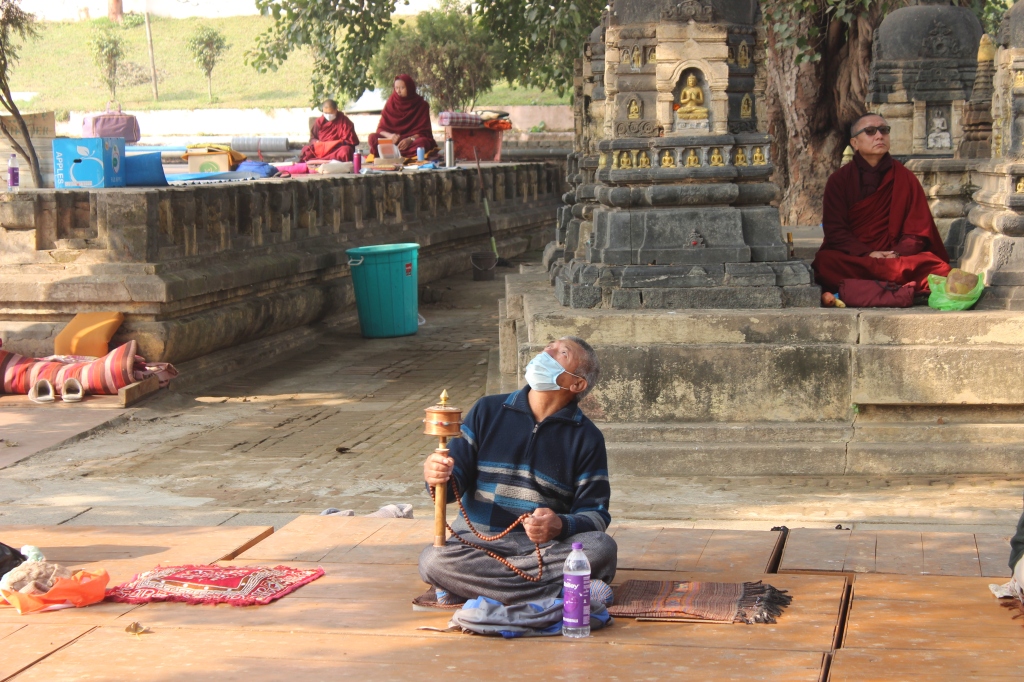
    Many famous Chinese monks, Fa Xian and Xuanzang foremost among them, even made long arduous trips to India just to get it right, like Charlemagne realizing his 8th century French language wasn’t proper Latin. And mostly I believe that meant learning meditation, and some other disciplines, which Theravada monks usually excel at, and Chinese monks often suck at—to this day. In fact, I didn’t really even know what meditation was until I attended some Theravada-based meditation retreats in Southeast Asia, intended for Asians, not Westerners. When you see a layman sitting silent unflinching for two or three hours lost in no-thought: that’s meditation. The monks are even better at it. Now I get it. Get it. 

     
c
Compose new post
j
Next post/Next comment
k
Previous post/Previous comment
r
Reply
e
Edit
o
Show/Hide comments
t
Go to top
l
Go to login
h
Show/Hide help
shift + esc
Cancel