


Zen and the Art of Dishwashing…

We are not slaves to the objects of our desire as much as we are slaves to desire itself. The objects come and go. And isn’t that just like us? I mean, to desire for the sake of desiring, as much as any object as the supreme goal, or maybe we can call it ‘cet obscur objet du desir,’ if I may borrow the title of the famous film by Luis Bunuel to illustrate my point.
And as in that film the object is not only unattainable, ultimately, but is constantly changing its face, such that “What follows is a tale of cruelty, depravity and lies — the very building blocks of love.” (Wikipedia) So is this simply our fate, as Westerners, especially, to bite off more than we can chew, simply for the pleasure of the sensation of the food inching its way slowly down our throats, and only gradually entering our stomachs?
There it triggers the feeling of fullness, if only for a moment, and begs the question as to whether that is really enough, or not, since consciousness comes with no gas gauges, just feelings, often random, of completion or vacuity, in this case, in addition to sensations of tastiness or disgust. So are we left to desire for the sake of desiring, in the same way that one might misinterpret Thich Nhat Hanh’s invocation to “wash dishes to wash the dishes” as “wash dishes for the sake of washing dishes,” which is not correct.
And I will admit that I misinterpreted that advice for years, as if he were advocating mindlessness as mindfulness. Now I know that he is a master of Zen, but I never knew that he was that Zen! And he’s not, in the sense that Zen sometimes goes too far in its linguistic riddling, in the hope that enlightenment might somehow magically result if we can only prove language to be the trickster that it is, full of bluff and bluster, but ultimately empty. And that may be true, but that does not mean that there are no meanings.
But Thich Nhat Hanh was not advising mindless dish washing, even though others may also have misinterpreted it that way, no salve to my chastened ego (https://www.researchgate.net/publication/281608722_Washing_Dishes_to_Wash_the_Dishes_Brief_Instruction_in_an_Informal_Mindfulness_Practice). What he was really advising was to make the best of mundane situations, and be aware of just that, AND ONLY THAT (ouch), when in the process of doing it (if you’re feeling bored, you can always increase the speed. Walking meditation can be fast or slow).
For meditation I personally advise sitting on a cushion, on the floor, lotuses optional, ditto mantras and mudras, eyes closed, body unflinching, for at least twenty minutes, more if you can. This is what I call STFU meditation. It may not be as famous as anapanasati or vipassana, or any of the other myriad of styles and subjects, but it accomplishes much the same thing, and that is to shut off the internal dialogue, at least for a spell (!), and return to pre-linguistic proto- or paleo-consciousness to reboot the program. All systems work better after rebooting (hint: try counting breaths, if you feel it’s otherwise just not working).
And so it is with desire. As much as Western culture rewards the act of ‘being in love with love,’ ultimately it is not only wasteful, consumptive, and useless, but even destructive, e.g. global warming. But don’t torture yourself. To chase illusions is only human: usually futile, sometimes rewarding, almost inevitable. This is life, a passing show. Stay safe.
 hardie karges and
  David Cole are discussing.


 Beyond all the fibs and fantasies, behind all the lies we tell ourselves, is the l-DNA we create for ourselves in language, a trail to our past and an arrow to our future, and pretty much the only thing we had before y-DNA and mt-DNA, revealed now to be something like a parallel universe to those more precise measurements, yet far more analogous to the largely hypothetical cultural tracks and traces, like c-DNA, full of long lonely nights and broken promises, frightened misgivings and belated thanksgivings…
 It has long been predicted that Buddhism’s future is in the West, and for better or worse, that may very well be true. So the question then becomes: what kind of Buddhism would that be? For purposes of dialog and dialectic, I see the two chief protagonists to be the Thai Forest Tradition and Zen, both of which have numerous and faithful adherents in the West, and both of which can claim some purity of faith and doctrine…
 Theravada Buddhism has it easy, when it comes to dhamma (dharma) talks, just pull out the old mind-kilesa-breath-nose-navel-‘Buddho Buddho Buddho’ playbook, rinse and repeat, hard to screw up unless you want to get into the murky afterbirth of past lives and kamma (karma), doing Yogic headstands and plotting Ptolemaic cosmic epicycles, trying to explain how anatta (non-self) somehow gets reborn, when there really is nothing there to begin with. But still they do. It’s embarrassing, especially when some of the same ones…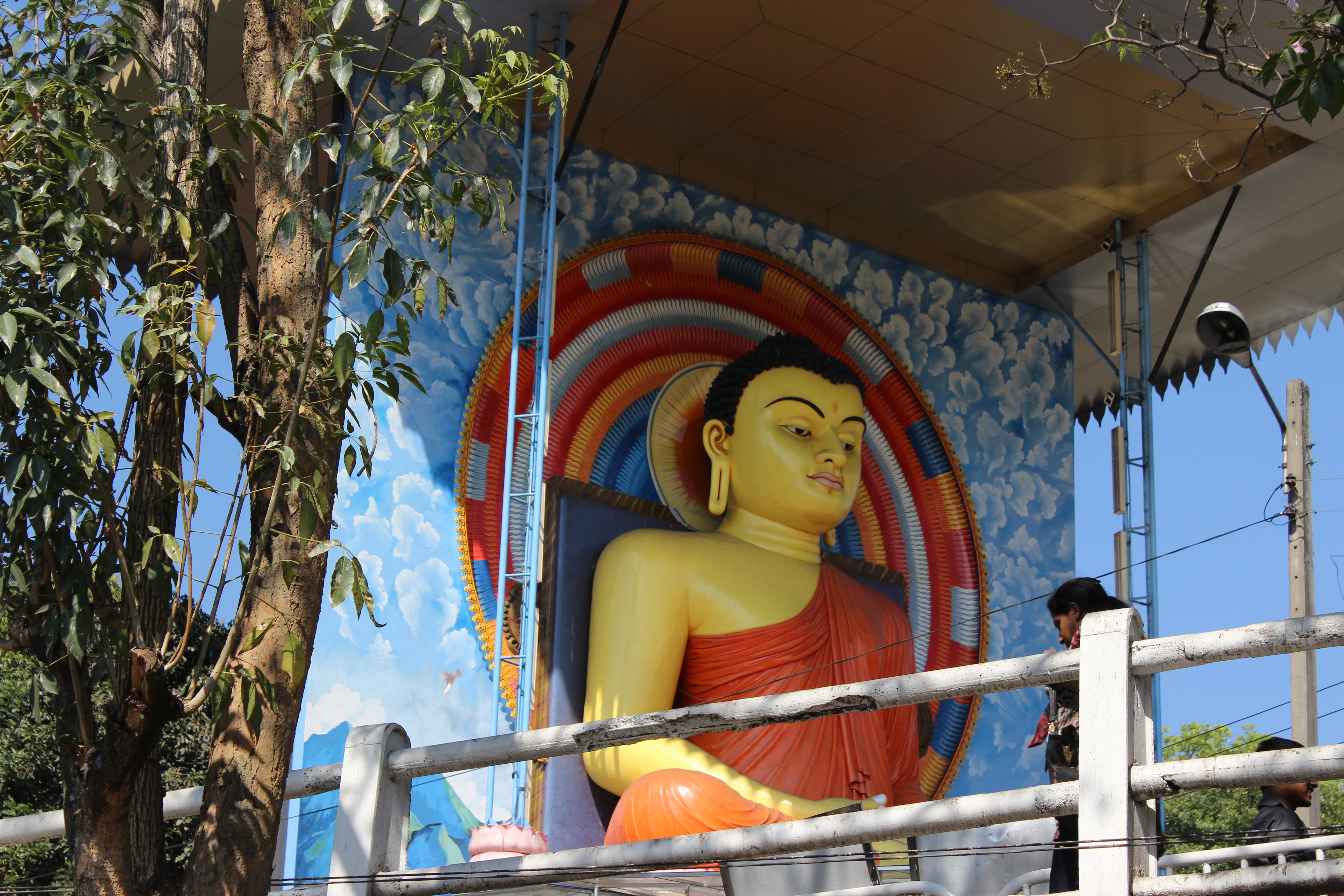
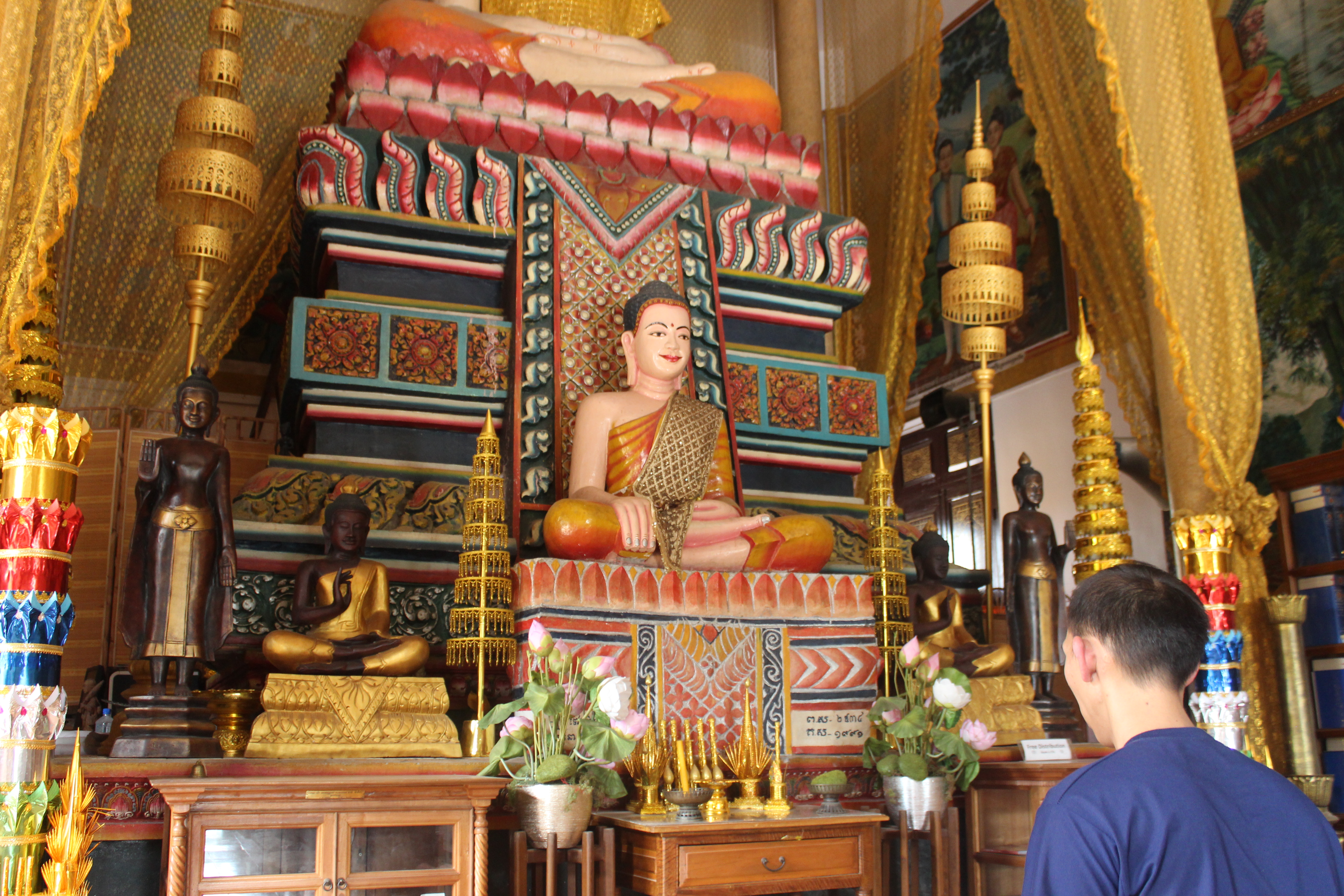 Karma is one of the major tenets of Buddhism, and one of the most misunderstood. The issue of past lives I’ll save for later; first let’s deal with this life. The basic idea is that if you do good things, then good things will happen to you. And if you have to take at least one religious tenet on pure faith to qualify as religious, then I’ll take that one, which I firmly believe, that by doing good, the world is thereby incrementally vaccinated against evil. Thus karma is frequently called the law of ’cause and effect’, BUT…
 The Smiling Pilgrim are discussing.
 streaming consciousness...
Reply