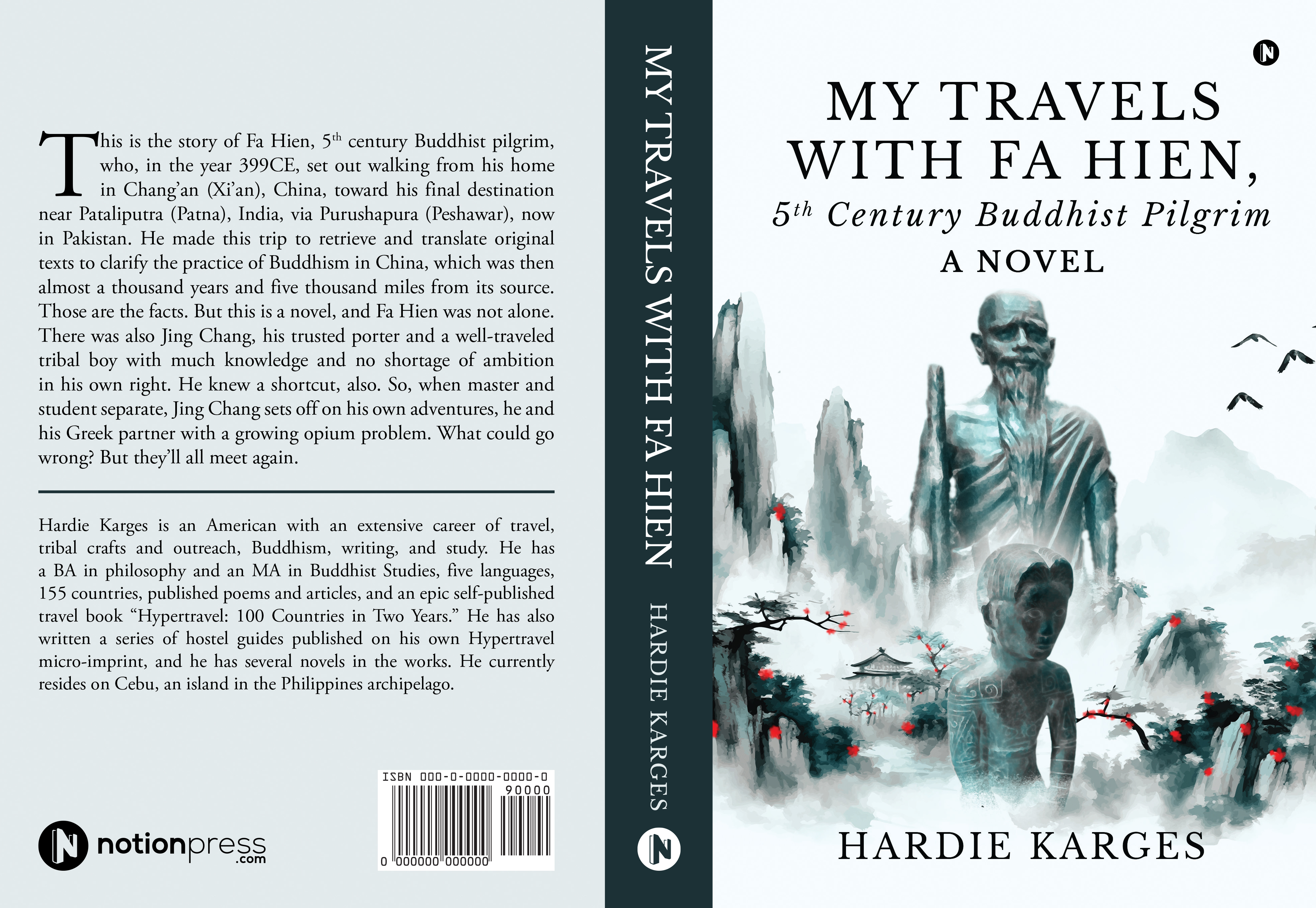


Buddhism: A Noble Truth or Two (and a few lesser ones)…


Buddha in his Four Noble Truths didn’t say that craving is THE (one and only) cause of dukkha, i.e. suffering. Pali and Sanskrit have no definite articles. But it is certainly one of them, and by the fact that the Buddha mentioned no others right then and there, it certainly seems logical to assume that it is perhaps the greatest of them. He did mention others elsewhere, though, and impermanence comes quickly to mind as one of those that he specifically wrote about in that context.
Perhaps impermanence was Buddha’s first encounter with dukkha? I know that it was mine, at the ripe old age of eight years old, in Jackson, MS, USA, as my parents prepared to migrate from the Big City out to the nearby countryside, and all that I knew and loved would change overnight, perhaps more than can be easily imagined here and now almost sixty years later. Because not only was that my first encounter with suffering of the existential sort, but it was also my first encounter with culture shock. I cried for days, and not only survived but thrived.
I even started to like that culture shock around the time I visited my twelfth or thirteenth country a few years later. Similarly, the Buddha did not say anything to the effect that ‘all life is suffering.’ But as he listed the various manifestations of suffering, e.g., birth, old age, disease, and death, then that might certainly be implied. That’s what he was obsessed with, most likely, because that’s what he was shielded from for most of his life—until he went outside. And so we must all go outside to find what is inside each of us.
And what we find inside is another world, a different world, almost another dimension, as different as Virtual Reality from our modern materialistic world of Science. And it is a world of feeling and perception, the only world that a sentient being can truly know. Everything else is only a likely story, and a likeable story at that. You shouldn’t have to choose between Buddhism and Science. You don’t. And sometimes short-term suffering brings the greatest long-term benefits. Don’t panic. Be patient. Be kind and adapt to changing circumstances. Impermanence shouldn’t be a cause of suffering.

 hardie karges and


 The opposite of death, of course, whatever that is, no more no less, the two like dancing partners choreographed to perfection, or life partners resigned to the fact. There is no other option, no matter how much the creators of cryogenics would wish it, or however much the authors of science fiction might fantasize. You can only delay the inevitable; every doctor will admit that, but still we spend every last cent to prolong our lives another minute or two for the sake of science, for the sake of the impenetrable sadness…
 I know it sounds like some silly game show, but it’s true. What each one of us decides to do and accomplish in this short life is largely subject to our own whims and devices, and not subject to judgment, not if there is any justice in this world. After all, the great sages and prophets don’t spend time on that, and all the great commandments, of any great religion, all begin with: “Thou shall not,” (or was it ‘shalt’?), but not “Thou shall…”
 streaming consciousness...
Reply