Tagged: samsara Toggle Comment Threads | Keyboard Shortcuts

  • Unknown's avatar

    hardie karges 4:35 am on April 20, 2025 Permalink | Reply
    Tags: , , , , , , , , samsara, ,   

    Buddhism and Mindfulness, Language and Life… 

    ‘Mindfulness’ is a tricky term, full of modern marketing. I prefer ‘consciousness,’ the original meaning to the same word in Pali, sati. Now that may seem like a minor quibble, but I prefer to keep superstitions and general ‘woowoo’ and ‘joojoo’ to a minimum for easier acceptance. Because I don’t want Buddhism to be something magical and mystical, even if that brings in some fervent fanatics full of vim and vigor. But it rules out science and that is the problem for me. Religion and science should be perfectly compatible, and that is best accomplished by staying off each other’s turf.

    Maybe it’s an impossible task, I suppose, but it’s still worth trying, I think. Because already a certain stratum of words has been ‘Buddhafied’ and elevated to a meaning that doesn’t conform to that of the ordinary world and its ordinary usage of the word. I’m not worried about the extra work of cataloging two meanings in my mind, but I’m concerned that we’re losing something by avoiding that original meaning. So, when samsara comes to mean ‘endless cycle of rebirths’, rather than its original meaning as simply ‘the world’ (e.g. in modern Nepali), well, something has changed, and not always for the better. You can check to see if that original meaning still works in every case, and it does AFAIK, but with a difference—authenticity.

    Only rarely does a word totally change meaning within the historical period, like the English word ‘passion’, for instance, once suffering, now a kind of special love, for us silly westerners, of course. In modern standard Thai, the word that now means ‘mindfulness’ is sati, from the Pali, but there it simply means consciousness. When I was lying on the side of the road after a motorcycle accident near Wiang Papao, no one was asking if I was mindful. They were asking if I was conscious. There’s a difference. Original early Buddhism was very down to earth. Transcendence came later. For me mindfulness is the opposite of mindlessness, pure if not simple.

     
  • Unknown's avatar

    hardie karges 4:32 am on December 8, 2024 Permalink | Reply
    Tags: , , , , , , , , , , , samsara,   

    Buddhism Basics: Metta and Karuna, Kindness and Compassion… 

    Kindness and compassion, metta and karuna, are not the path of weakness. They are the path of true strength, which may or may not coincide with the popular images of ‘big men’ and ‘strong men’ flexing muscles and making waves, but that is not the paradigm of the Buddhist monk in partial renunciation from the world. That is the paradigm of the world that the Buddhist must renounce, at least partially, the world of hatred, fear, and anger, often masquerading as bravado, strength, and victory.

    Ironically, many Buddhists may defer to such popular images of strength and victory while forgoing it themselves. Because they know that such phenomena are the manifestations of the world, samsara, over which they have little of no control. We can only control ourselves. But, if we can stay on the good side of those circumstantial strong men that the world spits out like so many celebrities for sale, then so much the better. That’s ‘skillful means.’ It doesn’t imply superior dharma or any kind of enlightenment on the part of the big man, just survival instincts on the part of the average bloke.

    But Buddhism is a path of kindness and compassion. That much is certain. The only question is how best to manifest that in our own private lives. As always, the Middle Path seems to offer the best clue. Don’t be too passive or too aggressive. There is a sweet spot right there in the middle somewhere, defined by an almost equal distance from the extremes that we must avoid. And if it seems like this is a path for losers and nondescript middlemen, then nothing could be farther from the truth. Living right is its own reward.

     
  • Unknown's avatar

    hardie karges 5:00 am on October 20, 2024 Permalink | Reply
    Tags: , , , , evangelical, , , , , , , , , samsara,   

    Buddhism at the Checkout Lane: the Best Rebirth is Spiritual 

    Spiritual rebirth begins within. It should never end. Samsara is something different. Samsara literally means ‘the world,’ always did, though perhaps etymologically from a distant past word connoting ‘wandering,’ but who knows? Etymology is always a best guess. As far as we know, at the time of the Buddha the word meant ‘the world,’ as it does to this day in modern Nepali, the modern language closest to its Sanskrit roots. Hindi probably got tired of the debate, so adopted the Arabic word dunia for most ordinary usage.

    But Buddhists turned the world cyclical, and so that circularity came to represent samsara more than the other aspects of the world itself. And that circularity specifically refers to the concept of rebirth, heavily borrowed from the Hindu concept of reincarnation, but without the literal transfer of the physical body from one generation to the subsequent one. In fact, Buddhism goes to great lengths to explain away the conundrum of <“What is reborn?”> at the same time that they go to equally great lengths to explain exactly what is the nature of this self that we’re denying. It’s a mess.

    Bottom line: the Christians—the evangelical Christians, of all sects—may have beat us to the punch on this issue. Because their insistence on being born again in the spirit is not only in the Bible, in multiple quotations, you may hear it loud and long at any tent revival in the lower US south from participants both black and white, in their exaltation at surviving a ‘Long Dark Night of the Soul’ as originally described by the 16th century Spaniard St. John of the Cross (not Eckhart Tolle).

    There is scarce reference to rebirth in any Buddhist text, though the Brahmanist Hindus and especially Jains would likely have many if only they had bothered to write it down. But that’s another story. The important thing is that spiritual rebirth is a very beautiful thing and idea, whereas physical reincarnation or even sorta kinda almost maybe rebirth of consciousness in a random body is a leap of logic, not to mention dubious science. And to those who say you can’t just pick and choose this and that, from assorted religions, I respectfully respond, “Why not?” They all did. Embrace it.

     
  • Unknown's avatar

    hardie karges 5:22 am on August 25, 2023 Permalink | Reply
    Tags: , , , , , , samsara, ,   

    Shunyata: Emptiness at the Center of Buddhism  

    Shunyata is famous as the Emptiness factor of Buddhism. But that zero, shunya, also defines a center. And so that same word, or some variation of it, forms the word or concept of centrality in many Southeast Asian languages, where it first arose. Thus, it refines the concept of the Middle Path in the same way that it refines the concept of anatta or ‘non-self.’ Now we can see that not only is there no permanent enduring self to worship or obey throughout eternity, but there is no permanent enduring anything to worship or obey throughout eternity.  

    In the same way we can see that not only is there a Middle Path that defines our passage through life, but there is also a center that we can keep coming back to, if we want, or revolve around, if we must, lest we lose our bearings in the passages of time and space. Because that Middle Path can be meandering, as we’ve already seen, but a center is more fixed, by definition, even if it is following a path in 3-D space. It is still fixed in relation to its surroundings. And so is a center.  

    So, I think that it’s possible to postulate and adhere to a Central Point of Buddhism in the same way that we follow a Middle Path. Nothing has changed except the precision of the definition, as with anatta. Thus, we should always ‘stay centered’ in the same way that we should avoid extremes in following a Middle Path. If this seems trite, trivial, and even somewhat torturous to accept, then I suggest otherwise. Because if that concept of samsara was originally a ‘wandering’ which soon became synonymous with ‘the world,’ then at some point we must settle down and find our center. 

     
  • Unknown's avatar

    hardie karges 8:16 am on March 11, 2023 Permalink | Reply
    Tags: , , , , , , , , , Kramer, , , Passion of Christ, , , samsara,   

    The Passion and Dispassion of Buddhism…  

    Buddhism in Sri Lanka

    There is no worse slavery than the slavery to your passion(s). And that’s a tough pill to swallow, because we tend to think of our passions as our pleasures, as though it’s only natural to be obsessed and conflicted. It’s not. But that shows the path that western culture has taken, in which our passions, which once meant ‘suffering,’ now are the focal point of our lives, and full of positive connotations—even if it kills us. So, with the ‘passion of Christ’ fully articulated as his suffering, in defeat, with no victory implied or intended, then Buddhism and Christianity are not so far apart, at least not superficially, at least not originally.  

    For both see suffering as seminal. The differences only become apparent when we realize that Christianity and the West make of suffering (i.e. passion) something to be encouraged, and sought, not something to be avoided and mitigated, as in Buddhism. The examples are many: samsara, for instance. This is a word that in the time of Buddha meant, and still means (in modern Nepali), ‘the world.’ And the Buddhists made something distinctly negative of that term, it now symbolizing the drudgery and misery of incessant rebirths. But most westerners, and especially Christians, are famous for their (our) ‘love of life’ and the world, too, of course.

    So, is the Christian belief in (and desire for) some sort of ‘eternal life’ really any different from the Buddhist rebirth? Only in that one is desired and the other abhorred, it would seem. So, if it’s not surprising that Buddhism and Christianity spring from similar roots, given their shared Indo-European proto-language and homeland, it IS a bit surprising that they’ve diverged so far from that initial starting point, and in apparently opposite directions. What would cause that? Good question. There would seem to be nothing in the physical landscape to explain the divergence, though the cultures encountered, and conquered (Indo-Europeans didn’t lose too many wars, except among themselves), differ quite radically.

    Considering that they went both ways from the Yamnaya Horizon’s original Pontic steppes, West and East, to Europe and north India, respectively, they would have encountered light-skinned ‘old Europeans’ on the one hand, and dark-skinned Indus Valley people on the other. That’s the biggest difference between the two groups right there, and may be significant, with respect to the caste system and perhaps more. But my own pet theory is that West and East were mostly playing out a dialectic of ideas, that likely dates back to 4000-3000BCE around lively campfires on high steppes and with spirited discussions.

    In this theory that dialectic is still being played out today, albeit in more ways than could ever have been imagined in the years BCE. The important thing is to not become a slave to your passions, though, even when you enjoy them, or when they cause you suffering. I’m reminded of Kramer’s statement to the ‘Soup Nazi’ in the old Seinfeld TV show: “You suffer for your art.” Touche’. Freedom FROM is the important thing in life after all, even more than freedom TO. Does it really matter whether you get the espresso or tamarind flavored ice cream today? Enjoy… 

     
  • Unknown's avatar

    hardie karges 9:13 am on September 18, 2022 Permalink | Reply
    Tags: , , , , , , samsara, , ,   

    Buddhism and the Nature of Self/Not-Self… 

    The notion of self is a linguistic convenience. But language is not reality. And this is one of the debates in Buddhism, of course, not so much the exact nature of ‘self,’ which is proscribed in Buddhism (with an ‘o,’ not ‘e’), but more the exact nature of ‘not-self,’ or ‘no-self,’ that distinction itself often at the crux of the debate, as if there were any real difference, as if it really mattered. Because what matters is that this is not the Hindu cosmic self nor the Christian eternal self, both of which are not what the Buddha envisioned for his group of followers and his emerging view of the world.

    But what exactly did he envision for the self? Not much, apparently. Best guesses are the (s)khandhas, or ‘heaps’ of causes and conditions that he enumerated to constitute the typical person sans persona that is typically referred to, though many modern Buddhists like to wax long and hard on the ego and ensuing egolessness that would obviously result from that starting point. But our concept of ‘ego’ is so tied to Freud’s concept of id, ego, and superego that it may be misleading. Because I’m sure that the Buddha had no such wild notions.

    The Freudian ego also makes the same mistake that the Buddha was trying to solve, positing self as a thing, or something, anyway, which is an independent actor on an ever-shifting stage, when the actions themselves were much more important, as modern psychology now acknowledges the behavior, rather than some elaborate tripartite self, so like verbs not nouns. The Buddha might even go a step farther and see the composite self as a collection of adjectives, thus tendencies to act, not even dignified by the actions themselves.

    I’m sure that he had our modern notion of selfishness in mind, though, so we have that much in common, what with his obsessions with craving and desire. And that’s where Buddhism has much to say about our modern consumeristic economies and lifestyles to the point that ‘stuff’ becomes the meaning of our lives. This is a trap, of course, and a never-ending cycle of unfulfillment. After all, how can things satisfy us if we ourselves are essentially non-things? Sometimes the world is too much with us. Even the Buddha and Wordsworth could agree on that. The Buddha called it samsara….

     
  • Unknown's avatar

    hardie karges 12:45 pm on November 15, 2020 Permalink | Reply
    Tags: , , , , Ecclesiastes, Gurkha, , Nepalese, Pete Seeger, , , samsara, The Byrds   

    Buddhism by the Book: Circular Arguments in Cyclical Existence… 

    “In springtime grow flowers. In summer grow fruit. In autumn count blessings. In winter take root,” I once said in a playful moment. In Christianity, of course, that sentiment is made famous in the quote, “To everything there is a season,” as originally expounded in the Biblical selection Ecclesiastes 3: 1-13, and brilliantly revised early in my lifetime in the work of Pete Seeger’s “Turn! Turn! Turn!,” and made famous by The Byrds, back when they were skinny.

    The meaning and essence of the thought expressed, of course, is the rhythm and circularity of the seasons. But I think it works equally well in Buddhism, or any other belief system, for that matter, in that by extrapolation, it perhaps can apply to the entire universe.

    We know little of the universe, though, so it is usually visualized in its macrocosmic view as planets in motion, even if the reality is equally a microcosm, if not more so, i.e. particles. But in its macro view, we see the revolution of moons around planets around stars around a poorly defined black hole center, and that is usually enough to convince us that there is at least some order to the universe, with or without an omnipotent creator, with or without an omniscient plan, aka ‘intelligent design.’

    This is again one of the pet projects of fundamentalist Christians, notwithstanding the likelihood that a God of true engineering capabilities could have come up with many mind-blowing designs, rather than the same one over and over with design adaptations that can easily be explained by natural selection if not epigenetics.

    But most Buddhists find their circularity in various iterations of the theme of rebirth and past lives, something which was never really the Buddha’s Big Idea, but which he’d have likely been foolish to reject, but not the latter-day obsession with it, in an almost inverse proportion to its scientific viability.

    But that is the difference between religion and philosophy, that religion craves certainty, even where no certainty exists, and not casual musings, or even a healthy dialectic. Scientists have no such illusions. And the best philosophers are scientists, and vice versa, with or without the background in math or Plato.

    So physicists today get an undefined Dark Matter occupying most of the universe, philosophers get Wittgenstein’s defenestration of language, and Buddhists after 2500 years get a soft pad on a cold floor with some bloke blabbing in the background, when I’d really rather meditate ‘like the Buddha did’—silently.

    In almost every ancient Buddhist text, if you translate ‘samsara’ as ‘the world’ instead of ‘cyclic existence,’ it stills makes as much, if not more, perfect sense. Coincidentally the language which today preserves more Sanskrit than any other language, Nepalese aka Gurkha, uses the word ‘sansara’ to mean ‘the world,’ no accident. In Hindi they use ‘dunia,’ from the Arabic. They probably got tired of cyclic existence. But let’s not argue. The only thing to argue for is the end of all argument. That is the only cyclic existence that I know…

     
  • Unknown's avatar

    hardie karges 3:32 pm on July 1, 2018 Permalink | Reply
    Tags: Agonistes, , , fashion, , Ginza, Giza, John Milton, , samsara, Samson, superman   

    Eyeless in Ginza, Superman Agonistes… 

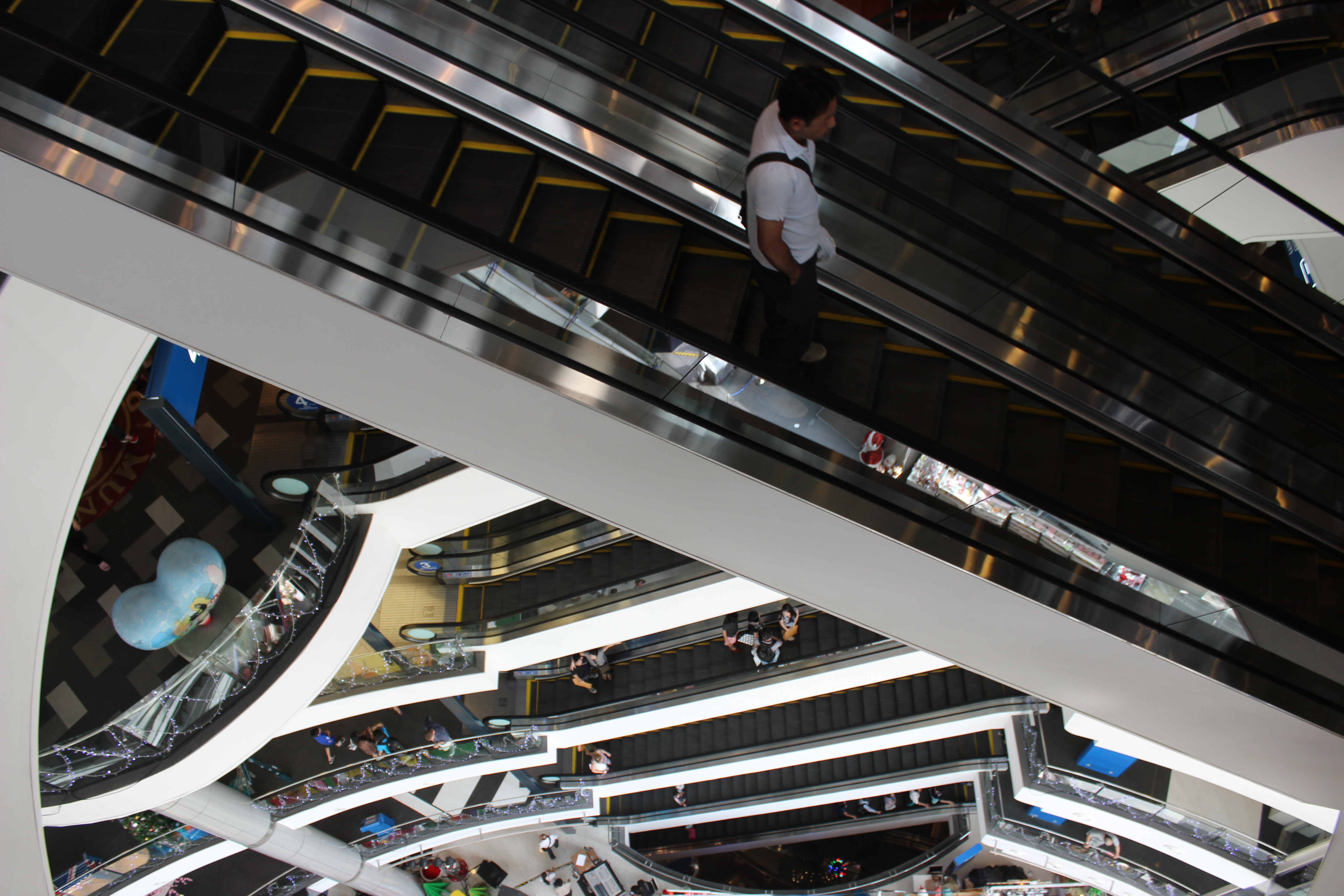
    IMG_0258Would that this were but the latest manifestation of many cycles of rebirth, each if only slightly better than the last, so that I could know that things were improving, if only gradually, if only incrementally, but in the right direction, something to indicate the ascent of man, not the descent, and maybe more in the manner of smiling Teilhard than grumpy Darwin, for then I could take solace in that fact and be happy…

    But I can see nothing of the sort, I limited to these eyes, and this life, in this world, the only one I know, though there may be others out there somewhere, but I know them not. I only know that this is not the pure land of prophecy, we sentenced here to gravity, and suffering, because the pure land of prophecy is surely one of the purest white light, these spectral colors of the most seductive hues begging me to come down to their world of solidity, to get down and dirty with sounds, phenomena, percussion and repercussions… (More …)

     
    • Dave Kingsbury's avatar

      Dave Kingsbury 3:32 pm on July 2, 2018 Permalink | Reply

      This seeks to burst the limitations with a very effective experimental edge, Hardie. At the same time, down to earth …

    • hardie karges's avatar

      hardie karges 4:52 am on July 3, 2018 Permalink | Reply

      Thanx for the vote of confidence, Dave. Experiment is risky but necessary, for me at least, to clear out the cobwebs that clog consciousness. Sometimes I feel I’ve sacrificed my life to it, though, not sure if it’s for better or worse, haha…

  • Unknown's avatar

    hardie karges 7:38 am on May 13, 2018 Permalink | Reply
    Tags: , Buddhist Studies, , , , , , , , samsara, , , , ,   

    Buddhist Studies: lists of lists, definitions defined and translations translated… 

    img_2116If there’s anything more annoying, as a Buddhist Studies MA student, than having to memorize lists of lists after lists full of lists from the annals of the ancients, it’s having to plow through the re-definitions of all those terms from the mouths of the moderns (is ‘anals’ a word?). This is not high scholarship. This is the business of busy-work, the intellectual equivalent of keeping that shovel moving to justify your union job, or to keep your position as the arbiter of privilege in the fan-boy chat-pages of Facebook…
    Yet that’s what they all do, in the Western Lands, at least, and even in the temples, too, as if only one new definition ‘changes everything’, so that the Pali/Sanskrit word ‘dukkha‘ is no longer merely ‘suffering’ but ‘stress’, ‘anguish, ‘dissatisfaction’, or maybe even just ‘a spot of unpleasantness’ so easily resolved by following that Yellow Brick Road known as the 8FP, Eight-fold Path, when the reality is not so easy at all… (More …)

     
  • Unknown's avatar

    hardie karges 7:51 am on March 10, 2018 Permalink | Reply
    Tags: , , , , , samsara   

    Buddhism and Christianity: Homelessness as Renunciation? 

    IMG_2234Despite the quick conclusions of some Western sympathizers, there is nothing more opposed in this world than the modern doctrines of Buddhism and Christianity. Sure they both want you to be good and do good, but beyond that the ways and means are almost exactly the opposite. Christianity plays offense. Buddhism plays defense. Christianity is a religion of action. Buddhism is a religion of renunciation. Christianity is a religion of passion. Buddhism is a religion of dis-passion…

    Originally, though, that word ‘passion’, in Latin, meant ‘suffering’, and so at that point, they indeed did have something in common, the bond of suffering, and the bond of enlightened transcendence, through the experience, and hopefully release, from suffering. Since then, they’ve largely gone separate ways, through the vagaries of circumstance, cultural and otherwise. So that today, the Western Christian ideal would be to achieve eternal life, this life. The Buddhist ideal is to escape ‘the wheel’ entirely… (More …)

     
c
Compose new post
j
Next post/Next comment
k
Previous post/Previous comment
r
Reply
e
Edit
o
Show/Hide comments
t
Go to top
l
Go to login
h
Show/Hide help
shift + esc
Cancel