


Buddhism and Language: the curse of narratives…
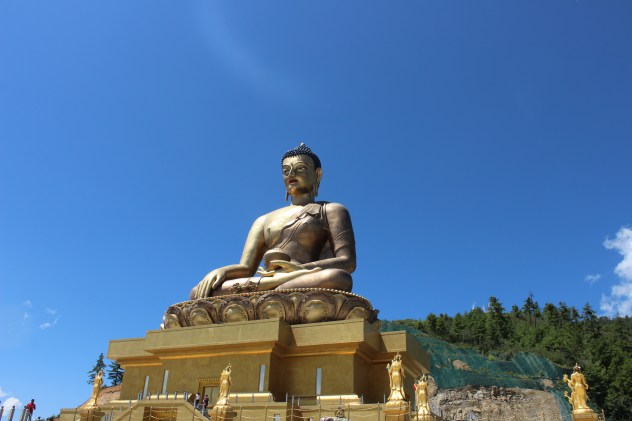 Though not often heralded as such, language is arguably the world’s greatest invention, and I think that, like most inventions, it might have a limited lifespan of prime utility, and it’s a very arguable point that the world just might be better off without it. I don’t arrive at this conclusion lightly, given that fact that I love language with all my heart and all my soul, but if it’s outlived its usefulness, then it just might need to be put out to pasture (and there just might be something better)…
Of course, whether people would be willing to do this is debatable, but still, it’s probably worth having the discussion, just to make the point, if nothing else. And the point is that many of the world’s problems are verbal. A policeman gives an order, and you are supposed to obey, immediately and without question. Otherwise they’ll shoot you, in America, at least, no matter that you’re deaf or not an English speaker. That’s not their fault. And, of course it’s not the language’s fault, either, for the bad intentions of its major malefactors. But still one of its main functions is aggression, to be sure, e.g. ‘the pen is mightier than the sword’… (More …)
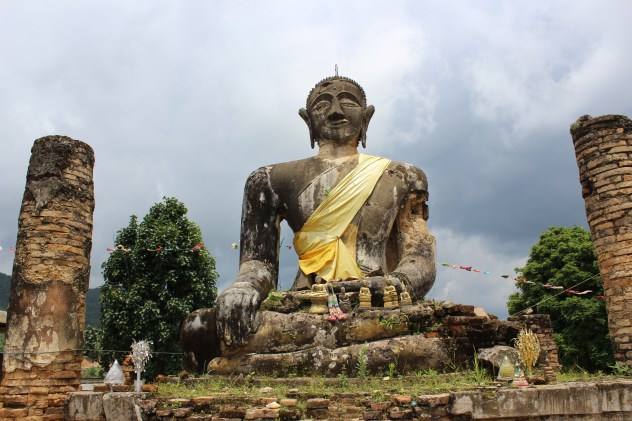 The Buddhist doctrine of shunyata is one of its most famous, and the one that put Mahayana Buddhism on the map, a full step beyond what was envisioned with the original teachings of the Buddha, yet well within that purview. It is usually translated as ’emptiness’ or ‘voidness’, though I prefer ‘zero-ness’, in recognition of the fact that the word ‘shunya’ or ‘sunya’ literally means just that, zero, and in the modern standard language of every Theravada Buddhist country today, still means just that, or a derivation thereof…


 The opposite of death, of course, whatever that is, no more no less, the two like dancing partners choreographed to perfection, or life partners resigned to the fact. There is no other option, no matter how much the creators of cryogenics would wish it, or however much the authors of science fiction might fantasize. You can only delay the inevitable; every doctor will admit that, but still we spend every last cent to prolong our lives another minute or two for the sake of science, for the sake of the impenetrable sadness…
 Okay, so I admit it: I’m going through a crisis of confidence with my newfound love of Buddhism, and all that entails. The devil is in the details, of course, as even the ever-tricky Buddha himself well knew, just like Jesus after him, that you pick and choose what to tell the initiates and laypeople at any one time, subject to their capacity to comprehend, assimilate, or even fathom, concepts which may just be a bit difficult to swallow at first, or maybe forever…
 streaming consciousness...
Reply