Tagged: Buddhism Toggle Comment Threads | Keyboard Shortcuts

  • Unknown's avatar

    hardie karges 8:14 am on April 30, 2023 Permalink | Reply
    Tags: Buddhism, , , , Huineng, , , ,   

    Buddhist Imperfection and the Crazy Wisdom of Zen  

    The Buddha never said we’re all perfect, quite the opposite. He said that we are nothing but ‘heaps’ of causes and conditions that he called skandhas. He never even said that he’s perfect. And those imperfections can be the basis for positive change. He DID list change as one of the causes of our suffering, but significantly less than that of the First Noble Truth—craving. Maybe that’s not surprising, from someone who was born into the lap of luxury, since change for someone of destitute poverty might only be for the better.  

    But that’s arguable, also, so let’s just split the difference and apply the Buddha’s own Middle Path to conclude that change can go either way, good or bad, which is convenient, since it’s inevitable. The point is that, in its origins, imperfection is at the heart of the Buddha’s vision, though the Zen sect of the Mahayana school would, like some Christian sects (such as Christian Science), reverse that position and argue that manifesting our innate perfection is only right and proper. 

    They also said that if you meet the Buddha on the road, then you should kill him. Hmmm. Obviously, there’s a logical explanation to that apparent exhortation to violence, but I won’t go into it. I’ll only say that I prefer a simpler approach to enlightenment. The Zen thing is to show the limits and traps of language, and I agree whole-heartedly with that, but I don’t necessarily agree to a Dadaist approach to it. One of the Christian sideline precepts is to say what you mean and mean what you say, (“Let your yes be yes and your no be no”), and they just might have that right. 

    No, I don’t think that anyone has all the answers, and it is to Buddhism’s credit that so much dialogue is allowed, and even encouraged, which promotes a larger dialectic. In fact, this is how the Zen master Hui-Neng upstaged the heir apparent to replace the current master, to whom he was only a rank (in)subordinate. Thus began the line of thought that we are not here to train our minds but to acknowledge the illusion of reality, so something like an alternative Mayanist (haha) school, which thrives to this day as subplot to many more orthodox traditions. We are not perfect, but this is why we practice… 

     
  • Unknown's avatar

    hardie karges 10:42 am on April 22, 2023 Permalink | Reply
    Tags: Buddhism, , , , Mark Epstein, , Roman numerals, , ,   

    Samma Vaca: Right Speech on the Buddhist Middle Path  

    This is something so difficult for so many people that often no speech is better. Because Buddhism didn’t start the old ‘Silence is Golden’ saying, but it probably could have. Because it’s such a valuable tool in the workshop of life that its effect is invaluable. I think that it can easily be seen as the sonic equivalent of Emptiness for Buddhist purposes, that same shunyata Emptiness derived from the Pali/Sanskrit shunya zero (yes, THAT zero), which is not really a number, but a concept, and which largely expanded the original anatman no-self doctrine to everything. 

    But, if easy convenient symbols for that powerful metaphor are hard to find, then silence is one of the easiest, maybe even easier than the eponymous shunya itself, i.e. zero. Because number systems did just fine for many years without the place holder and multiplier that we call ‘zero’ in the English language. And, despite some interpretations that it’s necessary for a decimal system, well, in fact, it is not, and our own (!?) Roman numerals are the proof of that, easily countable up to about 5000, and not so hard to write as V. But you wouldn’t want to see 4999. 

    And, so it is with speech. Sometimes less is more, not just figuratively, but literally, and numerically. Because, if the zero allows easy multiplication, with possibilities of infinity, then silence can do the same. Until I say something, then anything is possible, and the future is wide open. But once I commit to speech, and language, then its reach is definite, certain, limited—and past tense. But what is ‘right speech’? After all, we can’t be silent ALL the time. What everybody wants in life, whether they know it or not, is to feel good.  

    So, in brief, right speech is speech that makes you feel good, though not just you, but all the other people within hearing range, or in the case of written speech, then all potential readers. But that’s easier said than done. Because ours is a world of fierce differences and often acrimonious debate, even when the potential results are more futile than feudal. Still, we persist in advancing our agendas. Silence allows time and space to see the other side. But, if you must speak, then say nice things, constructive and conciliatory. And think good thoughts. That’s two steps of the Buddhist Middle Path right there. You’re halfway home. 

    Author’s note: just after writing this, I discovered a passage in Mark Epstein’s ‘Thoughts Without a Thinker’ that resonates in total agreement, in the section called ‘Holding Emotions’: “The Buddha taught a method of holding thoughts, feelings, and sensations in the balance of meditative equipoise so that they can be seen in a clear light.” Nice, couldn’t have said it better myself. Enjoy. 

     
  • Unknown's avatar

    hardie karges 8:16 am on March 11, 2023 Permalink | Reply
    Tags: Buddhism, , , , , , , , , Kramer, , , Passion of Christ, , , ,   

    The Passion and Dispassion of Buddhism…  

    Buddhism in Sri Lanka

    There is no worse slavery than the slavery to your passion(s). And that’s a tough pill to swallow, because we tend to think of our passions as our pleasures, as though it’s only natural to be obsessed and conflicted. It’s not. But that shows the path that western culture has taken, in which our passions, which once meant ‘suffering,’ now are the focal point of our lives, and full of positive connotations—even if it kills us. So, with the ‘passion of Christ’ fully articulated as his suffering, in defeat, with no victory implied or intended, then Buddhism and Christianity are not so far apart, at least not superficially, at least not originally.  

    For both see suffering as seminal. The differences only become apparent when we realize that Christianity and the West make of suffering (i.e. passion) something to be encouraged, and sought, not something to be avoided and mitigated, as in Buddhism. The examples are many: samsara, for instance. This is a word that in the time of Buddha meant, and still means (in modern Nepali), ‘the world.’ And the Buddhists made something distinctly negative of that term, it now symbolizing the drudgery and misery of incessant rebirths. But most westerners, and especially Christians, are famous for their (our) ‘love of life’ and the world, too, of course.

    So, is the Christian belief in (and desire for) some sort of ‘eternal life’ really any different from the Buddhist rebirth? Only in that one is desired and the other abhorred, it would seem. So, if it’s not surprising that Buddhism and Christianity spring from similar roots, given their shared Indo-European proto-language and homeland, it IS a bit surprising that they’ve diverged so far from that initial starting point, and in apparently opposite directions. What would cause that? Good question. There would seem to be nothing in the physical landscape to explain the divergence, though the cultures encountered, and conquered (Indo-Europeans didn’t lose too many wars, except among themselves), differ quite radically.

    Considering that they went both ways from the Yamnaya Horizon’s original Pontic steppes, West and East, to Europe and north India, respectively, they would have encountered light-skinned ‘old Europeans’ on the one hand, and dark-skinned Indus Valley people on the other. That’s the biggest difference between the two groups right there, and may be significant, with respect to the caste system and perhaps more. But my own pet theory is that West and East were mostly playing out a dialectic of ideas, that likely dates back to 4000-3000BCE around lively campfires on high steppes and with spirited discussions.

    In this theory that dialectic is still being played out today, albeit in more ways than could ever have been imagined in the years BCE. The important thing is to not become a slave to your passions, though, even when you enjoy them, or when they cause you suffering. I’m reminded of Kramer’s statement to the ‘Soup Nazi’ in the old Seinfeld TV show: “You suffer for your art.” Touche’. Freedom FROM is the important thing in life after all, even more than freedom TO. Does it really matter whether you get the espresso or tamarind flavored ice cream today? Enjoy… 

     
  • Unknown's avatar

    hardie karges 9:19 am on February 26, 2023 Permalink | Reply
    Tags: Buddhism, , , , , , ,   

    Buddhism and the Case for a Monkhood… 

    Some people think that there is something mystical or magical about monks chanting, in this case the Buddhist scriptures. But really it started as a way to memorize sutras that were not written for 500 years. And this is interesting in a few different ways and for a few different reasons. Firstly, it speaks to the issue of whether the Buddha actually said the things that are attributed to him. After all, if it wasn’t initially written, then how can we be sure? To which I would quickly add: even if it were written, how could you be sure that the Buddha actually said it? Ever heard of ‘fake news’? 

    The fact is that, given the times and the circumstances, memorization was a perfectly acceptable way of recording documents, which is the ultimate goal, after all, since nothing was being prepared for print, only some poorly defined remote abstract history, and of which only time itself would later determine the parameters. And if memorization is acceptable, or even superior, to easily stainable documents, then certainly a large group of literate and disciplined monks would be the perfect way to do it, meeting regularly to iron out any differences in the accurate transmission of such important information. 

    Secondly, it shows that not only were monks charged with a task of utmost importance, but that it was rigorous and highly demanding, thus giving the lie to the idea that monks were always intended to be ‘kept’ as pure and pristine specimens, virgins to the world and unashamed of it. No, they had a job. And lastly, it speaks to the notion of whether the Buddha himself even existed in this life in this world. Conspiracy theorists love nothing so much as to recreate history to their predilections and post-election dictates. 

    But, obviously, if monks have been chanting the same words in an unbroken line of descent from the original 2500 years ago, then that is proof, in and of itself. Yes, there were some breaks here and there, but those were rigorously mitigated, such that though Thailand received the original dharma from Sri Lanka, when things went awry there, the renaissance dharma went back to Thailand to make sure that they had it right. This is serious stuff.  

    But I like the sound of monks chanting, also, and even credit the sound of that on my ears in Mongolia in 2013 as an impetus to my impending initiative towards Buddhism. While listening, it felt like something Matrix-like moved, and ultimately that would be me. Still there is a larger issue of why writing was eschewed for so long when it was obviously the wave of the future, but that probably says more about India itself than Buddhism. Conservatism is not always a bad thing in uncertain times. Buddhism was all about discipline and training long before anything else, so more like kung fu than koans… 

     
    • Quantum Preceptor's avatar

      quantumpreceptor 12:42 pm on February 28, 2023 Permalink | Reply

      Well said Hardy. Being a monk is not easy now was mit easy then and will not be in the future. Memorizing the teachings is a gift that when passed on only expands the blessing. I love your writing keep it up!

      QP

    • hardie karges's avatar

      hardie karges 8:15 pm on February 28, 2023 Permalink | Reply

      Thank you!

    • gederedita's avatar

      gederedita 12:08 am on March 2, 2023 Permalink | Reply

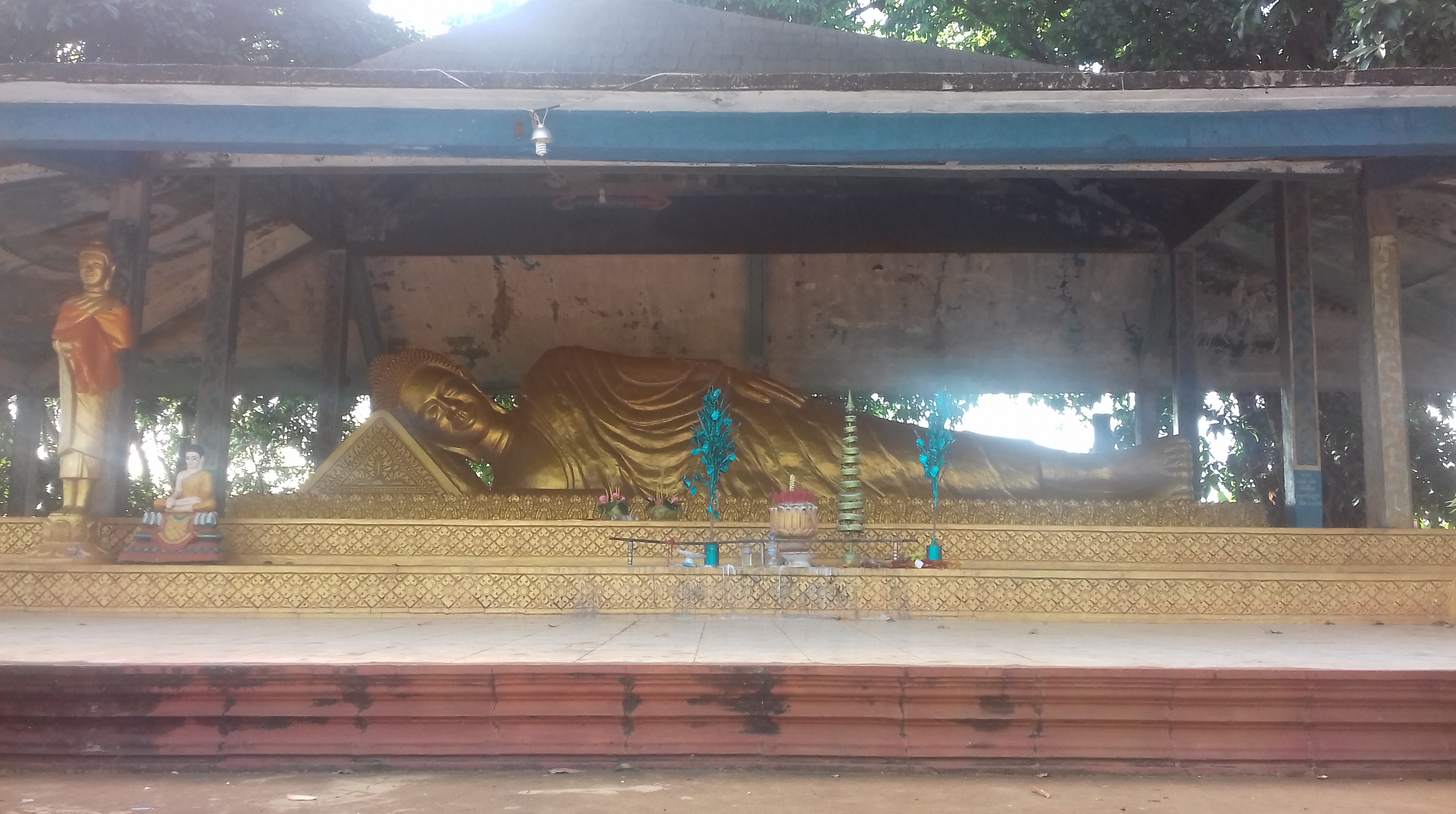
      I just know this temple from this blog. Iseen from the film but i dont know di temple located. I am lucky to find your blog, Hardie karges.

      • hardie karges's avatar

        hardie karges 5:33 am on March 2, 2023 Permalink | Reply

        This temple is in Bhutan, near the town of Paro. It’s usually called the ‘Tiger’s Nest.’ Thanks for your comment.

  • Unknown's avatar

    hardie karges 10:24 am on February 5, 2023 Permalink | Reply
    Tags: , Buddhism, , , , Graeber, , John Locke, Kadiaronk, , , , , Wengrow   

    Buddhism, Craving, and the Path to Enlightenment… 

    When you realize that you and your cravings are the cause of most of your problems, then you are on the path to enlightenment. And that’s the Second Noble Truth, more or less, so fundamental to the practice of Buddhism. After all, most Buddhists worldwide don’t meditate, and many physically can’t, but anyone can train their mind. That’s the heart of the Buddha’s original message, not rebirth, past lives, or even emptiness. Control yourself, and not only will the world be a better place, but you will be a better person.

    But there’s that ugly word ‘control’ again, the same word and concept which cause so much consternation among us Westerners for whom freedom is sacrosanct, and for whom control is the enemy. And that may be fine for the wide-open skies of Montana, but that might not work in all situations. Because, like it or not (I don’t especially like it), the world is becoming a crowded place, and the paradigms of a previous era may not all be appropriate now.

    Whether we take our cues from John Locke or the now-famous Native American scholar Kadiaronk, immortalized in The Dawn of Everything, by Wengrow and Graeber, the result is the same: a freedom is best understood by its limits—by definition. Most importantly, though, is the difference between self-control and control of others. This is where politics meets philosophy, and we find our place in the universe. Then there’s also that word ‘enlightenment’ again, which implies a duality between darkness and light despite any objective standard of reference.

    And that’s the word often revered to the same extent that control is reviled, but not always. Because words themselves can be as dangerous as their deliverance, and seldom do they live up to our expectations. But once they became our operating system, then so it will be until we find something better. Because, ultimately, language is just the interface, and there are more important things to be accomplished. When you realize that your worst curse just might be your greatest blessing, then you are on the path to enlightenment…

     
  • Unknown's avatar

    hardie karges 10:36 am on January 28, 2023 Permalink | Reply
    Tags: , Buddhism, Eskimo, , Greenland, , , , , Scandinaian   

    Buddhism 202: Defeating Ignorance, Fear, Hatred, and Anger… 

    Hatred and fear chase each other around the room like cats and dogs that never slept together as newborns on cold nights. Because fear is the primal emotion, even if anger usually takes the rap. You can have a commandment, “Don’t get angry!” But you can’t have a commandment, “Don’t be scared!” Or it wouldn’t make any sense if you did, simply because life doesn’t work that way. Fear is a primal reality, just like suffering. You can’t just command it to go away. And hatred usually expresses itself as anger. It’s almost like Dependent Origination.

    Because the reality that’s immediately prior to fear in ordinary consciousness is probably ignorance, since most fear is based on ignorance, just like cats and dogs that see a difference between them and assume that there’s danger, or because they were taught that way, when in fact there is only fear and ignorance. But the newborn puppy and kitty have no such luxury. They only know that it is cold, and an extra body will deliver warmth, right when and where it is needed. I learned this from direct experience in my own house in a country with no heaters and two pets that hadn’t yet learned to fear each other.

    So, there is primal knowledge, also, and that knowledge will tell you that in a desperate situation, you cling to each other, not stubborn ignorant outdated concepts. The Scandinavians in Greenland learned that lesson the hard way, dying out on the island they ‘discovered,’ rather than ask help from the Eskimos a couple hundred kilometers to the north, who were masters of that environment. You can call it racism, or you can call it fear or ignorance, but the result is the same—defeat.  But society can’t legislate primal fears.

    Society can only legislate actions, and behavior. So, if anger and hatred are among the ‘poisons’ of Buddhism, then the best cure is not only self-control, but release from the ignorance that is primal cause. If I hate someone because they are a different ‘race,’ then I should certainly exercise self-control, so as not to exhibit anger, but even better, much better, is to work on the root cause of both that hatred and anger, the fear and ignorance that is underlying. The best way to do that is to become friends. Try it. It’s called kindness. It’s contagious…

     
  • Unknown's avatar

    hardie karges 9:41 am on January 22, 2023 Permalink | Reply
    Tags: , Buddhism, , grasping, , , ,   

    Buddhism in the Bardo: Don’t Forget to Laugh… 

    Sometimes the best antidote to fear is humor, even laughter, the more the better. The proof is in the performance. And it’s contagious. That’s about as Zen-like koanic or as Vajrayana-like superstitious as I can get, not that I feel any need to give equal time to those later schools of Buddhism, but because it works, and whether the Buddha ever said something similar or not, I’m not certain, but I’m sure that he’d agree.

    Because the Buddha was a rational man, and that was a radical thing at the time, though many would prefer the latent ‘non-dualism’ inherent in Buddhism, even though that was hardly the Buddha’s central message. The central message was to reduce suffering, not by going on a shopping spree, but by removing the causes of suffering: grasping and craving, mostly. He also had impermanence on that list, as if all change is bad, but I’d probably prefer a more modern approach to that. Some change is good.

    But I see a subtle message about fear in the Buddha’s teachings, and I think that it’s important to make the implicit more explicit. Because fear is one of the horrors of modern life, since we have been so distant from it for a generation or two, and because it looms so largely on the horizon. Because we’ve become very attached, even addicted, to our lives, which more than a few Buddhist monks have pointed out, and to which I’ve often taken some offense to, but which may just be correct, after all.

    Because, even if the goal is to reduce suffering, the next question is always: at what cost? We certainly don’t expect a woman to submit to a rapist, just to avoid a bruise or two. Most suffering is mental, after all, and submission to fear is certainly not always the answer to it. Fortunately, there is usually a sweet spot between two equally unacceptable alternatives, and that is the goal of Buddhism, to find that middle path. It’s a process, after all, not dogma. Don’t forget to smile. Don’t forget to laugh. Sometimes the best antidote is an anecdote…

     
  • Unknown's avatar

    hardie karges 10:48 am on January 15, 2023 Permalink | Reply
    Tags: Brahmin caste, Buddhism, , , , , , Hittite, , , Mittani, , , ,   

    Buddhism 101: Right Thoughts, Right Words, Right Actions 

    Think good thoughts, speak good words, perform good acts. It’s contagious. It’s catching. It can make the difference between life and death. And that’s the bedrock of Buddhism, regardless of what the ‘rebirther’ Buddhists or the meditator Buddhists think, they tending to Vajrayana and Mahayanist persuasions, respectively, whether they know it or not, haha. Because the Buddha didn’t call his initial sermon the Four Noble Truths for nothing, and that’s Number One: Right Thoughts, Right Words, Right Actions…

    And if that sounds a lot like a song by Franz Ferdinand, then so be it. And if that sounds a lot like the Ten Commandments, then so be it. It’s simple. It’s basic. It’s universal, as it should be. Now I won’t go into the fact that Four Noble Truths can also be translated Four Aryan Truths, but there may be a clue to its universality there. Hittites of Mideast fame were also Indo-Europeans and may have accomplished much more than merely be a thorn in the side of the Semites. The nearby Mittani culture also had close connections with Sanskrit speakers…

    But that’s neither here nor there, and only serves to agitate modern India’s Brahmin caste. What’s important is not nationalism, but rationalism, the kind that thinks before it speaks and looks before it leaps. That was implicit in the earliest Buddhism, also, with its insistence upon the acknowledgement of causes and conditions for all the phenomena of the world, not superstition or divine intervention. And that’s Dependent Origination in a nutshell, a theory that not only defines us, but combines us. We’re all in this together, literally. Be kind.

     
  • Unknown's avatar

    hardie karges 10:58 am on January 7, 2023 Permalink | Reply
    Tags: Buddhism, , , , , , , , ,   

    Buddhist Emptiness and the Path to Infinity… 

    Christians cling to abundance the way that Mahayana Buddhists cling to Emptiness. The truth probably lies somewhere in between. So, the appearance of exact conceptual opposition may be more apparent than real. Or maybe I’m obsessed with the reconciliation of these two opposites. The short story on Buddhist shunyata, i.e. ‘Emptiness’ (maybe not the best translation), is that it’s a logical conclusion to the previous early Buddhist insistence on anatta, i.e. ‘non-self’, in which not only is a permanent non-changing self not real, but in fact nothing is now real, not in the sense of something permanent.

    The problem is that the next logical conclusion to the previous logical conclusion is the very illogical conclusion that nothing is real in any sense, which is likely far from what the Buddha intended, thus leading to Zen, non-dualism, and other ersatz religions perfect for artists, intellectuals, and other spiritual seekers for whom simple silent meditation will never be enough. And I mean no insult to them, for whom I hold much sympathy and synchronicity, only that such lofty metaphysics are best for debates and dialectics, not for universal belief systems that might change the course of civilization.

    And to do that we’ll need to somehow reconcile the apparent opposites of West and East, Christianity and Buddhism. Emptiness might help here. For Christians are as obsessed with Infinity and Eternity (read ‘no limits’) as they are with abundance, an obvious similarity. You want infinity? Want eternity? Want a world without limits? No problem, it’s all around you. There’s only one problem: it’s empty. If you want stuff, then restrictions apply. Now if we can only sell Christians on the concept of conceptual abundance, not physical stuff, then we might have something. Stay tuned…

     
  • Unknown's avatar

    hardie karges 10:41 am on January 1, 2023 Permalink | Reply
    Tags: Buddhism, by-passing, , , hungry ghost, , observer effect, , , , ,   

    Buddhism and the Observer Effect… 

    The one who can control himself, can control the world—his world…

    The more you look for the beauty in this world, the more that you will find. Which, if that sounds self-intuitive, is certainly worth a reiteration, and possibly, a fresh new look. Because, the danger is to take this intuitive truth to its illogical conclusion, and thereby decide that nothing truly exists. This is what the ‘non-dualists’ and even some Buddhists do, and in making a conundrum of existence, essentially make it non-workable, in that nothing gets done, simply because there is no longer any reason to do it…

    The subjective nature of perception is obvious and its contribution to our further conceptions of reality well-documented in the ‘observer effect,’ which makes a mockery of measurement, and, in return, our reliance on science. But does that mean that all Science is unreliable? No, of course not. Does that mean that there is no objective truth? Not necessarily. Does that mean that ‘Buddhism is True?’ Haha, silly book title…

    The cognitive bias of our own subjectivity is itself measurable and can usually be factored into any equation that lends itself to a margin for error. And, considering that the effect shows up in physics, psychology, and even sociology, its impact is notable. That is, like gravity, it can not only bring us down, haha, but it can bend and distort the very nature of our existence. But, what does this have to do with Buddhism?

    Buddhism, especially in its earliest days, long before Emptiness and Zen and Hungry Ghosts, was known mostly for its training of the mind, for the simple purpose of taking a sad situation and making it better, simply by readjusting the usual reactions. And, while this can subject Buddhism to charges of ‘bypassing’ and passivity, it can also have good results to great effect. Regardless, the important point is to balance this with empirical objective information for best results. The world tends to look best at sunrise and sunset, as every photographer knows, wink wink, something about the nature of light and our need for it. Happy New Year!

     
c
Compose new post
j
Next post/Next comment
k
Previous post/Previous comment
r
Reply
e
Edit
o
Show/Hide comments
t
Go to top
l
Go to login
h
Show/Hide help
shift + esc
Cancel