Tagged: logic Toggle Comment Threads | Keyboard Shortcuts

  • Unknown's avatar

    hardie karges 4:31 am on July 27, 2025 Permalink | Reply
    Tags: , , , , , logic, , , , ,   

    Buddhism on the Installment Plan (with Quick Easy Payments) 

    If Science conquers Death, then Buddhism may be out of work, but I doubt it. Because, for all the rap about Buddhism being pessimistic, the truth is that it’s not; it’s realistic. Now, that may contrast sharply with the goo-goo eyed optimism of Sunday School Christianity (any denomination) and their doctrines of eternal life and passionate love, but it’s only being realistic—and rational. You’re going to die. Get over it. For an adult, that’s the starting point of any life equation. You’ve got x amount of years to produce y amount of children and z amount of money, so you better get started, because time’s wasting.

    Or not. Buddhism always allows for negation in any of its tetralemma style catuhskoti logic, so, if that’s negative, by definition, then so be it. Negation is often the only certainty, just as Emptiness is often the only Eternity. And that is why Buddhism is so often defined by its meditation, which is essentially doing nothing—creatively, watching thoughts come and go while breath counts the time and plays rhythm. But it’s only a partial renunciation, unlike the Jains’ total immersion, from which they seldom emerge. That’s the Middle Path, neither total leisure nor lack, buffet nor snack.

    Buddhism is so ‘right’ simply because it’s so simple. Avoid extremes and be nice; seek friends. Because that’s the heart of Buddhist ‘love’, metta, friendship. Ex-Christians try to soup it up by invoking ‘lovingkindness’, with Mary and babe at the breast, but really, it’s just friendship, non-possessive and cool, not hot, male or female, jewelry or not. Feel free to try it at home. It’s non-toxic. Or form a group. Some call it sangha. Others call it family. And don’t forget to wash your karma.

     
  • Unknown's avatar

    hardie karges 4:38 am on May 4, 2025 Permalink | Reply
    Tags: advaita, , , , , , logic, , ,   

    Buddhism on the Installment Plan: Samma Advaita? Coming Soon… 

    There should be no quarrel between science and religion, or philosophy and physics, because truth is an evolving body of knowledge. But there is, and it can occupy a lot of space in that wide hopefully open field called consciousness. And if ‘dualism’ is looking for some extra work on tricky subjects, then the opposites of mind and body, or matter, is not a bad place to start. Because that is the core dichotomy which underlies them all, usually, to the point that a convenient synthesis is really not possible.

    If there were an easy synthesis to override the apparent duality, then it would be a simple dialectic. That’s easy with adjectives, but not so easy with nouns. So, the better alternative is often to define the space, so that each can exist in its own sphere of influence. Physics by definition deals with a material conception of reality, and so philosophy should respect that field of knowledge, since nothing can be proven beyond a shadow of a doubt.

    Thus, there is no true metaphysical certainty, because it presupposes an inquiry which is logically misplaced. Philosophy is better off with ethics and logic and anything ese for which certainties are possible. Likewise with science and religion. Science is a method of proof. Religion is not, and more often than not is defined by acts of devotion. That’s not Science, so it’s best to ask questions pertinent to each of the two disciplines. Right non-duality to go with right views and right action? We’re working on it…

     
  • Unknown's avatar

    hardie karges 3:57 am on December 17, 2023 Permalink | Reply
    Tags: , , , , logic, , , patanjali, , , , ,   

    Buddhism: Silence is Better than Language…  

    You can say ‘namaste’ all day and prove little. You can say nothing and prove much. Or you can sit in samadhi all day and prove everything, ‘samadhi’ being that meditative state of total absorption, in which the threads of language are locked out at the gates without credentials for entry. Because language is that element of mental activity tainted with the brush of corruption, duality at its most obvious, subjects verbing adjectivized objects so adverbially that prepositions threaten to revolt and assume post-positions, conjunctions just looking for somewhere to put an ‘and,’ ‘but’ only ‘if’ conditions can be avoided, so tenses only indicative, nothing subjunctive allowed. 

    All of which is to say that there’s more to life than language, OR logic, and often it’s even positively negative, if you care to find some meditative transcendence for even a moment in this increasingly noisy world or ours, crowded and clusterf*cked almost beyond recognition of the sublime Nature that it once was, notwithstanding the sporadic violence inherent to that same Nature.  

    Language is a double-edged sword. On one hand, it allowed homo sapiens to subdue, or outdo, all its competitors in the competition for the low-hanging fruit of life, those skills allowing multiple individuals to act as one for the purpose of being ‘firstest with the mostest,’ skills indispensable for survival when life is on the line and food is not yet on the table. This can be proven conclusively with the timelines of our competitors’ mutual demise in the face of sapiens’ overwhelming superiority. 

    On a more practical day-to-day basis, it’s simply an easy recipe for mindfulness, antidote for the common complaint of ‘monkey mind,’ during which our minds are so possessed of internal chatter that it’s virtually impossible to think properly, much less achieve some level of ‘calm abiding,’ i.e. samatha. So, ironically, the very thing that is our military strength is our existential downfall—unless we can control it. This is the unique sapiens challenge to zoological superiority and key to the future ascendance of our species—or not. Thus, Buddhist practice is more than an individual accomplishment; it’s truly intrinsic to our survival. 

     
  • Unknown's avatar

    hardie karges 10:25 am on July 24, 2022 Permalink | Reply
    Tags: , Brahmanists, , , , , logic, , ,   

    Buddhism is a World of Feeling, Thoughts Optional 

    Be kind to humans and other sentient beings, even when they are obnoxious, egotistic, pompous, and overbearing. And this is a tough row to hoe in the age of social media, I know, but that makes it even more important, doesn’t it? I think so. Because the pressure in this social media age for anyone who wants to be an ‘influencer,’ is to crack wise first, and smooth hard feelings later, if ever. But that’s not the correct order of things, I don’t think, not these days or ever.

    Because we are all ‘influencers,’ to some extent or other, but if we’re all sticking our egos in everyone’s faces all the time, then who is left to bear witness? So, we all have a stake in this game, regardless of whether we’re professional or not, because those lines are becoming blurred—at best. This is nothing if not a world of feeling, and I think that’s how Buddhism best makes sense. Because there was no world of reason back then, much less science, even if the Buddha was aware of the power of reason and tried to incorporate it into his practice.

    But reason at its best requires inscrutable logic, and the Indian tetralemma, in Greek, or catuhskoti, in Sanskrit, was far from perfect, and violated the Law of the Excluded Middle of Aristotelian logic, more familiar to our Western thought. But the Indian choices of ‘This,’ ‘That,’ ‘All of the above’ or ‘None of the above’ might ironically have led to the Buddha’s famous Middle Path, which Greek logic only approached with a roundabout dialectical synthesis that came much later.

    There’s more to life than logic, though, of course, and a close examination shows a classical Indian world-view heavily based on feeling and introspection, the deeper the better for the really big questions. That’s the world that the Buddha was raised in, and that was his method by trade, as prophet to the ages. When in doubt, think it out. Though many modern non-dualists may deny that the Buddha ever really intended anything, much less own his thoughts, I think it’s safe to say that he certainly did.

    If the Buddha’s thoughts had had no thinker, then I doubt we’d have Four Noble Truths and twice that number of folds and twists to our middle path of salvation, as defined by the cessation of suffering, at least partially, if never quite total. In every case, too, it’s a world of feeling and perception that is described, defined by name and form, and articulated by consciousness. The Brahmins and Brahmanists saw a world of Cosmic self in union with Brahma. The Buddha begged to differ. That’s the world he lived in, and that’s the world that he bequeathed to us.

     
  • Unknown's avatar

    hardie karges 10:23 am on June 13, 2021 Permalink | Reply
    Tags: beauty, , , , , logic, , , , , truth   

    Buddhism in the Facebook Era: Truth Falls Flat in the Face of Entertainment 

    I’ve often said that the ultimate quest in a human’s life—my life—is for truth, beauty and goodness, with the implication being that this is the proper field of inquiry for religion and philosophy. But is that what really happens? Beauty isn’t so hard nor controversial, since we tend to all have similar views on what inspires feelings of beauty, if not art, within us, and not dissimilar to the quick and easy Internet definition on MS Bing: “a combination of qualities, such as shape, color, or form, that pleases the aesthetic senses, especially the sight.”

    That sounds about right, now, doesn’t it? And even more so when slightly modified to allow that this combination of qualities might also “please the intellect or moral sense.” Cool. Sounds good to me. I think that we can all agree on that. And the concept of goodness dovetails nicely into that concept of beauty, such that it almost serves the chief purpose of clarifying exactly what we mean when we talk about goodness or simply ‘the good.’ And that’s exactly what the ancient Greek philosophers talked about, they who basically invented the term ‘philosophy,’ and for whom the definition of ‘goodness’ was something like: “you’ll know it when you see it.”

    (More …)
     
  • Unknown's avatar

    hardie karges 11:16 am on July 7, 2019 Permalink | Reply
    Tags: , , , , , logic,   

    Buddhism, Mental Formations, and Defilements of the Heart and Logic… 

    Who says you can’t go home again? Home is a warm place in your heart, and mind. And if that’s a ‘mental formation’ as is often said in Buddhism, then that’s not such a bad one, but I’m not sure. I’ve studied Buddhism for several years now and I’m still not certain of the proper translation for the Pali/Sanskrit words sankhara/samskara that usually gets translated as the rather cryptic ‘mental formations’. But I do know that when Ajahn Chah, the great Thai forest master, used the term ‘arom’ อารมณ์ , which in normal speech means ‘feeling, emotion’, the translator rendered it as ‘mental formation’, so I figure that’s a valuable clue, notwithstanding the fact that the term may also have sexual connotations, depending on who says it, under what circumstances, and at what time of the day or night, in case you’re feeling sleepy. But that’s just the random white noise of mental idling, before or after an actual coherent thought, since I’m sure Ajahn Chah had no sexual connotation in mind, he one of the few post-Buddha (non)-personalities who I might credit with genuine Enlightenment. But feeling preceded linguistic thought, certainly, and I’ve heard Buddhist monks opine that ‘thought is a defilement’, so language falls flat, and that may be the point. In the beginning there was silence; and then there was noise. That’s all I know…

     
  • Unknown's avatar

    hardie karges 5:34 am on December 2, 2018 Permalink | Reply
    Tags: , Boy Scouts, , , , logic, , , , , , , , , ,   

    Boy Scouts: be prepared. Buddhists: not so fast… 

    img_1572

    The Golden Spires of Shwedagon Pagoda

    This is one of the problems I have with Buddhism, the whole ‘no-thought’ paradigm, that always seems to find currency, notwithstanding the fact that the Buddha never said anything like that, not to my knowledge, anyway, and the term sati, which has taken on the meaning of ‘mindfulness’, probably had no such lofty connotations at the time, the problem now being one of vagueness, if not deliberate obfuscation, in order to inspire awe and reverence, apparently, as if it is untranslatable to the ordinary mortal…

    But it certainly is a common ordinary word in modern standard Thai, something like simple ‘consciousness’ or ‘mind’, so ‘mindfulness’ is a marketing hook to sell a fad to the West, that special sauce and some righteous hocus pocus, such that the makers of the film ‘Samadhi’ have to explain that the term is untranslatable to English, notwithstanding the fact that it is done all the time outside the rarefied circles of New Age fad religions… (More …)

     
  • Unknown's avatar

    hardie karges 6:04 am on October 14, 2018 Permalink | Reply
    Tags: , , fallacy, , , logic, , , , soteriology   

    Buddhism and Language: the curse of narratives… 

    IMG_0599Though not often heralded as such, language is arguably the world’s greatest invention, and I think that, like most inventions, it might have a limited lifespan of prime utility, and it’s a very arguable point that the world just might be better off without it. I don’t arrive at this conclusion lightly, given that fact that I love language with all my heart and all my soul, but if it’s outlived its usefulness, then it just might need to be put out to pasture (and there just might be something better)…
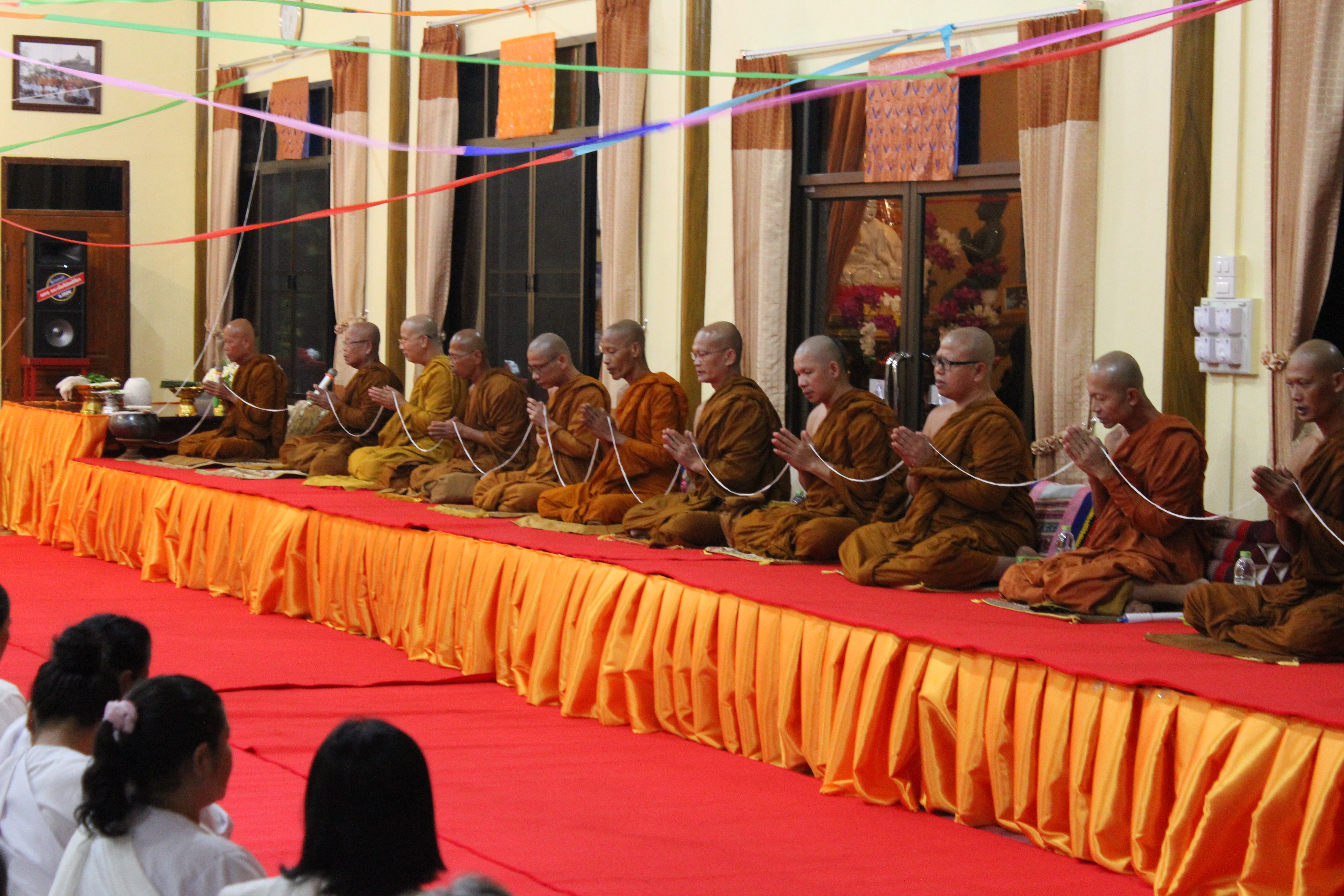
    Of course, whether people would be willing to do this is debatable, but still, it’s probably worth having the discussion, just to make the point, if nothing else. And the point is that many of the world’s problems are verbal. A policeman gives an order, and you are supposed to obey, immediately and without question. Otherwise they’ll shoot you, in America, at least, no matter that you’re deaf or not an English speaker. That’s not their fault. And, of course it’s not the language’s fault, either, for the bad intentions of its major malefactors. But still one of its main functions is aggression, to be sure, e.g. ‘the pen is mightier than the sword’… (More …)

     
  • Unknown's avatar

    hardie karges 6:20 am on September 30, 2018 Permalink | Reply
    Tags: , , , logic, , reductios, , , ,   

    America, Buddhism, Logic and Einstein’s Equivalence Principle… 

    img_0953You know the American dream, the whole world does: two-story house and a two-car garage, two kids in the breakfast nook and the neighbor’s kids coming over later, God’s little acre in a sanctified suburb, full ownership and bulging bank accounts, stay-at-home mom and a rising-star dad, with a bachelor’s degree in business and a lotta’ backyard gossip, Saturday at the zoo and Sunday barbecue, PTA meetings and postman’s daily greetings, fried chicken and crispy French fries, milk shakes and apple pies…

    Also known as the Australian dream or Kiwi if you prefer, but only a quarter-acre there and the fries just might be pies, so be careful what you eat, otherwise just the same, with a down-under accent, big goofy grins on the chinny-chin-chins, a weekend in the outback, a maid in the kitchen, a promise of deliverance, and the assurance of no limits: neither sky nor sand nor seacoast nor sex, all-you-can-eat in a never-ending buffet of consumer goods, entertainment, sensations, but mostly money… (More …)

     
    • quantumpreceptor's avatar

      quantumpreceptor 12:33 am on October 1, 2018 Permalink | Reply

      Hi Hardie with avoidance you certainly have the Theravadan view well encapsulated. Why else should one take 300 vows and live separately from many others but to avoid all that is potentially disturbing. In Mahayana and Vajrayana these so called disturbing emotions are actually the fuel for the fire that drives practice further and faster. There are several ways to see this is there not?

      QP

      • hardie karges's avatar

        hardie karges 1:18 am on October 1, 2018 Permalink | Reply

        Hi again QP: Absolutely. Yes, I love the Thai Forest Tradition, but see it best as the first step along the path, gotta’ re-enter the world at some point in order to save it, which is the highest goal IMHO. Mahayana is a bit fractured right now, though, so can’t help but think that there must be a new paradigm evolving, to account for all the world changes of the last 1000 years, which Buddhism mostly hasn’t answered yet. I don’t know that Secular Buddhism is the answer, but I definitely think it’s part of the discussion. Most religions abhor uncertainty, but I think the capacity for a true dialectic is one of Buddhism’s strengths, fingers crossed. Thanks for your comments…

  • Unknown's avatar

    hardie karges 6:36 am on September 2, 2018 Permalink | Reply
    Tags: , logic, , , , ,   

    Buddhist Dilemma: Is Inner Peace Possible in the Era of Donald Trump? 

    img_1572

    The Golden Spires of Shwedagon Pagoda

    Americans are frightened. People are scared. They read about things like this in books, but never dreamed that they would have to live through it: the American Civil War, the French Revolution, the Boxer Rebellion, The War of Spanish succession, Genghis Khan, the Persian Wars, Adolf Hitler, the Aryan invasion, Rape of Nanking, 100 years War, Josef Stalin, the American Genocide, the Mexican War, Chaco War, World War I, Opium Wars, Crimean War, Vietnam, wars of the world and genocides in general…

    But the American civil war was not really a civil war, as many historians have pointed out, but rather a War between the states, with many unwilling participants on each side of arbitrary lines. What is happening now is the true civil war, an internal conflict not only within societies, but within people’s own minds, as to what is right and what is fair, what is appropriate, and whether there will be violence, whether there will be casualties, and whether there will even be any affordable healthcare to mitigate the circumstances… (More …)

     
    • Dave Kingsbury's avatar

      Dave Kingsbury 9:41 am on September 4, 2018 Permalink | Reply

      A timely and thought-provoking piece. Our small world is impossible to escape, nor should we try. The middle path becomes a touchstone. Thanks for posting, Hardie.

c
Compose new post
j
Next post/Next comment
k
Previous post/Previous comment
r
Reply
e
Edit
o
Show/Hide comments
t
Go to top
l
Go to login
h
Show/Hide help
shift + esc
Cancel