

Tagged: language Toggle Comment Threads | Keyboard Shortcuts
-
hardie karges
-
hardie karges
-
hardie karges
Buddhism Unchained: Don’t Follow the Money
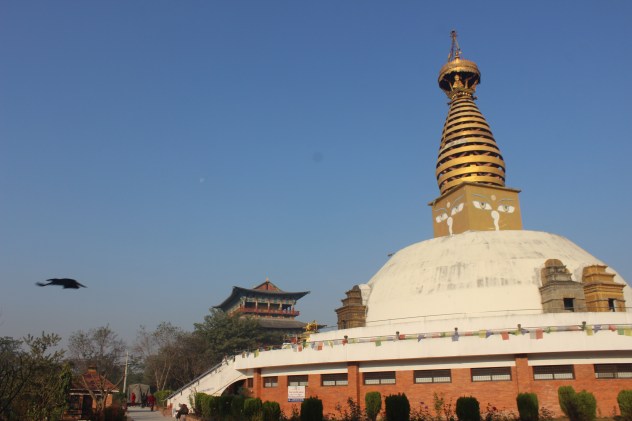
Foĺlow the dharma, not drachma, dirham, denaro, or dinero; rupiah, rubles, or renminbi. Because money is not important. What is in your heart is important. That should go without saying, of course, but it often needs to be repeated for best effect. It’s often said that free enterprise and Christian Protestantism go hand in hand, but it’s hard to imagine what kind of economic system would be inspired by Buddhism. Communism, maybe? No, I don’t think so, certainly not the authoritarian kind. Because Buddhist monks are the freest people in the world, even if they are sometimes confined to their home temple, or at least ONE temple, especially during the wassa rains retreat.
But, other than that, they are pretty much free to come and go. And they do, subject to availability, of course. Because monks are in high demand, given the bragging rights that often go with numbers. But that only applies to the men, of course. Nuns and laywomen often have a much tougher time in the temples, often for reasons that can only be explained by patriarchy and general male orneriness. I hope that’s changing, but there are no guarantees. Last I heard, nun mae chees in Thailand still go to Sri Lanka for full ordination.
When perfected, the temple-based sangha system might indeed be able to serve as an economic paradigm, though not likely either communist or capitalist. Collectivist, maybe? Yes, maybe, if certain temples could be coaxed into giving up the daily alms round. It’s nice, and all, but is more symbolic than absolutely necessary, certainly. I suppose some folks see the monks dropping by for daily bread like paper or milk delivery boys, as regular as rain, but they could maybe be encouraged to visit the temple more often, too. That’s often what they do in the USA, and it works fairly well.
Bottom line: if Buddhist monasteries were to allow women on an equal basis with men and they were to grow bountiful organic gardens, with rotating tasks divided equally between women and men, I bet that they could overcome any lingering sexual urges, and in the meantime impress many people with their efforts to be a new social paradigm. I personally would be so impressed that I and others might easily be inspired to make some contributions to the cause once or twice a year. It’s a new world dawning, better sooner than later.
-
hardie karges
-
hardie karges
-
hardie karges
Buddhism 496: Life is not a transaction…
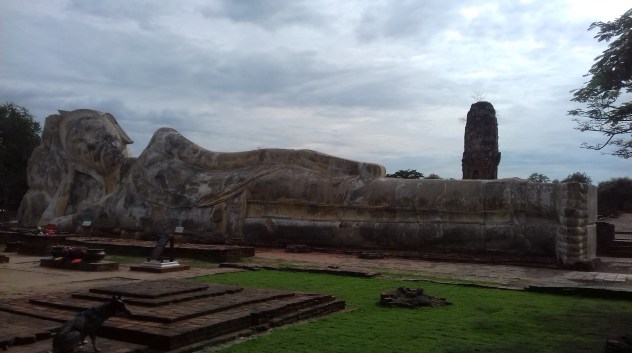
You don’t have to make a deal. You can just be, in silence or with sound, no winners or losers, just humans being human, sharing secrets and fears, drinking coffee or beers, no more thrill in a magic pill, this is it. And, if I’ve learned anything from a decade of Buddhism, then that probably sums it up as nicely as I can. In brief: accept life, as it is, without fear nor favor, without sweetness nor savor, just ISness, not bizniz, nor busy-ness, unless that is what’s required for daily salad, with or without dressing.
But it’s the hardest thing sometimes, normalcy, and the universal requirement for sanity in the face of adversity, that is the birthright of our species, articulation and clarification, in the form of language, that which is our most powerful invention in this world. And the Buddha himself knew that simple ISness would be difficult, especially when someone had tasted the thrill of sex, so that we would naturally try to emulate that intense feeling in some way artificial, to forego the foreplay that may or may not yield results.
And so, we have the Buddhist Middle Path, to remind us of our sanity, our normalcy, and our downright decency, when left to our own devices. And that is all that we need, our human-ness, our humanity when the temptations exist to tempt fate and call in late, hoping to be granted a reprieve of our normalcy, in order to shoot for the stars of fame and fashion, not from any innate need or necessity, but just the ego rush of kingliness, when all others are paupers or pawns in the game of life. Sometimes it takes training to resist temptations.
-
hardie karges
-
hardie karges
-
hardie karges
Soft Buddhism, Hard Buddhism, and the Middle Path between…

If there is a convergence of Christianity and Buddhism in the works, as I often think, then I think that will be accomplished by the evolution of ‘soft’ versions of each, which will allow them to mix and mingle almost imperceptibly, which I think is good. Because, even if I have some minor misgivings about Buddhism possibly losing some of its distinctive characteristics, I can assure you that rebirth is not one of them, nor is the vengeful form of ‘hard’ karma that supports it.
In that mindset, the idea is that not only rebirth, but virtually everything, is a result of prior actions, both good and bad, which strictly control present rewards or punishments, to the point that the word ‘karma’, which means ‘actions’ becomes a synonym for the English term ‘fate’. I don’t think that was the Buddha’s intent, but many people have a negative view of the world, and we are all subject to their influence. I prefer a much softer karma, more closely related to the Buddha’s own ‘samma kammanta’, i.e. right actions, as elucidated in the Eightfold Path. Do good actions, and you will receive good things.
And, if that karma of retribution is the ‘hard’ Buddhism which I dislike, then that Eightfold Path, which is the Middle Way between extremes is mainstream Buddhism, which stands like Hegel’s dialectic as a path forward for decision making, which is how I often use it. In this view, ‘Soft’ Buddhism would be the meditation and mindfulness often invoked by those monks walking for Peace and for which many Westerners are poised and ready to adopt whole-heartedly ASAP.
Christianity has a soft mystical side, too, and even a ‘reborn’ side which is preferable to the Hindu reincarnation which often is the source of Buddhist rebirth and which supports a caste and class system which too often follow hereditary priest and warrior affiliations. That is why Buddhism is not popular in India today and good reason to avoid Hinduism like the pandemic. Buddhism and Christianity need fertile ground on which to mix and mingle. That is the Buddhist Middle Way, Hegel notwithstanding…
-
hardie karges



Reply