Tagged: Xuanzang Toggle Comment Threads | Keyboard Shortcuts

  • Unknown's avatar

    hardie karges 2:30 am on November 30, 2025 Permalink | Reply
    Tags: , , , , , , , , , , , Xuanzang   

    Buddhism and the discipline of the Discipline…  

    Our knowledge, our faith, our generosity, and our freedoms are only as good as our discipline. This is the not-so-secret to the practice of Buddhism, of course, the training of the mind and the resulting control of emotions so crucial to the success of the practice. Any Buddhist monk in Thailand can tell you that without thinking. The word Vinaya so crucial in the early years of Buddhism means ‘discipline’ in Modern Standard Thai, i.e. vinay.  

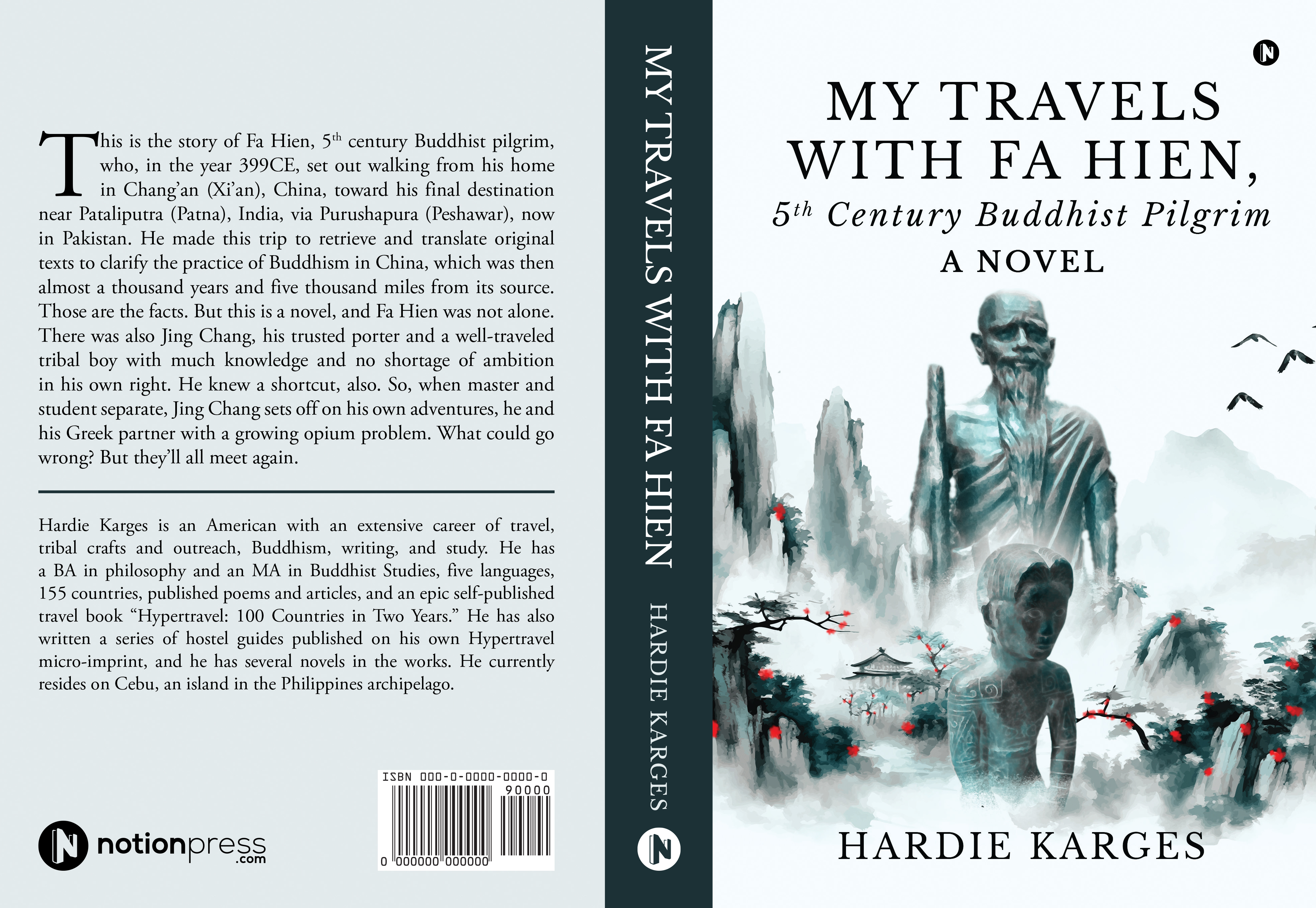
    That’s just as it did for Fa Xian and Xuanzang c.4-600 CE, when they made the long trek from Xi’an, China to east India VIA AFGHANISTAN to get the true and correct vinaya, so corrupted by the centuries and kilometers in distance from the original sourceMany westerners bring a Christian crutch with them into their knowledge of Buddhism, too, so might think of meditation as some otherworldly experience, but that is a fantasy. To be honest, many Thai laypeople often think the same.  

    But no Buddhist monk would ever be so silly. You’ll never see a monk laughing his a$$ off about anything, much less about matters of the dharma. But this is no feigned seriousness for the sake of poses and postures. The dharma is no joke, and these are not children. Most, but not all, monks dedicate their lives to the practice and dissemination of Buddhist truths and knowledge. Mutations occur in the transmission and relocation from place to place, but the essential truths are unchanged: we are slaves to what we crave, and the solution to our suffering comes with kindness, compassion, and right living. 

     
  • Unknown's avatar

    hardie karges 6:19 am on March 10, 2024 Permalink | Reply
    Tags: , , , , , , , , , , , , , , , Xuanzang   

    Buddhism at the X-roads: More Dharma, Less Drama 

    To live from sensation to sensation is to live like an animal. To follow dharma is to live like a human. Because, despite the attraction of the so-called ‘present moment,’ which may or may not be real, the Buddha prized reason and rationality above almost all else, easily verified by his insistence on recognition of the causes and conditions underlying all actions and motivations. He may or may not have said something supporting the ‘present moment,’ but I’m not sure what or when that would have been. 

    Bottom line: reason(s) and rationality are to be prized above almost all else in Buddhism, the one possible exception being the need for, and insistence upon, meditation. And, for me, this is where that ’present moment’ comes into play, it being almost the perfect metaphor for that suspension of belief and disbelief which is meditation, all thought suspended in favor of pure awareness, of breath, if nothing else, anapanasati, the original meditation of which all others have subsequently derived.  

    Meditation is so fundamental to Theravada Buddhism that it has recently almost become re-branded as Vipassana, or ‘insight meditation,’ all the other disciplines involved in the practice of Buddhism notwithstanding. And this is likely what the Chinese Buddhist pilgrims Fa Xian (Hien) and Xuanzang found above all else, silent meditation, since almost nothing else was written, and was almost too heavy to carry once they had it transcribed from the original Pali or Sanskrit into Chinese.  

    But how do you transcribe meditation into any language for inclusion in a book which someone may or not read at some point in history? Meditation was largely independent of written vinaya (discipline), and that is what had sustained Buddhism for around 1000 years by that time. And that’s what sustains it today, all the opinions and debate on Facebook and elsewhere notwithstanding. Original Buddhism required only silence, and concentration, no apps or other accessories necessary. 

     
  • Unknown's avatar

    hardie karges 5:15 am on February 4, 2024 Permalink | Reply
    Tags: , , , , , , , , , , , , , , , , , Xuanzang   

    Buddhism: Meditation, not Mysticism…  

    Buddhism was never intended to be mystical. Buddha was very rational in his take on life and suffering. Any mysticism came later, mostly in the Vajrayana Buddhism of Tibet that came directly from India, not China, and which had taken firm hold in that country by the Eight Century CE. And while that ‘school’ of Buddhism is often included in the Mahayana tradition which traveled through, and was greatly influenced, by China, such is not the case with Vajrayana, which derives from a later, maybe the last, Indian Buddhist tradition, before it succumbed to the coup de grace by the invasive Mughals, after centuries of losing ground, and followers, to the Brahmanist Hindus. 

    About the only thing that all the Mahayana schools have in common, in fact, is that they are not of the original Theravada tradition, which originated in India and found fertile ground in southeast Asia, mostly. And if the Vajrayana tradition is famous for its multiple levels of heaven and hell, its Tantric yab-yum, mudras and mantras, then Theravada (aka Hinayana), is best known for its lack of all that, and concentration on meditation, especially, to the extent that it’s sometimes known by that most famous meditation technique Vipassana. Meanwhile the Mahayana Buddhism of China is probably best defined by its transcendent Buddha and the vast Emptiness of reality, both more recent developments.

    Many famous Chinese monks, Fa Xian and Xuanzang foremost among them, even made long arduous trips to India just to get it right, like Charlemagne realizing his 8th century French language wasn’t proper Latin. And mostly I believe that meant learning meditation, and some other disciplines, which Theravada monks usually excel at, and Chinese monks often suck at—to this day. In fact, I didn’t really even know what meditation was until I attended some Theravada-based meditation retreats in Southeast Asia, intended for Asians, not Westerners. When you see a layman sitting silent unflinching for two or three hours lost in no-thought: that’s meditation. The monks are even better at it. Now I get it. Get it. 

     
c
Compose new post
j
Next post/Next comment
k
Previous post/Previous comment
r
Reply
e
Edit
o
Show/Hide comments
t
Go to top
l
Go to login
h
Show/Hide help
shift + esc
Cancel