Tagged: Virtual Reality Toggle Comment Threads | Keyboard Shortcuts

  • Unknown's avatar

    hardie karges 2:47 am on April 6, 2025 Permalink | Reply
    Tags: , , , , , , , , , Virtual Reality   

    Buddhism, Life, and a World Defined by Challenges 

    Good things take time. Anger solves nothing. Life is defined by its challenges. So, I think that’s my philosophy of life, in a nutshell, based heavily on the Buddhist acceptance of suffering, but without succumbing to that fact and any sordid fate that may await that cruel date. Because it doesn’t have to be seen as pessimistic. And that’s the rap that Buddhism has to fight hardest, in order to make Western converts, the idea that it’s too negative, not full of abundance, eternity, infinity, and all the other fantasies that Christianity has bequeathed us, in its two short millennia of existence.

    But Buddhism is not pessimistic, just realistic. You’re going to die, so get over that, and let’s get some things done while we’re here—or not. There’s no shame in renunciation. That’s not passivity. That’s acceptance of reality. Buddhism is only guilty of a mistake if it promotes passivity. Passivity is residing homeless on the streets of LA, not as an ordained monk in Asia. That’s creative, collective, and cooperative. Society could survive like that, even if the pay’s the same as the godforsaken streets of LA.

    Survival is the current concern, also, species survival as much and as well as individual, since we are living in a world of species identity, even if we sometimes transcend those limitations. But we don’t have to go to Mars to do that, though the moon would be nice, especially during the rainy season, haha. Or we could possibly accomplish as much or more in Virtual Reality, if and when the time is right, and the speed and memory are sufficiently available. It’d probably cost less than Mars, too, to create a perfect world as a digital twin of this world. We already have a neural twin. It’s called life, defined by challenges.

     
  • Unknown's avatar

    hardie karges 5:19 am on February 16, 2025 Permalink | Reply
    Tags: , dream, , , , , , , Virtual Reality   

    Buddhism 499: Life is but a Dream… 

    Grasping at memories is like trying to grab air. There is simply not much there. And yet we treasure our memories above almost all else, that walk in the park and that kiss in the dark, that moment so long ago that seems almost like today in its freshness. You can still taste it, right? And smell it? See it and hear it? Everything but touch it, something that you probably never did in the first place, the non-tactile sensations much easier to reproduce in an ephemeral memory or dream.

    And that’s fine, as long as we give little or no weight to it, because memories are notoriously unreliable. That’s an object lesson, also, about the nature of reality and the phenomena that inhabit it. Because none of the phenomena of life are any different. It’s just that memories, like dreams, are such obvious bad actors in a hollow play with no substance real or even imagined. This is heavily implied in Buddhism, also, that life is but a dream, and not in such a shallow way as a kid’s play.

    Because the word maya is used frequently, and that’s magic, at best, illusion, more accurately, or deceit, at worse, more or less the acceptable range of sense perception as an accurate description of reality. But in modern parlance it might actually be more like a simulation, but not digital, like Virtual Reality; it’s neural, a precise, if not exact, neural twin of our brain’s (mind’s) own neural landscape, so that we can coexist in this world, the facts of which are too complex to duplicate by art or artifice. Another quark for Mister Mark? I’ll take a rain check. That’s too complicated. Just buy me the moon, or some reasonable facsimile.

     
  • Unknown's avatar

    hardie karges 4:09 am on January 12, 2025 Permalink | Reply
    Tags: , artificial-intelligence, Hadron Collider, , introspection, machine-learning, , , , , , Virtual Reality   

    Buddhism 499: Finding Strength in our Mutual Weaknesses… 

    To know your weaknesses is to know your heart, and from there derives your strength. But it may be a tough sell in this day and age of winners and losers with little in between, still the Buddha’s truth holds true. We are but accidents of fate and creatures of chaos, the ‘good genes’ largely wasted on pretentious and presumptuous pretenders to power, while the rest of us use our mindfulness not as a weapon, but as a tool of deep introspection, probably a better term than ‘self-knowledge’ and the next best thing to hard science, which requires group effort.

    But much can be accomplished with deep introspection, and the best part is that the proof is in the perception, rather than the dictates of science, which will likely always fall short of the requisite proofs which can only be attained at the Hadron Collider. And still, that is not enough, because our brains gnaw at the edges of the known universe like rats with a ball of cheese that is self-expanding. But, at some point we have to take a rest and live our lives and create a society that responds to human needs, not the scientific ones.

    Because we live in a simulation, neural not digital, and this is my great revelation of the modern age, where Buddhism meets science and Virtual Reality is an apt metaphor. So, this life and this world are not an illusion, as often cited, but a simulation, which is a very bit different, without the ring of falseness which haunts the other term. This neural simulation, a twin of the ‘real’ world, is as it should be, but far from the quarks and tachyons which clamor for recognition in the collider. But our neural simulation requires no Collider, but only mindfulness, patient recognition that this is exactly how it should be, no matter how short it may fall from ultimate reality. Don’t think too much…

     
  • Unknown's avatar

    hardie karges 5:03 am on January 5, 2025 Permalink | Reply
    Tags: , , , , , , , , , Robert Wright, The Matrix, , Virtual Reality   

    Book Review: ‘Why Buddhism is True’ by Robert Wright… 

    Okay, I owe this review to Robert Wright as payback, because, while others at my Buddhist college were ‘oohing’ and ‘aahing’ back in 2017 over the release of his book ‘Why Buddhism is True’, I was extremely skeptical—and quite vocal about it. Why? Well, first, there’s the title: ‘Why Buddhism is True’. It seemed phony to me, as phony as some rock-and-roll band calling themselves ‘Nirvana’. Don’t push my buttons. Then there’s the Matrix glom-on right in the First Chapter. Or was it the Introduction? Are you serious? That’s certain proof of amateur hour for me. Last, but not least, there’s professional jealousy. Wright is first and foremost a journalist. So, what makes him the best person to write this book?

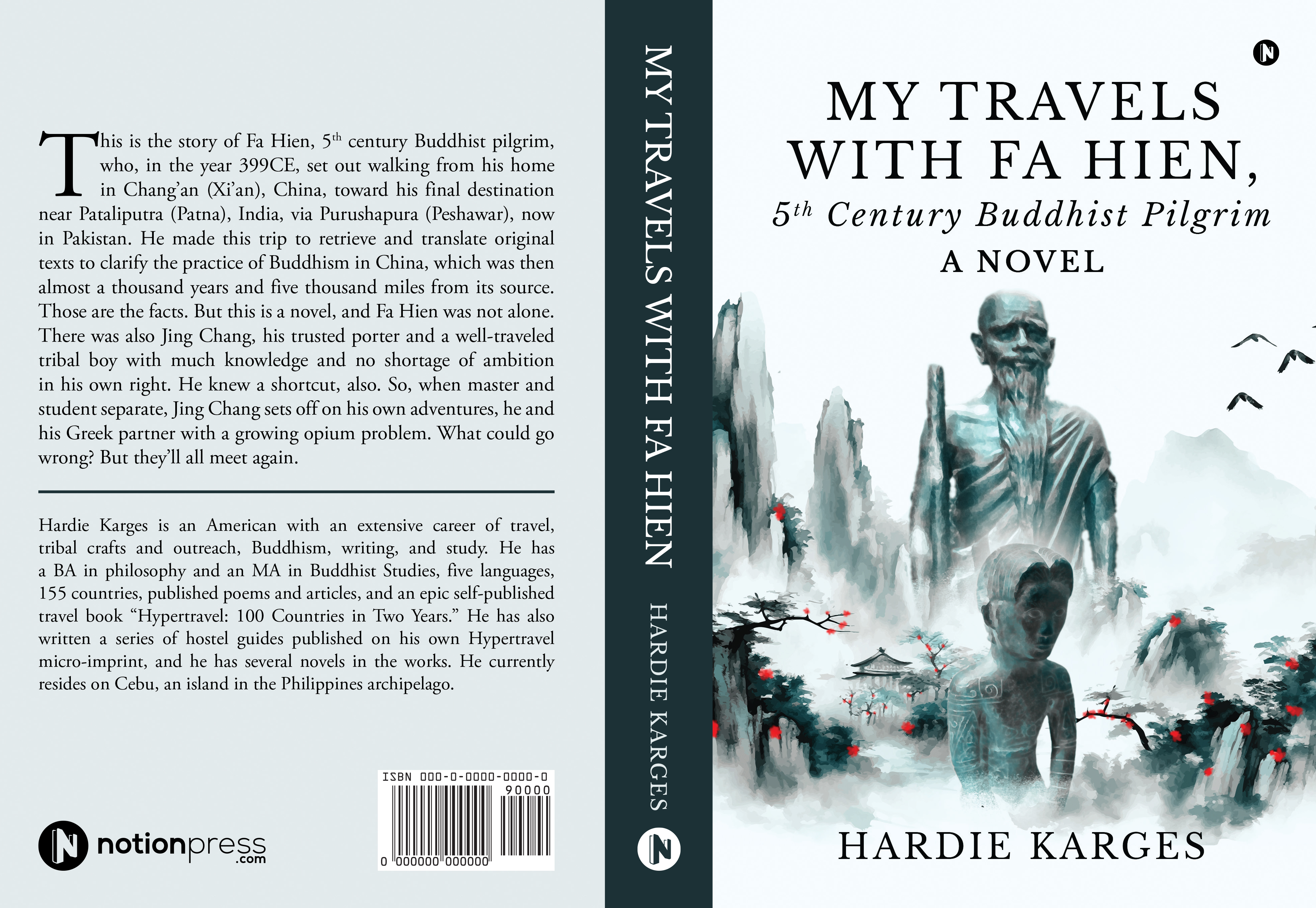
    Because, even back then, I knew that that’s the $64k question that any self-respecting literary agent would ask you before rejecting you, without telling you about the ‘journalist’s exemption’. Now I know, older but wiser (and with an MA in Buddhist Studies plus a recently published novel based on the travels of Buddhist pilgrim Fa Hien, hint hint). But his book is pretty darn good. So, I owe Mr. Wright a heartfelt apology. And that’s not a quick and easy decision, because he’s pressing his luck by reducing Buddhism to meditation, when many, if not most, of the world’s Buddhists, meditate very irregularly—IF EVER!

    But he pretty much left the Matrix references behind (‘Dharma film’, indeed!), and moved right on to other topics, some of which still stretched credulity, but served as some kind of Buddha’s Greatest Hits collection, if nothing else, so that’s probably a plus for the lightly initiated. After all, Buddhism has come a long way from its early Theravada discipline, Mahayana metaphysics of Emptiness, and Vajrayana mysticism. Now there are Vipassana, koans, and ‘crazy wisdom’, instead. Wright even devotes an entire chapter to ‘How Thoughts Think Themselves,’ one of my pet peeves in the modern Buddhist canon. But Wright handles it with journalistic equanimity, making clear that there are ways of justifying that attitude, without necessarily seeing all thoughts as falling into that category.

    But my favorite part of the book is the attention given to the possibilities of a simulated reality for us here in this life in this world, as alluded to in ‘Chapter 11: The Upside of Emptiness’, in which he argues that it is a psychological necessity to project ‘essence’ for long-term survival and human evolution. And while I would prefer to draw parallels between our neural simulations and the digital simulations of Virtual Reality, the bottom line is the same: it’s better than ‘illusion’ and nihilism is prohibited. Nirvana is similarly and summarily dismissed as the overriding raison-d’etre of Buddhism, while mentioning the unmentionable: we’re talkin’ ‘bout death here, y’all.

    Then there’s the title, which I assumed was editorial overreach on the part of Simon & Schuster, in the vein of the previously mentioned ‘Thoughts w/o Thinkers’, ‘Hardcore Zen’, ‘Universe in a Single Atom’, and other such pseudo-Buddho titular nonsense, but no: this is Wright’s chosen title, which he is prepared to defend as indicating its psychological appropriateness, something like samma ditthi, right view; nothing like absolute truth, so that’s cool. Wright is casual too, sometimes even funny, witness the title to Chapter 13: ‘Like Wow, Everything is One (at Most)’, haha. I like that. Bottom line: sometimes a well-traveled journalist is preferable to a star-spangled Rinpoche, especially when that guru is telling you to vote for the orange guy with the big bulge and the bankroll. I like honest brokers. Wright is worth the read. R.I.P. Kurt. The last Matrix movie sucked.
     
  • Unknown's avatar

    hardie karges 5:00 am on December 29, 2024 Permalink | Reply
    Tags: biology, , , , , , , , , Virtual Reality   

    Applied Buddhism: the Present as Precedent… 

    Let go of the past. Embrace the future. Accept the present as the only thing we can truly know from direct experience. And this I know from experience, having been at the losing end of many debates on the subject, I once a proponent of the losing idea that time, like space, has three dimensions: past, present, and future. But now I can see clearly that those are really only one, or maybe three-in-one, if you prefer, the only remaining question being whether space is truly three dimensions, or whether it, too, is really only one, or maybe two, if we see the world as composed of drops rather than crystals, circles rather than cubes.

    So, how can you embrace the future, then, if it’s really only a simulated version of the present? I think of it as Emptiness, or shunyata, which is literally the zero in intermittent mathematical placement notation or potentially the final zero(s) which are capable of multiplication to infinity, and which are arguably a necessity for human existence, that clear blue sky which not only implies oxygen, but life, as much or more than the green of its fruit or the red of its roots, that ultraviolet of infinity as important and ubiquitous as the infrared of black-hole gravity. That’s the past; lose it.

    So, we see everything through the eyes of the here, and the now, which color everything in tones which they are comfortable with, and knowledgeable of, in some vast neural simulation which only vaguely resembles the particle/waves of consciousness and biology which lie at the root of all existence. This is not illusion, though, so much as it is a neural twin of ultimate reality, like VR’s digital twins, so that we can live, and move, and have our being with a minimum of obstacles to movement and awareness, and so happiness, which is all we are really capable of, even on the best of days.

     
  • Unknown's avatar

    hardie karges 4:03 am on May 26, 2024 Permalink | Reply
    Tags: , dissatisfaction, , Existentialism, , , , , , , , , , , , , , , , , , Virtual Reality   

    Buddhism 499: Sometimes Some Things Are Lost in Translation  

    Beware re-translations. The Buddha spoke a Sanskrit-related language. Sanskrit never went extinct. ‘Dukkha’ still means ‘suffering’, sorry. Many Western Buddhists try to manipulate the message, however slightly, to make it more appealing to Western tastes, but that says as much about Western tastes as it does about Buddhism. The issue in question, of course, is the First Noble Truth, which states something as innocuous—and obvious—as the fact that suffering exists, nothing more, nothing less, UNLESS: you want to make that jagged little pill a little easier for someone from Hoboken to swallow. 

    Because if the principle of suffering is important enough to list it first and foremost as the foundational principle of your new religion, then that’s easily hyperbolized into such platitudes as ‘Life is Suffering’, ‘All Life is Suffering’, and so on, which is understandable, but somewhat depressing for many Western tastes accustomed to fast food and Ferris Wheels (for those of us raised on Existentialism, it’s not such a problem). But the easiest way to mitigate that circumstance is to soften the edges of that term ‘suffering’ to make it sound more like ‘dissatisfaction’, ‘stress’ (ahem), ‘spot of bother’ (maybe ?), or my favorite: ‘bummer’, haha. 

    Okay, so I’m joking a little bit, but the modern notion of ‘stress’ was surely unknown in 5th C. BCE India, so that’s a bit of a joke, also. But the effort at mitigation is certainly allowable under the Buddha’s own notion of ‘skillful means’, so it’s just a question of what’s appropriate. Bottom line: dukkha means ‘suffering’ as surely today as it did 2500 years ago, as a quick trip to Google Translate will quickly prove (yes, they have Sanskrit). The problem is that many Westerners see life as something ‘fun fun fun’ and so actually want rebirth or reincarnation (if not eternal life), while many traditional Easterners downplay any attachment to this cosmic play of samsara, while seeking release in Nirvana. 

    What to do? Nothing, really, because Buddhism should not be concerned with gaining adherents or scoring points, but merely offering some solace and refuge for those who need such. The world is what it is, and you’re probably going to die, regardless of any and all medical advances (though Virtual Reality is a remote possibility). Therefore, even the best scientific advances can only be limited in scope, and satisfaction with those limits is much better than trashing ourselves and/or the planet in frustration. As always, the middle path offers a practical solution: enjoy life, but don’t get too attached to the wheel. Accept some limits without total submission to them. Persevere. The middle path is long and winding.

     
  • Unknown's avatar

    hardie karges 4:09 am on June 24, 2023 Permalink | Reply
    Tags: , , , , , , , , , , Virtual Reality   

    Buddhism, Love, and the Middle Path to Survival  

    Europeans and Americans live to fall in love, and many other countries and languages aren’t much better. Live to fall, wow! In the Thai language the equivalent expression would be to get ‘lost in love,’ not much different. But Buddhist metta is better than that, all the best parts of love and none of the bad, friendship mostly. You can be kind and still be balanced. But this is a hard lesson to teach, because we’re hooked on passion like junkies on the hard stuff, and there’s not too much that we can do about it, even if we wanted to. Or can we? Of course, we can. And it’s no accident that the original meaning of the word ‘passion’ is ‘suffering,’ just like that for which Buddhism is so famous. 

    It’s just that at some point we started to like all that excess emotion, just like we began to ‘love our lives,’ while Eastern ascetics continued to renounce the pleasures of flesh and fish, just as they continue to do to this very day. I suppose that the Western attitude is that if we try hard enough, we just might create that eternal life that Jesus promised us all along. Does Virtual Reality count? It might have to, if we’re serious about that as our goal…or, maybe we could just train our minds and tame our desires to a more acceptable level that allows for plenty of free time and a healthy dose of creativity, also. 

    Bingo, the Middle Path is always the solution, not passivity nor stress tests, just good honest old-fashioned hard work, complete with rationality, such that extremes of thought and opinion are rejected in favor of more conciliatory positions. In other words, you might gain less than the wildest stock option, but in return, you are also likely to lose less if your risks fall short of the mark. But that’s more than a conservative business portfolio decision. That’s a principle of life: make steady gains going forward, with always the option to change direction with any new information that accompanies the passage of time. That’s the Buddhist Middle Path. We’re playing for keeps here. 

     
  • Unknown's avatar

    hardie karges 9:17 am on April 15, 2023 Permalink | Reply
    Tags: , , , , , , , , , , Virtual Reality   

    Buddhist Mindfulness: No Shortcuts to Salvation  

    Mindfulness, sati, requires some awareness of the unpleasant details, also, unfortunately or fortunately, for this is the nature of existence, the existence of suffering and the ways to ameliorate it, on a path to cessation, if not the twenty-five-dollar cure that we’ve grown so accustomed to expect, in some binary fashion, now you see it and now you don’t, as if there were indeed magic bullets that can hit every target, with never a miss—at least in theory. 

    But, until someone can bio-engineer us with eternal life or create us a Virtual Reality so perfect that we can’t tell the difference, then the (not-so?) harsh reality is that each and every one of us will die, later if not sooner, peaceably if not in agony. And this is the truth of Buddhism, that suffering is ubiquitous, and implacable, if not the all-embracing disastrophe that it so recently was. But that was likely due to the dubious emboldenment of patriarchy, in distinct contrast to the previous matriarchal survivalists that sustained us for so many millennia. 

    But the point is that Buddhism is not pessimistic, but realistic, and the obvious corollary would be that the silly-eyed optimism of capitalistic Christianity is itself the cause of many of our problems, especially global warming, for which it is singularly unprepared to offer a credible solution, given the demands of economic growth. But Buddhism can offer that solution: conscious mindful existence that accentuates self-sufficiency, not the excesses of abundance and infinity that capitalism and Christianity demand.  

    In other words: less can indeed be more, in quality if not quantity, and that is the important consideration, now, isn’t it? Yes, I think that it is. And that is also the cautionary tale with so-called ‘mindfulness.’ Be careful which way you turn your gaze of awareness, because you will have to deal with the circumstances in your field of vision. And that is good. Buddhism in its origins never pretended to transcendence. This is the real world we find ourselves in, and that is the challenge… 

     
  • Unknown's avatar

    hardie karges 1:03 pm on September 6, 2020 Permalink | Reply
    Tags: , , , , , , Virtual Reality   

    Buddhism and the Balancing Act of Excellence… 

    Violence solves nothing. It only creates more violence. We all know it, yet still we do it, reveling in our passions and bathing all awash in our emotions unapologetic, for this is what we are taught from day one, in the wild wild west, to be passionate about what we do, and anything less is ‘middling…’

    Yet middling is part and parcel of Buddhism and its Middle Path, the avoidance of excess and its extremes, in favor of the boredom of ‘middle-ness.’ From this viewpoint happiness is as often as not the avoidance of sadness, and bliss might very well be suspect for its dalliance with extreme emotion…

    Does this attitude build great cities? Does this attitude conquer continents, and send rockets to the moon? No it probably doesn’t, and we are probably better off because of it. Because neither does it commit genocides, enslave peoples, or cause global warming, and it can produce great art…

    Has your life really improved with the invention of Roombas to Hoover your floors? Do you really need four hundred channels of mediocre programming on the idiot box to satisfy your palate? And before you point out to me that I seem to be championing mediocrity as the Middle Way between lack and excess, I wish to point out that excellence is not a threat to anyone’s existence in the same way that luxury and self-starvation are, which is the original inspiration to the Buddha’s awakening…

    The Middle Path itself is nothing if not excellent. Do you think that it is easy finding that meandering sweet spot between extremes? It’s not. It’s an exquisite, but not excruciating, balancing act. And balance is crucial to the equation. Is it even possible for an equation to not be balanced? Of course not…

    Yet our lives in the 21st century are far from being balanced. We worship the gods of technological salvation, but we are never saved. We are only further addicted to our own existential cravings. Now I love science, and technology, i.e. applied science, but I don’t really need a self-driving car. I need a city that doesn’t’ require automobiles…

    Internet is sublime, and Virtual Reality is transcendent, but what else do we need? Interstellar exploration is wonderful, but you don’t need rockets for that, just better telescopes. Our cities are sh*t-stained pits and our lives wallow in the mire, accordingly. Nature, and dharma, can, and should be, a refuge, on a good day. Cities and technology? Meh, not so much…

     
c
Compose new post
j
Next post/Next comment
k
Previous post/Previous comment
r
Reply
e
Edit
o
Show/Hide comments
t
Go to top
l
Go to login
h
Show/Hide help
shift + esc
Cancel
