Tagged: rebirth Toggle Comment Threads | Keyboard Shortcuts

  • Unknown's avatar

    hardie karges 5:00 am on October 20, 2024 Permalink | Reply
    Tags: , , , , evangelical, , , , , , rebirth, , , ,   

    Buddhism at the Checkout Lane: the Best Rebirth is Spiritual 

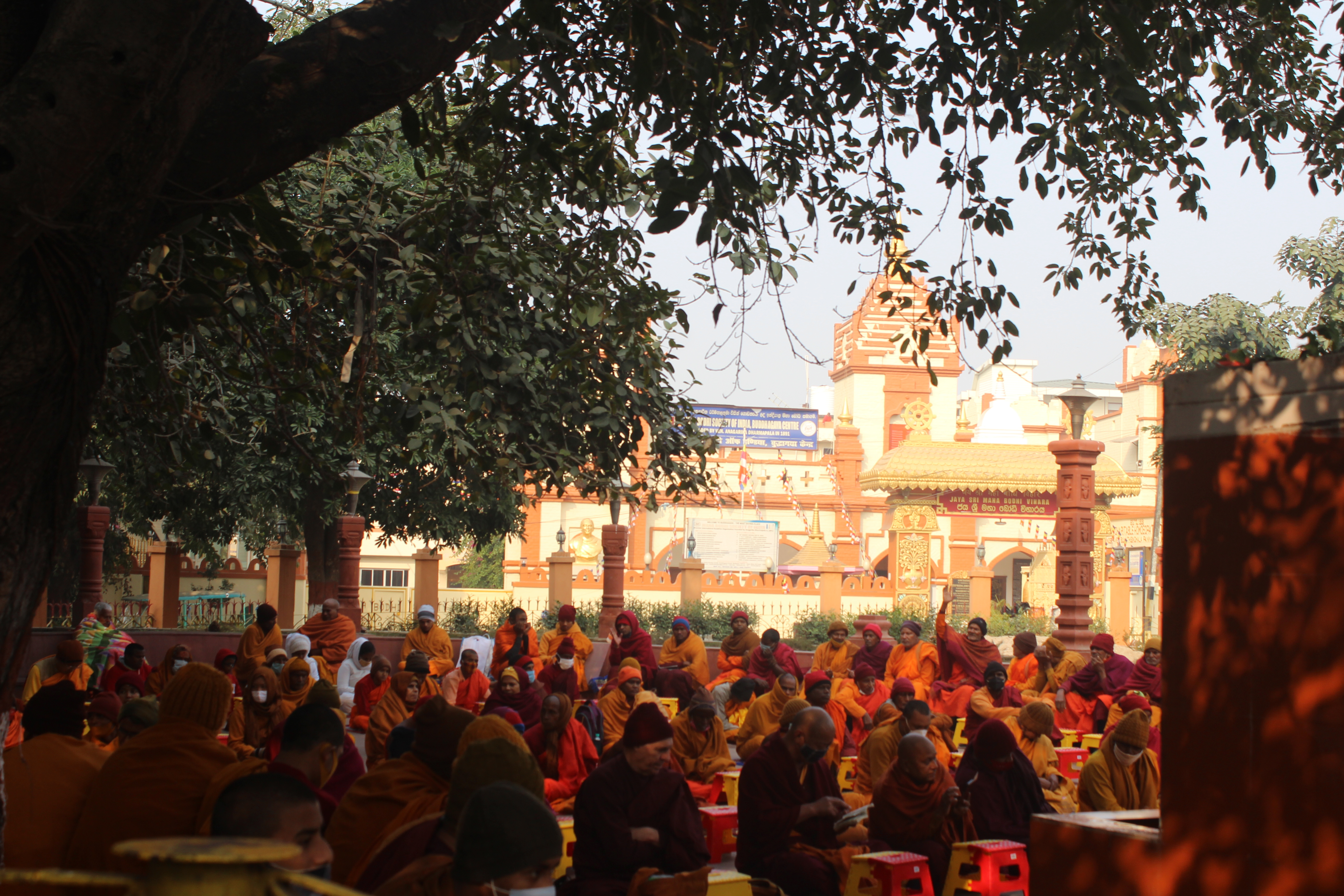
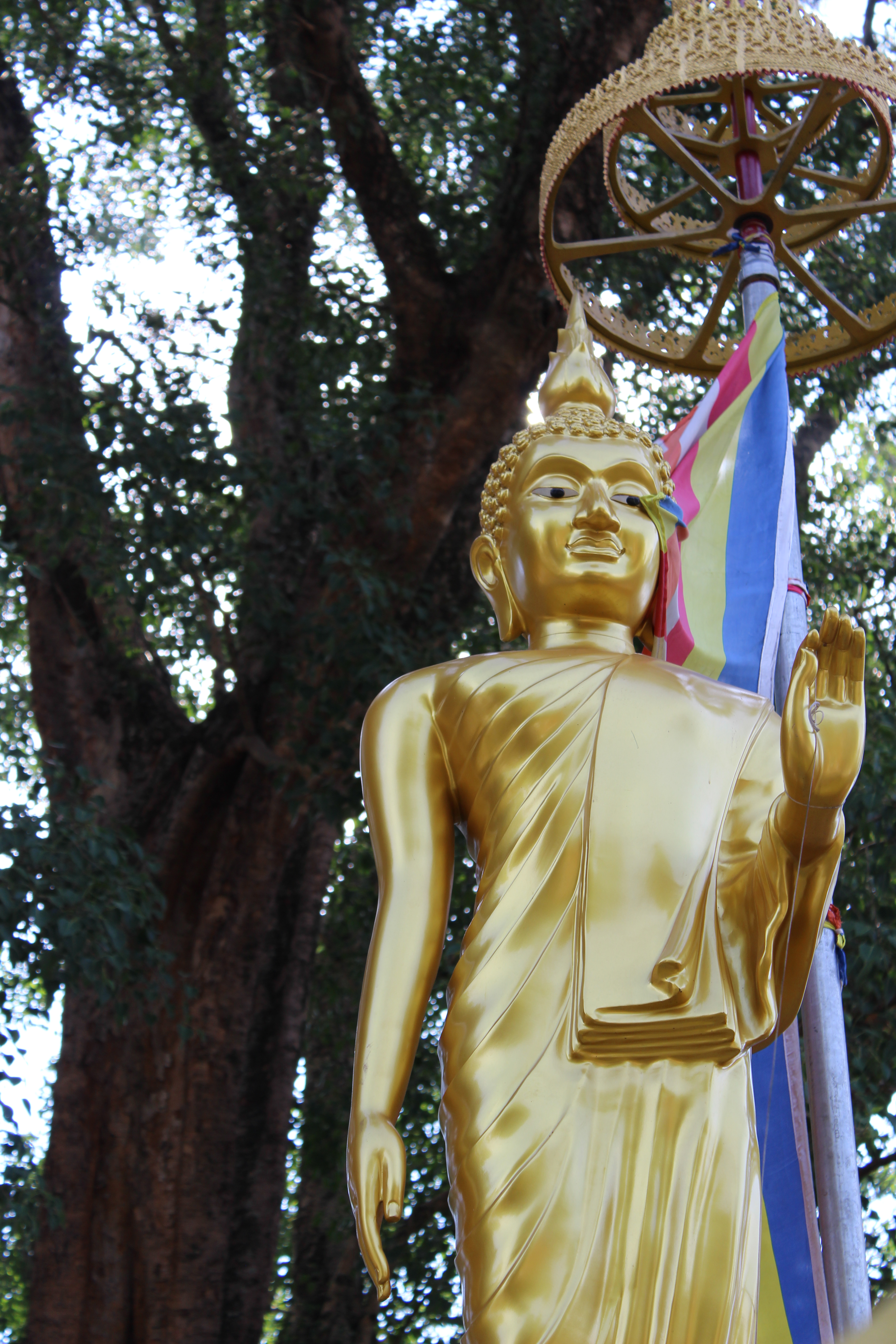
    Spiritual rebirth begins within. It should never end. Samsara is something different. Samsara literally means ‘the world,’ always did, though perhaps etymologically from a distant past word connoting ‘wandering,’ but who knows? Etymology is always a best guess. As far as we know, at the time of the Buddha the word meant ‘the world,’ as it does to this day in modern Nepali, the modern language closest to its Sanskrit roots. Hindi probably got tired of the debate, so adopted the Arabic word dunia for most ordinary usage.

    But Buddhists turned the world cyclical, and so that circularity came to represent samsara more than the other aspects of the world itself. And that circularity specifically refers to the concept of rebirth, heavily borrowed from the Hindu concept of reincarnation, but without the literal transfer of the physical body from one generation to the subsequent one. In fact, Buddhism goes to great lengths to explain away the conundrum of <“What is reborn?”> at the same time that they go to equally great lengths to explain exactly what is the nature of this self that we’re denying. It’s a mess.

    Bottom line: the Christians—the evangelical Christians, of all sects—may have beat us to the punch on this issue. Because their insistence on being born again in the spirit is not only in the Bible, in multiple quotations, you may hear it loud and long at any tent revival in the lower US south from participants both black and white, in their exaltation at surviving a ‘Long Dark Night of the Soul’ as originally described by the 16th century Spaniard St. John of the Cross (not Eckhart Tolle).

    There is scarce reference to rebirth in any Buddhist text, though the Brahmanist Hindus and especially Jains would likely have many if only they had bothered to write it down. But that’s another story. The important thing is that spiritual rebirth is a very beautiful thing and idea, whereas physical reincarnation or even sorta kinda almost maybe rebirth of consciousness in a random body is a leap of logic, not to mention dubious science. And to those who say you can’t just pick and choose this and that, from assorted religions, I respectfully respond, “Why not?” They all did. Embrace it.

     
  • Unknown's avatar

    hardie karges 8:16 am on September 7, 2024 Permalink | Reply
    Tags: , , , , , , , , , , , rebirth, , , ,   

    Buddhism: It’s a Process… 

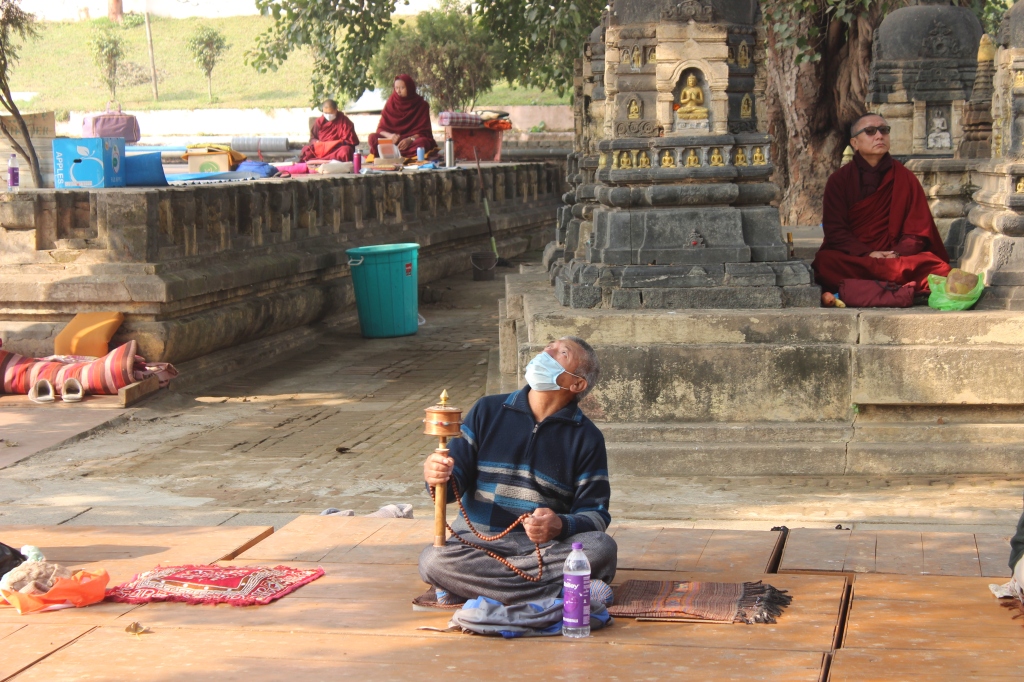
    I am not the same person as yesterday, and I will be a different person tomorrow. I am not DNA code. I am skandhas, anatta, annicca, that is: I am a ‘heap’ of causes and conditions, nothing permanent, always changing. So don’t get too attached to yourself or to anyone else, because tomorrow offers no guarantees. Oh, and one more thing: there’s no soul, at least nothing like what the Christians or Hindus have in mind, eternal and/or cosmic, though Buddhism usually allows for at least a limited sort of rebirth.

    After all, we don’t want to get too dreary now, do we? Certainly not. But the principles listed here are foundational to Buddhism. And so, life and the world are at least somewhat illusory, at least in their most obvious manifestations as part of the visual and sensory feast that constitute our world of perceptions. But there is another principle that is even more important to some of us as Buddhists, and that’s the concept of the Middle path, which can be applied to almost anything, including itself, that hypothetical middle path which defines Buddhism by its very lack of definition.

    And such is the history of Buddhism, as it evolves almost dialectically, from thesis to antithesis to synthesis, only to start the process all over again. It is in that view that Buddhism emerged in the first place, as the middle path between the excesses of Hinduism and the extreme renunciation of Jainism. And it is that process which continues today, as Mahayana offers an alternative to the original Theravada, and to which Vajrayana and Zen start the process all over again. Now the original Theravada Buddhism would like to remake itself as Vipassana: meditation, that is, first and foremost. I like that idea.

     
  • Unknown's avatar

    hardie karges 3:41 pm on June 30, 2024 Permalink | Reply
    Tags: , , , , , , , , , rebirth, , , , , ,   

    Buddhist Love is not like Falling in Love, Sorry…     

    No, Buddhist love is nothing like the weeping and wailing and gnashing of teeth that often accompanies Christian ceremonies, whether birth or death or the multicolor gray area in between, mostly sex. Buddhist love, metta, is just a whole lot like friendship, and there’s nothing wrong with that. So, Platonic love, then maybe? I think Plato would be cool with that, maybe too cool. And that’s what falls short for a lot of people, for whom devotion is the primary practice of their religion. 

    It just doesn’t have the feeling of total surrender required for the religious experience in many people’s minds. But that’s Buddhism: cool, baby, cool. The devotional aspects were the last major additions to the three major canons of Buddhism, and long after the original discipline orientation of Theravada and the transcendental orientation of Mahayana. So, it’s no coincidence that the Tibetans got their Vajrayana straight from the source of India, which is primarily devotional to this day, whether of Shiva or Vishnu, no matter the object. Devotion is the important thing for the devotee. 

    But whether the two additional ‘vehicles’ may or may not have added something important to Buddhism, the core practice of discipline and dana (giving) remain unchanged. Upgrade the meditative practice of anapanasati to vipassana, and BOOM! You’ve got a rebirth of the original Buddhism with or without the doctrine of Rebirth to the non-Self (?!). Ouch. Yep, that’s better now, just to avoid questions that have no good answers. Too many cooks ruin the broth. The kindness is more important than the love.  

     
  • Unknown's avatar

    hardie karges 4:03 am on May 26, 2024 Permalink | Reply
    Tags: , dissatisfaction, , Existentialism, , , , , , , , , , , rebirth, , , , , , ,   

    Buddhism 499: Sometimes Some Things Are Lost in Translation  

    Beware re-translations. The Buddha spoke a Sanskrit-related language. Sanskrit never went extinct. ‘Dukkha’ still means ‘suffering’, sorry. Many Western Buddhists try to manipulate the message, however slightly, to make it more appealing to Western tastes, but that says as much about Western tastes as it does about Buddhism. The issue in question, of course, is the First Noble Truth, which states something as innocuous—and obvious—as the fact that suffering exists, nothing more, nothing less, UNLESS: you want to make that jagged little pill a little easier for someone from Hoboken to swallow. 

    Because if the principle of suffering is important enough to list it first and foremost as the foundational principle of your new religion, then that’s easily hyperbolized into such platitudes as ‘Life is Suffering’, ‘All Life is Suffering’, and so on, which is understandable, but somewhat depressing for many Western tastes accustomed to fast food and Ferris Wheels (for those of us raised on Existentialism, it’s not such a problem). But the easiest way to mitigate that circumstance is to soften the edges of that term ‘suffering’ to make it sound more like ‘dissatisfaction’, ‘stress’ (ahem), ‘spot of bother’ (maybe ?), or my favorite: ‘bummer’, haha. 

    Okay, so I’m joking a little bit, but the modern notion of ‘stress’ was surely unknown in 5th C. BCE India, so that’s a bit of a joke, also. But the effort at mitigation is certainly allowable under the Buddha’s own notion of ‘skillful means’, so it’s just a question of what’s appropriate. Bottom line: dukkha means ‘suffering’ as surely today as it did 2500 years ago, as a quick trip to Google Translate will quickly prove (yes, they have Sanskrit). The problem is that many Westerners see life as something ‘fun fun fun’ and so actually want rebirth or reincarnation (if not eternal life), while many traditional Easterners downplay any attachment to this cosmic play of samsara, while seeking release in Nirvana. 

    What to do? Nothing, really, because Buddhism should not be concerned with gaining adherents or scoring points, but merely offering some solace and refuge for those who need such. The world is what it is, and you’re probably going to die, regardless of any and all medical advances (though Virtual Reality is a remote possibility). Therefore, even the best scientific advances can only be limited in scope, and satisfaction with those limits is much better than trashing ourselves and/or the planet in frustration. As always, the middle path offers a practical solution: enjoy life, but don’t get too attached to the wheel. Accept some limits without total submission to them. Persevere. The middle path is long and winding.

     
  • Unknown's avatar

    hardie karges 4:26 am on February 25, 2024 Permalink | Reply
    Tags: , , , , , , , , , , , rebirth, , ,   

    Kindness and Compassion are the Heart and Soul of Buddhism  

    Buddhism in Bhutan

    Compassion has no expiration date. It’s never too late to make new friends with old enemies. This is one of the secrets to a good life: no grudges, no scorched earth, no retribution, and, most importantly, no regrets. It should be simple, since you don’t really have to do anything, but in fact it’s one of the hardest things ever, so attached as we are to our egos and our ‘face’ that we spend so much time and effort saving, lest someone steal it right off of our heads, haha. 

    The Dalai Lama once said that his religion was simple, and that’s kindness, which is compassion, in a word, same thing, same time, and that’s Buddhism, too, in a word. All the elaborate lists and literary expositions that comprise the Buddhist Abhidharma are unnecessary to describe the heart of Buddhism, so why waste so much time and effort when you can put it all in a word, or two? Because yes, there is another word that needs to be included, and if karuna is the first word, then metta is the second, often translated as ‘lovingkindness’ or simple ‘friendliness.’ 

    Put the two words together, and you’ve captured the heart and soul of Buddhism. In fact, modern standard Thai language does indeed often combine the two words for extra effect, so mettakaruna is a word or phrase that you will hear often there. Suffering is famously the back-story to Buddhism, that and its cessation, and that’s pretty much all you need to know. The cosmology of self and rebirth are important but debatable, IMHO, and thus of secondary importance, ditto nirvana. The analogy to Christian forgiveness might be worth mentioning but it isn’t necessary. Be good; don’t be bad. It’s that simple. 

     
  • Unknown's avatar

    hardie karges 3:59 am on February 18, 2024 Permalink | Reply
    Tags: atoms, , , , , , , , , rebirth, ,   

    Buddhism is not Opposed to Science…  

    You shouldn’t have to choose between Buddhism and Science. You don’t. Describing the physical nature of reality is not the proper role of Buddhism. The Buddha did not have Samma Paramanu (right atoms) at the top of his list of the Eightfold Path. He had Right View, Right Intention, Right Speech, Right Action, etc., all ‘things’ within the realm of human endeavor. The debate over rebirth notwithstanding, the nature of reality should be off-limits. The nature of human understanding is primary. 

    When I was a child and my mother would ask what I learned in Sunday School, I was famous for replying ‘magic,’ haha, beginners’ luck on my part, that I was prescient enough to see that most religions require a double dose of faith, whether that is pure superstition or not. And most Christian religions are proud of that fact, as if too strong of a reliance on science leaves no room for faith, which is at the heart of most Christianity. With Buddhism it seems optional. Because, while I don’t need the concept of rebirth for Buddhism to make sense to me, I make no issue of it with others, 

    Even science requires some faith, but that’s not the same as belief. After all, how many of us can understand the math that underlies quantum physics? Not me. But I can appreciate the fact that a physicist can, and they agree that the science has been proven empirically countless times. Buddhism requires no such empirical truth. The truth is in your heart and mind, which are one and the same. The foundational truths of Buddhism and Christianity are almost the same.  

    Change passive voice to active, change positive suggestions to negative prohibitions and the five Buddhist Precepts are almost identical to the second half of the Ten Commandments: no killing, no stealing, no lying, no hanky panky, and no drink—simple, except for the drink, which Christianity allows. The first five of the ten commandments more resemble Islam. But the point is that Science is not prescribed nor prohibited by any of this. Science is a method, not a religion, and it’s always tentative, never dogmatic. At its best, Buddhism is the same, and never at odds. 

     
  • Unknown's avatar

    hardie karges 6:51 am on November 12, 2023 Permalink | Reply
    Tags: , , , , , , rebirth,   

    Buddhism in the Real World: To Be or Not To Be… 

    When you believe in yourself, don’t believe too much, just enough to accomplish what you need, not enough to inflate your ego. But this is a hard thing to measure, so must simply somehow be ‘felt,’ as if it were a real substantial thing. It’s not. This is the problem which often occurs when all the ‘other’ religions, philosophies, theoretical sciences, and sundry spiritualities like Hinduism, Buddhism, quantum physics, and chaos theory all get lumped together as co-equal partners in ‘New Age’ metaphysics. 

    The problem, of course, is that many are mutually contradictory. Many things simply can’t be had both ways, Buddhism and Hinduism being the best examples. Hindus believe in an eternal soul. Buddhists don’t. Still Hindus consider Buddhists a renegade sect and constantly try to surround them and close the circle (zero?) while no one is looking. Karma, rebirth and past lives are the best-laid trap, to which Buddhism must constantly be on guard not to fully submit, lest it become ‘just another Hindu sect.’ 

    And so it is with you. Self is not a binary choice, all or none, duality or non-duality. You can be a personality with a happy and fruitful time in this life and this world without ever being left with the dubious choice of a cosmic eternal all-important soul or a subject-less object-less witness to actions that you have no right to. Our sentences have subjects and objects, whether English, Spanish, or Hindi, and so do you, if you want them. You are only an unwilling participant, simple mindless witness, if you so choose. You can be as active as you want, and you can tell Robert Adams that I said so. 

     
  • Unknown's avatar

    hardie karges 5:23 pm on October 29, 2023 Permalink | Reply
    Tags: , , , , , rebirth,   

    Buddhism, Non-duality, and the Imminent Death of Ego  

    The one who can control himself, can control the world—his world…

    Obsession with non-self can be another form of attachment to ego, though caution should probably be advised, since our modern definition of ‘ego’ is so heavily influenced by that of Freud. The Buddha was a Jungian, haha, no, I’m serious, what with the mass subconscious and all that rap. But ‘ego’ makes the rounds regularly in modern Buddhist circles, even though ‘self’ or even ‘soul’ is probably the better translation of atta. The Buddha knew nothing of id and superego, not in the Freudian sense of the tripartite personality that includes ego. 

    But the concept of personality is one that should probably get more play in the Buddhist and non-dualistic press, since that offers a convenient compromise between dualism and non-dualism, or self and non-self. Because the original issue between the Buddhists and Brahmanists (early ‘Hindus’) was whether we had permanent enduring transmigratory selves, i.e. souls, or not, not whether we have personalities. And modern non-dualists have gone too far, IMHO, in proclaiming (yes, proclaiming) that since we have no souls, or selves, then we are essentially nothing. 

    Non-dualism may be the ‘wild west’ of spirituality right now, with many vague certainties, but I think that’s an accurate assessment. But the Buddha never said that, certainly. Why would he prescribe an Eightfold Path for non-entities with no free will and capable of nothing? He wouldn’t. He laid out an Eightfold Path for these transient personalities named Hardie and Jane and Bocephus, so that we would have a clue for what to do in our short stays in this planetary existence, regardless of whether anything goes on after or not.  

    His own sympathies seemed to be divided, too, since his early doctrine of anatta, non-self, is one of the pillars of Buddhism. The Hindu doctrine of reincarnation was picking up steam, though, and the Buddha seemed influenced by it, as were many, so much so that the related concept of ‘rebirth’ found its place in the Buddhist narrative. Since that implies past lives, though, then that’s reason for doubt, given that the Buddha’s deathbed count of 100k past lives would predate Homo Sapiens. Such are the issues we deal with in an evolving faith and practice. Cool. Enjoy the ride. Just be kind, like the doctor prescribed. 

     
    • Nina Lydia's avatar

      Nina Lydia 7:19 am on October 30, 2023 Permalink | Reply

      Interesting post. I agree with “Obsession with non-self can be another form of attachment to ego.” There are many lifestyle Buddhists these days. No-self can be a difficult concept, just like rebirth. There is no separate self, and this body will transform into ashes or soil with some bones left. However, our Karma will go on and have an effect after we’re gone.

      • hardie karges's avatar

        hardie karges 5:38 am on November 6, 2023 Permalink | Reply

        Thanks for your comment, Nina…

  • Unknown's avatar

    hardie karges 4:17 am on October 1, 2023 Permalink | Reply
    Tags: , , , , Mughal, , , rebirth, , , ,   

    Buddhism in the Balance: Karma Chases Dogma 

    Karma is not just simple cause and effect. That’s Newton’s Third Law of Motion. With karma the effect is not reciprocal; it’s indirect. If you hit someone and they hit you back, that’s not karma. That’s a fistfight. And if it involves money, then that’s business, haha. So, no, it’s not so simple as it seems on the surface, and not so simple as it’s often defined: cause-and-effect. But that doesn’t mean that it’s as complicated as some people, especially monkish scholars, would like to make it, either, with ‘multiple feedback loops’ often extending over generations. Since this life in this world is all we really know, then everything else is wild speculation. 

    But karma, rebirth, and past lives have largely taken over a once-simple Buddhist discipline of meditation, moderation, and self-control, that apparently needed more magic to sell it upstream to the late-comers and Tibetans. So Buddhist temples in Nepal often share space with their Hindu counterparts, and the official line of Hinduism vis a vis Buddhism is that the latter is merely one of the many branch offshoots of the former, which is not an unreasonable position to take, especially considering the vastly different Vajrayana tradition, which was state-of-the-art Buddhism in the 8th century CE.  

    That is when it became the official religion of Tibet, and entered its last days of importance in India, before the Mughals finally gave it the coup de grace a few centuries later. That’s also one of the most popular forms of Buddhism in the West, also, along with Zen, though the original meditation-based Theravada is finally making some much-deserved headway, after being reinvented as ‘Vipassana.’ That’s my brand, closest to the original, preferably without all the past lives and subsequent debates about rebirth. 

    But I still make some room for karma, albeit ‘karma lite,’ i.e. this life only, with effects largely subjective and internal to the actor and perceiver. So, in this view, if you do bad things, nothing will hit you over the head, not immediately, but you will set in motion a chain of events that will make your life increasingly more miserable in direct proportion to the misery which you have caused to others. If that sounds like only a toothier version of the Golden Rule, “do unto others as you would have them do unto you,” that’s because, well, it is. The karmic version only calls direct attention to the fact there WILL be consequences. But you will have to be the judge of that, though I can attest to it.  

     
  • Unknown's avatar

    hardie karges 8:16 am on March 11, 2023 Permalink | Reply
    Tags: , , , , , , , , , Kramer, , , Passion of Christ, rebirth, , ,   

    The Passion and Dispassion of Buddhism…  

    Buddhism in Sri Lanka

    There is no worse slavery than the slavery to your passion(s). And that’s a tough pill to swallow, because we tend to think of our passions as our pleasures, as though it’s only natural to be obsessed and conflicted. It’s not. But that shows the path that western culture has taken, in which our passions, which once meant ‘suffering,’ now are the focal point of our lives, and full of positive connotations—even if it kills us. So, with the ‘passion of Christ’ fully articulated as his suffering, in defeat, with no victory implied or intended, then Buddhism and Christianity are not so far apart, at least not superficially, at least not originally.  

    For both see suffering as seminal. The differences only become apparent when we realize that Christianity and the West make of suffering (i.e. passion) something to be encouraged, and sought, not something to be avoided and mitigated, as in Buddhism. The examples are many: samsara, for instance. This is a word that in the time of Buddha meant, and still means (in modern Nepali), ‘the world.’ And the Buddhists made something distinctly negative of that term, it now symbolizing the drudgery and misery of incessant rebirths. But most westerners, and especially Christians, are famous for their (our) ‘love of life’ and the world, too, of course.

    So, is the Christian belief in (and desire for) some sort of ‘eternal life’ really any different from the Buddhist rebirth? Only in that one is desired and the other abhorred, it would seem. So, if it’s not surprising that Buddhism and Christianity spring from similar roots, given their shared Indo-European proto-language and homeland, it IS a bit surprising that they’ve diverged so far from that initial starting point, and in apparently opposite directions. What would cause that? Good question. There would seem to be nothing in the physical landscape to explain the divergence, though the cultures encountered, and conquered (Indo-Europeans didn’t lose too many wars, except among themselves), differ quite radically.

    Considering that they went both ways from the Yamnaya Horizon’s original Pontic steppes, West and East, to Europe and north India, respectively, they would have encountered light-skinned ‘old Europeans’ on the one hand, and dark-skinned Indus Valley people on the other. That’s the biggest difference between the two groups right there, and may be significant, with respect to the caste system and perhaps more. But my own pet theory is that West and East were mostly playing out a dialectic of ideas, that likely dates back to 4000-3000BCE around lively campfires on high steppes and with spirited discussions.

    In this theory that dialectic is still being played out today, albeit in more ways than could ever have been imagined in the years BCE. The important thing is to not become a slave to your passions, though, even when you enjoy them, or when they cause you suffering. I’m reminded of Kramer’s statement to the ‘Soup Nazi’ in the old Seinfeld TV show: “You suffer for your art.” Touche’. Freedom FROM is the important thing in life after all, even more than freedom TO. Does it really matter whether you get the espresso or tamarind flavored ice cream today? Enjoy… 

     
c
Compose new post
j
Next post/Next comment
k
Previous post/Previous comment
r
Reply
e
Edit
o
Show/Hide comments
t
Go to top
l
Go to login
h
Show/Hide help
shift + esc
Cancel