

Tagged: meditation Toggle Comment Threads | Keyboard Shortcuts
-
hardie karges
-
hardie karges
Buddha Talk: A Buddhist Theory of Knowledge
You can learn from the Buddha or you can learn from a virus. The message is largely the same: Do no harm. The virus IS normal. That is the realization. Dealing with it has the opportunity for enlightenment. This is the hand we were dealt: old age, sickness and death. That is the stuff of enlightenment, for those fortunate enough to get that close to the underlying truth of the simulation of reality in forms that our bodies (and minds) are equipped to process. Nothing can change that underlying nature of reality, nor our only partial ability to understand it.
And that is a fundamental truth in itself, our inability to ever truly understand it, totally and completely. It’s a shame that they don’t tell you that at the beginning of every beginning science class: this is only a partial understanding of what there is to know. Does that mean that the laws of science are wrong? No, only that they are incomplete. And they may be incomplete, not only in our knowledge of them, but in their own characteristics and capabilities. Like AI, the laws of science may be learning, not only in what they are, but in what they are capable of being.
Evolution is one of my favorite subjects, and natural selection is key to that, the somewhat mechanical need to reproduce that every DNA cell seems to have at its heart. But we only know a world that is constantly growing, thanks largely to that same urge. But that’s a world largely empty until recently. But I believe that evolution is self-correcting, also, the same instincts that can save human population decline can also correct over-population, details to be worked out later. That’s the future. But it’s still only a simulation, as Buddhism heavily implies, if never states outright. We don’t perceive protons and electrons, tachyons and quarks. We perceive houses and trees, light and sound.
-
hardie karges
Buddha Talk #0: Emptiness
You can have infinity, i.e. endlessness, with no boundaries, but it’s empty. Or you can have things, but only a limited number of them. You can’t have both. Infinite stuff is a fool’s dream. But that’s exactly what many Christians believe, or buy into, I should say. Because it ties directly into the capitalism that accompanies so much Christianity, especially the Protestant sort, which by no accident came into existence at almost exactly the same time as capitalism, maybe even preceding it by a bit, thereby giving the lie to any idea of mutual causation, in fact maybe a direct cause.
And many of those Christian values get carried into Buddhism by the same Christians who gave up their worldly ambitions in the process, at the same time that they cast piercing glances at the senior monks over the status of women in the ranks of the ordained. The meaning of the hallowed Buddhist concept of ‘Emptiness’, i.e. ‘shunyata’, is also up for grabs. Because, while shunya is the Sanskrit word for ‘zero’ and dates from right around the same time as the invention of the zero (yes), and may very well have originally been a philosophical concept long before becoming a mathematical one, that doesn’t stop certain westerners from frowning upon the concept.
Because ‘Emptiness’ has a very negative, and strong, Western psychological connotation as the cause of depression and unhappiness, this in a culture that rewards engagement above all else. I see it every day as a digital creator on social media, with no seeming recognition that such engagement is exactly what drives many people away from such media. Apparently driving sales is more important. So, I let many comments go unanswered, not because I agree or disagree with the viewpoint expressed, but simply because that uncertainty is fine, and often not worth fanning the flames of dispute, since the only certainty is negation. Then there’s spiritual bypassing, but that’s for another day. Be kind.
-
hardie karges
Buddhism and Suffering, More or Less…

I find it mildly humorous how western Buddhists, many of them famous, constantly try to redefine the Sanskrit term ‘dukkha’ as something less than full-fledge ‘suffering’, as if the Buddha would bother creating a new philosophy or religion just to say “Sometimes there is a spot of bother,” haha. No, he pretty much articulated that the four prime instances of suffering are none other than birth, old age, sickness, and death, in no certain order, but generally agreed upon by all sects and schools of Buddhism.
All of which would generate nothing much more than a tired ‘duh’, if it weren’t for the birth inclusion, which might raise some eyebrows from Western Christian-like disciples, for whom birth is truly a miracle. And I might agree with that, but maybe for a slightly different reason. Because, I don’t merely believe that birth is a miracle, but that all life is indeed a miracle, especially intelligent (!?) life, and to which I would add any and all ‘stuff’, too, except that the only clue that stuff indeed exists is by the perceptions of those self-same humans, i.e. intelligent life, and their invention of language with which to define it.
From there the ruminations on suffering diversify according to the source, including causes such as change as articulated by the Buddha himself (to which I sometimes disagree, to allow for good changes), and others such as “suffering due to separation from loved ones, suffering from being with those we hate, the suffering of not getting what we desire, and lastly, the suffering which arises from the five components which constitute our bodies and minds.”
Those last are articulated by the Singapore Nichiren disciples that I confess to knowing little about, and whose conclusions are questionable to me, such as the equation of Enlightenment with Nirvana, and whose inclusion of hellish realms with ‘Hinayana’ seems just incorrect. Yes, I have an MA in Buddhist Studies. But the equation of the ancient Sanskrit word ‘dukkha’ with suffering is certain with the Thai, Lao, and Khmer languages, and in Hindi and Nepalese it’s ‘dukkhee’ or ‘dukkhad’ and means something more like ‘sad’ or ‘unhappy’, so still definitely more than simple dissatisfaction. Birth notwithstanding, old age, sickness, and death, with no recourse, certainly qualify as suffering, so we must deal with that. That is our mission, the cessation of suffering, or at least a healthy reduction.
-
hardie karges
Buddha Talk: The Karma of Intent…
If Buddhism is an open doctrine, it needs to be updated frequently. If it’s a closed doctrine, then it loses relevance over time. All of which is to say that the Buddha was a real person, with real thoughts and feelings, not just some otherworldly manifestation emanating from above in some transcendental livestream, as some of the Mahayanists might prefer it, they with bills to pay and demons to slay and Taoists just nipping at their heels waiting for the price of real estate to stabilize.
But dharma practice doesn’t have to be hard and cold. It can be soft and warm and still non-clinging. People think of something often referred to as ‘the law’ as something written in stone and cruel in its intentions. But that is not the case with Buddhism. Buddhism is a philosophy, and one that is measured by its results, not just its intentions. And those results are palpable, from the ‘calm abiding’ produced by meditation to the long-term mindfulness produced by ongoing practice.
If you’re in it for the bliss, then good luck with that, because it’s a bit uncertain and a bit difficult to measure subjectively or objectively. Personally, I prefer the increased certainty of lesser expectations that accompany devotion to the Middle Path that defines Buddhism. Because that is not a cheap shortcut designed to increase the coffers while padding the rolls. No, that is intrinsic to that which is Buddhism and which is honest to a fault. To avoid extremes is to avoid mistakes. The only certainty is negation, but that is not always a viable approach to a situation that needs action, karma, honest effort.
-
hardie karges
Buddha Talk: the Sounds of Silence…
Sometimes silence is the best way to celebrate. Not that celebration is necessary, ever, for any reason, but if it is desired, for some reason, then silence is not a bad way to go about it. Because our lives in this world have advanced beyond the simple survival of the individual and by extension the species, to the point where we are at the point of destroying everything we’ve accomplished by the fact that we have over-produced and over-reproduced.
Our individual lives are no longer in imminent danger. But the lives of the species are in terrible danger. And the well-being of the individual is similarly impacted, if no longer in immediate danger of destruction. Still, we have been very successful over the course of our existence, and if that calls for celebration, then let it be silent. Because silence is Buddhism’s secret weapon, best seen in the practice of meditation. And if we need to celebrate in order to propagate, then let it be here, in silence, not in the screaming of flesh.
The path is not always straight or easy. It often seems to go in circles. Patience is the key that unlocks the door to freedom. But this is not an absolute freedom in the Western sense, the freedom to do this and that. That’s a boy’s dream. Girls have responsibilities to fate and the future. That requires discipline and diligence, karma in the truest sense of actions and reactions. That requires little or no flash or flare, just dedication to the cause of righteousness–truth, beauty, and goodness. That is the Middle Path.
-
hardie karges
Buddha Talk: Buddhism and Language, With and Without…
Language is a tool, not a weapon. It is a gift, not a curse. It all depends on the circumstances, time and place and details of the chase. To be honest, it is almost impossible to imagine life without language, since not only do we habitually think in a language, but for many people the two are inseparable. And that is why meditation is practiced, is it not? Yes, I think it is, because we can think without it, using what I often call ‘mental maps’.
Now, meditators and fellow travelers can gleam and bliss out about ‘insight’ and ‘calm abiding’, but the modus operandi is to cut off the language, or at least slow it down, if not exactly swatting thoughts away like flies on our windshields. The fruit of this activity is not something we can control, but only comment upon, for better or worse. Meditation may or may not provide ‘calm abiding’, much less insight, though those are worthy goals, I feel, but it can reduce the dependency on language, and that helps. It’s interesting that in some languages, to think and to feel are interchangeable concepts, but not so much in English.
The important point to remember is that not only are thought and language not synonymous, but the one is not even necessary for the other. Because, not only do animals think without language, but so do computers, i.e. they use machine language. Machine language is binary, 0’s and 1’s, and its (Boolean) logic corresponds to that, more than, less than, equal to, etc., i.e. ‘and’, ‘or’, ‘not’. This can just as (or more) easily correspond to all the phenomena of existence as the more familiar Aristotelian logic that we are familiar with, variations on if/then syllogisms. Your dog and cat have little need for that, and you could probably do with less. All you really need is mindfulness.
-
hardie karges
Buddhism, the Four Poisons, and a Self with no Face…

Jealousy is maybe more insidious even than greed, hate and delusion, because it has no face, just a false self reflected in thousands of tiny mirrors. And that self is the original conundrum, of course, between Buddhism, Jainism, and Hindu Brahmanism, the source of much contention and spirited debate. Because, when Buddhism crowned itself as the Middle Path between excesses of luxury and lack, it also defined itself as the Middle path between (Hindu) Brahmanism and Jainism, the one full of noise and ceremony, and the other full of silence and fasting—slowly.
Buddhism famously split the difference, of course, advocating the mediation between extremes in some sort of dialectical approach that might easily resemble the thesis, antithesis, and synthesis that Hegel would elaborate more than two thousand years later. The beautiful part of this approach is that it not only avoids those pesky extremes, but it also provides a way forward in any ever-changing world in which the only certainty is negation. But that jealousy will fade when it has nothing to fall back on, no false identity or permanent traits which too often define a being in this life in this world.
Because, in many opinions, that is all we have to buy or sell on the free market for souls in a world where matter in motion is the only alternative. This world is but a simulation of the real world, though, in which light is the only medium and love is the only exchange. You can grab it fast or you can make it last, and the balance between the two is even better. So, let’s make a shopping list for our Eightfold Path. Right thoughts, right words, and right action are more than the lyrics to a song by Franz Ferdinand. It’s a way of life.
-
hardie karges
Buddhism 103: The Best Meditation Requires no App…
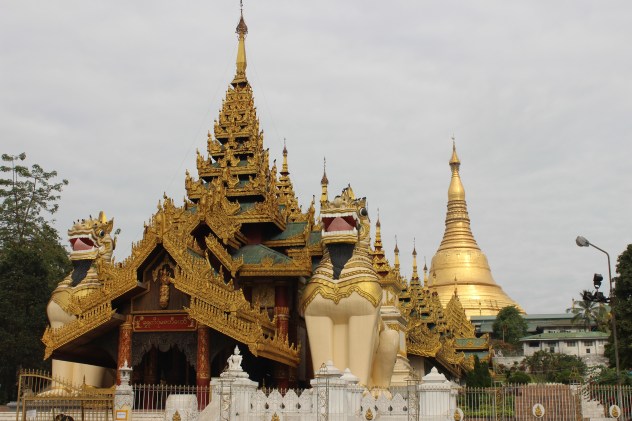
Only silence can solve the problems caused by language. But this is a difficult reality for many people, especially Westerners, to accept. After all, our psychological method is basically ‘talk therapy’, wherein somehow the words all fall into position in a way that makes sense and provides meaning for the patient, i.e. listener. Within the Buddhist tradition, I’ve only had ‘guided meditation’ from western lamas in the Tibetan/Vajrayana tradition.
In my own Theravada Buddhist tradition, I’ve never had, nor even heard of such ‘guided meditation’, though I wouldn’t be surprised to find that in the English language and specifically intended for a Western audience. Because this is a fundamental distinction between East and West. There are few, if any psychologists or psychiatrists in most Asian countries, and I would only expect to see those few for Western clients. If that sounds inconclusive, then go to an Asian bookstore and find the psychology section, if they have one. So, you’re thinking, maybe, ‘I’m Okay, You’re Okay’?
It’s probably more like ‘How to Make Money without Really Trying.” This is why I suspect that many psychologists have problems with Buddhism, and vice versa, hence the term ‘spiritual by-passing.’ They don’t use that term with Christianity, or any other religion, all of which are far more ‘religious’. Westerners love engagement. That’s why Mark Z pushes it constantly, and why many people leave Facebook eventually. I guess it pays off for him, but other lessons are more valuable to learn. Welcome to Buddhism—and silence.
-
hardie karges
Buddhism and the True Cost of Freedom

None of us is truly free. We are all truly connected. But we sometimes value this ideal of freedom more than life itself, as if having a child were more of a burden than a blessing, as if having a car were more important than having a home. But if any one of us were to truly experience this blessed freedom, then we probably wouldn’t really want it. We worship the idea of freedom, not the thing itself. But this is a hard lesson for a red-blooded American, we of the ‘warrior ethos’ and the mid-morning coffee break.
So, when we want a healthy dose of that much-vaunted freedom, we ‘go driving’ with the top down, preferably, and foot to the floor, definitely, heads out the window, like dogs with dark glasses and tongue lapping lips. Meanwhile, the Europeans look skeptical and all for good reason. Because it’s not sustainable, that’s why. It’s the same old myth of abundance, wherein not only do we want our own healthy dose of infinity, but we want it filled to overflowing with our own stuff, whether it be physical things or memorable experiences.
And memories are one of the most cruel tricks of possession, because then and there we categorize our experiences for safe keeping according to size and shape, use and abuse. But those are just dead forms and figures, with little application to today’s needs. We put them on walls and pedestals, adjusted for height and shape. But nothing really works, and any salutary effect is very short-lived. The freest person on this earth is that orange-robed monk walking nowhere fast and dedicated to making it last.
-
jmoran66
As an ex-American. I can relate to this mindset. Thankfully, I got out of there and am in a place where, through practice, I have been able to move beyond that way of thinking. I am in Thailand.
-
hardie karges
Good choice. I was there for a long time myself, mostly up north, around Chiang Rai. Where are you?
-
jmoran66
I’m in Bangkok. Been here for years, now. Over time, I’ve come to see it as fertile ground for practice, in it’s own way. It took a while to grasp that, however.
-
-
hardie karges
Yes I didn’t like Bangkok much at first but gradually warmed up to it. I might visit again, hoping to do a video series on monks and temples in SE Asia. Stay tuned. Thank you for your comments.
-


 hardie karges and


 streaming consciousness...
Reply