Tagged: emptiness Toggle Comment Threads | Keyboard Shortcuts

  • Unknown's avatar

    hardie karges 4:25 am on May 11, 2025 Permalink | Reply
    Tags: , , emptiness, , , , , , ,   

    Buddhism in a Time of Troubles 

    In times of chaos, we need calm minds. In times of crisis and cruelty we need strong hearts. Welcome to the USA, c. 2025. It is a time of peace. It is a time of war. There’s no real way to know what future historians will think about this era, but it probably won’t be good. Goodness is as goodness does, and cruelty just doesn’t count for much, unless you’re engaged in some frightfully fanciful fantasy. But Buddhism is just the opposite of that, and that comes after many a long involved historical dialectic, the likes of which continue to this day.

    But cruelty was never the kicker. Kindness is. The Dalai Lama said it, and I’d second it in a second. In Buddhism you don’t really have to do much of anything, as long as you’re nice about it. In fact, Buddhism is defined more or less by what you’re NOT to do, e.g. the precepts, not to be confused with the commandments, more like the prohibitions. Then there’s Emptiness, ‘shunyata‘, which veritably defines Buddhism by its lack of requirements, meditation being the prime example.

    So, the trick is not to be consumed by the swirl of politics and policies, even when the angst is almost overwhelming. After all, sometimes the worst situations eventually yield the best results. The important thing is to hold fast to certain principles, no matter how difficult that can sometimes be. Then there are ‘skillful means.’ That means that sometimes difficult goals can be accomplished in unfamiliar and unexpected ways. Be creative. The world is waiting patiently.

     
  • Unknown's avatar

    hardie karges 5:03 am on January 5, 2025 Permalink | Reply
    Tags: , , , emptiness, , , , , , Robert Wright, The Matrix, ,   

    Book Review: ‘Why Buddhism is True’ by Robert Wright… 

    Okay, I owe this review to Robert Wright as payback, because, while others at my Buddhist college were ‘oohing’ and ‘aahing’ back in 2017 over the release of his book ‘Why Buddhism is True’, I was extremely skeptical—and quite vocal about it. Why? Well, first, there’s the title: ‘Why Buddhism is True’. It seemed phony to me, as phony as some rock-and-roll band calling themselves ‘Nirvana’. Don’t push my buttons. Then there’s the Matrix glom-on right in the First Chapter. Or was it the Introduction? Are you serious? That’s certain proof of amateur hour for me. Last, but not least, there’s professional jealousy. Wright is first and foremost a journalist. So, what makes him the best person to write this book?

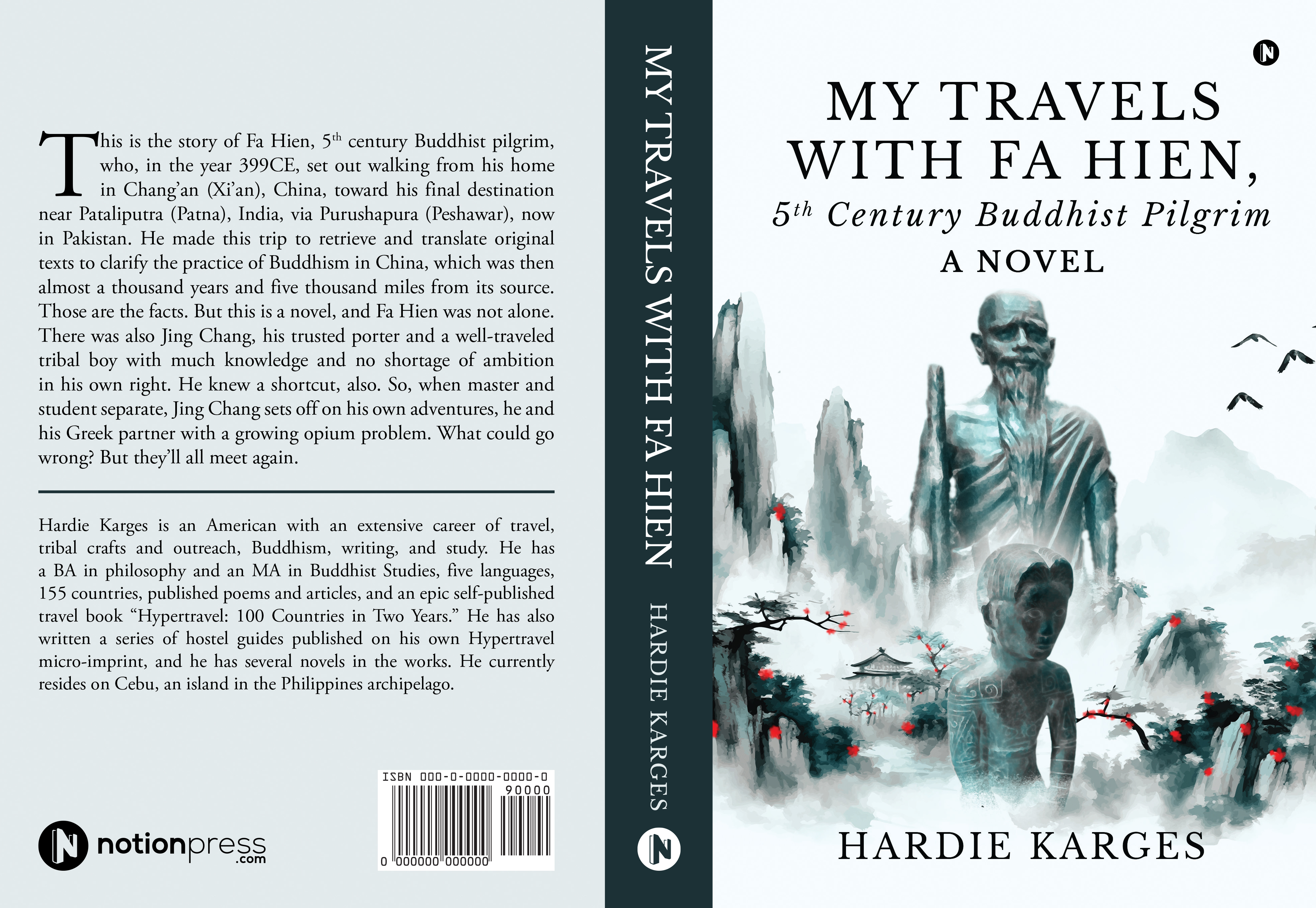
    Because, even back then, I knew that that’s the $64k question that any self-respecting literary agent would ask you before rejecting you, without telling you about the ‘journalist’s exemption’. Now I know, older but wiser (and with an MA in Buddhist Studies plus a recently published novel based on the travels of Buddhist pilgrim Fa Hien, hint hint). But his book is pretty darn good. So, I owe Mr. Wright a heartfelt apology. And that’s not a quick and easy decision, because he’s pressing his luck by reducing Buddhism to meditation, when many, if not most, of the world’s Buddhists, meditate very irregularly—IF EVER!

    But he pretty much left the Matrix references behind (‘Dharma film’, indeed!), and moved right on to other topics, some of which still stretched credulity, but served as some kind of Buddha’s Greatest Hits collection, if nothing else, so that’s probably a plus for the lightly initiated. After all, Buddhism has come a long way from its early Theravada discipline, Mahayana metaphysics of Emptiness, and Vajrayana mysticism. Now there are Vipassana, koans, and ‘crazy wisdom’, instead. Wright even devotes an entire chapter to ‘How Thoughts Think Themselves,’ one of my pet peeves in the modern Buddhist canon. But Wright handles it with journalistic equanimity, making clear that there are ways of justifying that attitude, without necessarily seeing all thoughts as falling into that category.

    But my favorite part of the book is the attention given to the possibilities of a simulated reality for us here in this life in this world, as alluded to in ‘Chapter 11: The Upside of Emptiness’, in which he argues that it is a psychological necessity to project ‘essence’ for long-term survival and human evolution. And while I would prefer to draw parallels between our neural simulations and the digital simulations of Virtual Reality, the bottom line is the same: it’s better than ‘illusion’ and nihilism is prohibited. Nirvana is similarly and summarily dismissed as the overriding raison-d’etre of Buddhism, while mentioning the unmentionable: we’re talkin’ ‘bout death here, y’all.

    Then there’s the title, which I assumed was editorial overreach on the part of Simon & Schuster, in the vein of the previously mentioned ‘Thoughts w/o Thinkers’, ‘Hardcore Zen’, ‘Universe in a Single Atom’, and other such pseudo-Buddho titular nonsense, but no: this is Wright’s chosen title, which he is prepared to defend as indicating its psychological appropriateness, something like samma ditthi, right view; nothing like absolute truth, so that’s cool. Wright is casual too, sometimes even funny, witness the title to Chapter 13: ‘Like Wow, Everything is One (at Most)’, haha. I like that. Bottom line: sometimes a well-traveled journalist is preferable to a star-spangled Rinpoche, especially when that guru is telling you to vote for the orange guy with the big bulge and the bankroll. I like honest brokers. Wright is worth the read. R.I.P. Kurt. The last Matrix movie sucked.

     
  • Unknown's avatar

    hardie karges 4:13 am on November 10, 2024 Permalink | Reply
    Tags: , , , , emptiness, , , , , , , , ,   

    Buddhism 202: Anatman on the Installment Plan 

    The fact that I’m not the same as I was before is at least partial proof of anatta, non-self, i.e. a heap of adjectives in evolution. The Sanskrit word skandha means something like ‘heap’, of course, that of which we are composed, without clearly defining exactly what that material is, though it would appear to fall in the category of ‘causes and conditions’, so more mind than matter, more substantial than material. Thus, I prefer to think of them as adjectives rather than nouns or even verbs, mere descriptions of what is to become.

    But this is immaterial (pun intended) to the substance of the original debate, mostly between Hindu Brahmins, Jains, and Buddhists, as to the permanence—or not—of a supposed ‘self’ or ‘soul’. For Hindu Brahmanists this was a cosmic ‘soul’ on a par with a God-like ‘Brahman’, while for the Jains this was an atomic soul that inhabited everything on a granular level. In response to these two choices, early Buddhists basically said, “Naah,” then moved on to bigger and better considerations.

    And, if this seems like a severe diminution of personality to the point that we (who are writing and reading this humble script) have no intrinsic existence, then I prefer to think about the freedom that this gives us rather than the limits imposed upon us. Because this emptiness is as close as we can come to infinity or eternity, and so the very opposite of limitation. There’s only one catch, though, already mentioned. It’s empty. There can’t be any sort of unlimited physical stuff. It’s simply not possible, sorry. Look on the bright side; there appears to be no current shortage of anything important. And we are a very conscious heap, in the process of evolution.

     
  • Unknown's avatar

    hardie karges 5:28 am on May 12, 2024 Permalink | Reply
    Tags: , , , , emptiness, , , , , , , , ,   

    Buddhism in the Back Room: Doing Laundry to do Laundry… 

    Beware a path too easy, because it may be a false one. Maybe that goes without saying, but probably not, because most people assume that if they ever find an acceptable path in life, then hopefully it should at least be easy. And I get it, me too, but good luck finding that in real life, because real life is nothing if not a challenge. And Buddhism is no different. In fact, ease and benefit may be inversely proportional, i.e. the easier it is, the less benefit you’ll derive from it. Which almost seems too obvious, that you get what you work for, but sometimes it’s necessary to spell things out. 

    This goes to karma, of course, actions, and comes back around as a sort of fate, prescribed actions based on prior performance, anything but predetermined, even when that is what some people want in their religion above all else. Many people can see no reason to believe in a religion when it offers them nothing but freedom of choice. People want magic. Except when they want certainty. Don’t worry. When they know, you’ll know, and life will be nothing if not exciting in the process. 

    And isn’t that what most people want more than anything—excitement? Unfortunately, that is the case all too often. People are more desirous of drama than dharma, and who cares if the kids must figure out what’s right and wrong in their own free time and at their own limited initiative. But Buddhism is better than that. The Buddhist Five precepts are almost identical to the Christian’s second set of Five Commandments, everything except the alcohol. The first set of five are fundamentally Islamic. Then Buddhism only gets better: Emptiness, Consciousness, Kindness, and Goodness, the Four Nesses’ even nobler truth, IMHO. You heard it here first.  

     
  • Unknown's avatar

    hardie karges 3:45 am on April 14, 2024 Permalink | Reply
    Tags: , , , , emptiness, , , Heart Sutra, , , , ,   

    Buddhism 101: the Middle Path is Easy  

    Muslims don’t always seem happy. Christians sometimes seem too happy. Buddhists seem just about right, more or less, give or take, on average, all things considered. That’s the middle path, that sweet spot somewhere between extremes, of luxury and lack, surrender or attack, white and black, better multicolor than random shades of gray. And that’s foundational to Buddhism, that lack of hard doctrine, much less dogma, in favor of an all-encompassing dharma based on principles on moderation, mediation, and avoidance of extremes and attachments. 

    “My religion is kindness,” the Dalai Lama himself once famously said, and that about wraps it up, on the foundational level, when combined with meditation as the finest form of practice. Sure, there’s the ontological primacy of emptiness, still, but that makes little or no difference in the average person’s life, it itself subject to shifting connotations and lack of definition, resonant mostly as the dueling protagonist in the Heart Sutra refrain, “Form is Emptiness, Emptiness is Form,” fully transcendent but ultimately inconclusive. 

    Buddhism is first and still foremost discipline, dignity, and detachment, far from the madding crowds and seething temptations. Control your mind to control your circumstances, especially when the likelihood of changing those circumstances is minimal. Choose your battles carefully. Save yourself, then save the world. That’s the best that we can do. Do it now. 

     
  • Unknown's avatar

    hardie karges 8:42 am on March 3, 2024 Permalink | Reply
    Tags: , , emptiness, , , , , , ,   

    Buddhism 301: Emptiness Is Also Silent, and Infinite…  

    Silence is normal. All noise should be treated as an alien force, approached with caution and handled with great care. But, we live in a world of mechanical waves, so we assume that the world should be full of it, percussion and repercussions. But that doesn’t necessarily mean that our worlds should be so full, since our worlds are plural, and everyone must make that choice individually. And this is another case of the glass half-full or half-empty, since it’s likely neither. But which is better?  

    Maybe there was a time in the history of the world when to merely ‘break the silence’ was somehow enlightening, revolutionary, and revealing, worth something in and of itself, but those days are likely long gone as the world rapidly fills up with stuff if not substance, and the resulting benefit is as illusory as it is elusive. What to do, then? Embrace the silence, for all it’s worth, as that should be plenty, for it is itself the raw material of meditation. 

    And, if simple awareness is the stuff of consciousness, then meditation may not be consciousness ‘on steroids,’ God forbid, but hopefully consciousness refined, purified, and made more intense in the process and more sacred in turn. For, what is more sacred than pure consciousness? This is a question that science cannot answer, and likely never will, but if there is something sacred in this life and in this world, then that must be it.  

    Buddhist ‘Emptiness,’ shunyata, based on the numerical concept of zero, is hard to define, and even harder to embody, but if that space is empty, then it must also be silent, and that makes a life more refined and much finer. But which came first, the concept or the number? It doesn’t really matter, now, does it? Embrace it, for to be empty, and silent, does not mean to be lacking. It means to be infinite, as only emptiness can. Stuff is limited. Find a place for it, then forget about it, if you can, for a while, at least.

     
  • Unknown's avatar

    hardie karges 5:15 am on February 4, 2024 Permalink | Reply
    Tags: , , , emptiness, , , , , , , , , , , , , ,   

    Buddhism: Meditation, not Mysticism…  

    Buddhism was never intended to be mystical. Buddha was very rational in his take on life and suffering. Any mysticism came later, mostly in the Vajrayana Buddhism of Tibet that came directly from India, not China, and which had taken firm hold in that country by the Eight Century CE. And while that ‘school’ of Buddhism is often included in the Mahayana tradition which traveled through, and was greatly influenced, by China, such is not the case with Vajrayana, which derives from a later, maybe the last, Indian Buddhist tradition, before it succumbed to the coup de grace by the invasive Mughals, after centuries of losing ground, and followers, to the Brahmanist Hindus. 

    About the only thing that all the Mahayana schools have in common, in fact, is that they are not of the original Theravada tradition, which originated in India and found fertile ground in southeast Asia, mostly. And if the Vajrayana tradition is famous for its multiple levels of heaven and hell, its Tantric yab-yum, mudras and mantras, then Theravada (aka Hinayana), is best known for its lack of all that, and concentration on meditation, especially, to the extent that it’s sometimes known by that most famous meditation technique Vipassana. Meanwhile the Mahayana Buddhism of China is probably best defined by its transcendent Buddha and the vast Emptiness of reality, both more recent developments.

    Many famous Chinese monks, Fa Xian and Xuanzang foremost among them, even made long arduous trips to India just to get it right, like Charlemagne realizing his 8th century French language wasn’t proper Latin. And mostly I believe that meant learning meditation, and some other disciplines, which Theravada monks usually excel at, and Chinese monks often suck at—to this day. In fact, I didn’t really even know what meditation was until I attended some Theravada-based meditation retreats in Southeast Asia, intended for Asians, not Westerners. When you see a layman sitting silent unflinching for two or three hours lost in no-thought: that’s meditation. The monks are even better at it. Now I get it. Get it. 

     
  • Unknown's avatar

    hardie karges 3:35 am on January 28, 2024 Permalink | Reply
    Tags: , emptiness, , , , , , , , , , , zero point   

    Buddhism and the Power of Silence  

    Words once spoken cannot be taken back. Actions once committed cannot be retracted. Silence is better than violence. This is one of the hidden little gems of Buddhism, the value of silence. And other than the emphasis on meditation, it’s something that doesn’t often get mentioned—until now. Because here and now, in the modern age and the Western world, the noise is almost deafening, and the calls to engage are never-ending, no matter that much of that engagement is cruel and disheartening.  

    As a ‘digital creator’ on Facebook, I get it all the time, as if non-engagement were synonymous to incompetence. But nothing could be further from the truth. Silence is not violence, and BLM (Black Lives Matter) should know this. MLK (Martin Luther King) certainly knew it well, as did Mohandas K. (Mahatrma) Gandhi. Silence is one of the most powerful weapons in the world, in fact, but it is also much more than that. As the operating method of meditation, it can save souls (people) and so, it can also save nations.  

    If silence is the zero point for meditation, then meditation is the zero point for life. In this analogy, silence is like the zero (shunya) for which emptiness (shunyata) is named and can be thought of like the mathematical zero as the point between positive and negative (existence or non-existence?) numbers or the absolute zero temperature beneath which there is no lower, or even the zero-point energy of quantum physics as that point closest to absolute stillness. That’s the goal of meditation, insight optional, and that’s the goal of life, if only for a moment, now and again, always and forever. 

     
  • Unknown's avatar

    hardie karges 3:11 am on June 9, 2023 Permalink | Reply
    Tags: , , , , , emptiness, , , ,   

    The Difference Between Buddhism and Hinduism  

    The difference between Hinduism and Buddhism might best be seen in the Buddhist monk’s hairstyle: Emptiness! Haha. And while that may seem like the ultimate in silliness, there’s more than a little bit of truth there. But first, let me clarify that Buddhist monks are typically, i.e. almost always, shaved bald, ditto for nuns, while Hindu pandits, acharyas, and especially rishis, are known for their wild locks and their elaborate rituals, yagyas. Buddhists typically chant, the same words that their predecessors chanted, some 2500 years ago.  

    That’s how the sutras were composed and recorded, long before the advent of written text in the Indian subcontinent. And Emptiness, shunyata, was always at the heart of the doctrine, even if its full articulation followed the previous anatta ‘no self’ doctrine, which was one of the early prime tenets of Buddhism, and which was in direct opposition to the Hindu belief in Atman, something of a cosmic self, which transmigrates eternally, on a good day, unless it is lucky enough to obtain release from this pit of samsara. Note that to this day, eastern religions want to escape the world, while western religions typically want eternal life in this world. 

    But the difference between Hinduism and Buddhism is in the details. While Hinduism is about celebration and ecstasy, Buddhism is typically about austerity and discipline. And, at the risk of losing converts to Hinduism, I’d have to agree. To be a full-fledge Hindu, you really have to be born there with a caste affiliation. They’ve tried constantly to subvert Buddhism that way, also, but with varying success. Mostly they succeeded in killing it, in India, at least, while the more nationalistic Hinduism was left to take up its cause with an ascendant Islam. Buddhism is universal. Hinduism is not. Buddhism is the Middle Path between Hinduism and Jainism. But that’s another story.

     
    • Balance Thy Life's avatar

      Balance Thy Life 3:14 am on June 9, 2023 Permalink | Reply

      Interesting article highlighting the differences between Hinduism and Buddhism. The comparison between the hair of Buddhist monks and Hindu pandits was amusing yet insightful.
      founder of balance thy life https://balancethylife.com

  • Unknown's avatar

    hardie karges 10:42 am on April 22, 2023 Permalink | Reply
    Tags: , emptiness, , , Mark Epstein, , Roman numerals, , ,   

    Samma Vaca: Right Speech on the Buddhist Middle Path  

    This is something so difficult for so many people that often no speech is better. Because Buddhism didn’t start the old ‘Silence is Golden’ saying, but it probably could have. Because it’s such a valuable tool in the workshop of life that its effect is invaluable. I think that it can easily be seen as the sonic equivalent of Emptiness for Buddhist purposes, that same shunyata Emptiness derived from the Pali/Sanskrit shunya zero (yes, THAT zero), which is not really a number, but a concept, and which largely expanded the original anatman no-self doctrine to everything. 

    But, if easy convenient symbols for that powerful metaphor are hard to find, then silence is one of the easiest, maybe even easier than the eponymous shunya itself, i.e. zero. Because number systems did just fine for many years without the place holder and multiplier that we call ‘zero’ in the English language. And, despite some interpretations that it’s necessary for a decimal system, well, in fact, it is not, and our own (!?) Roman numerals are the proof of that, easily countable up to about 5000, and not so hard to write as V. But you wouldn’t want to see 4999. 

    And, so it is with speech. Sometimes less is more, not just figuratively, but literally, and numerically. Because, if the zero allows easy multiplication, with possibilities of infinity, then silence can do the same. Until I say something, then anything is possible, and the future is wide open. But once I commit to speech, and language, then its reach is definite, certain, limited—and past tense. But what is ‘right speech’? After all, we can’t be silent ALL the time. What everybody wants in life, whether they know it or not, is to feel good.  

    So, in brief, right speech is speech that makes you feel good, though not just you, but all the other people within hearing range, or in the case of written speech, then all potential readers. But that’s easier said than done. Because ours is a world of fierce differences and often acrimonious debate, even when the potential results are more futile than feudal. Still, we persist in advancing our agendas. Silence allows time and space to see the other side. But, if you must speak, then say nice things, constructive and conciliatory. And think good thoughts. That’s two steps of the Buddhist Middle Path right there. You’re halfway home. 

    Author’s note: just after writing this, I discovered a passage in Mark Epstein’s ‘Thoughts Without a Thinker’ that resonates in total agreement, in the section called ‘Holding Emotions’: “The Buddha taught a method of holding thoughts, feelings, and sensations in the balance of meditative equipoise so that they can be seen in a clear light.” Nice, couldn’t have said it better myself. Enjoy. 

     
c
Compose new post
j
Next post/Next comment
k
Previous post/Previous comment
r
Reply
e
Edit
o
Show/Hide comments
t
Go to top
l
Go to login
h
Show/Hide help
shift + esc
Cancel