Tagged: rishi Toggle Comment Threads | Keyboard Shortcuts

  • Unknown's avatar

    hardie karges 4:40 am on November 24, 2024 Permalink | Reply
    Tags: ashrama, , , , , , , , , , rishi, sannyasin, , ,   

    Buddhism 399: Homelessness and the Joy of Giving… 

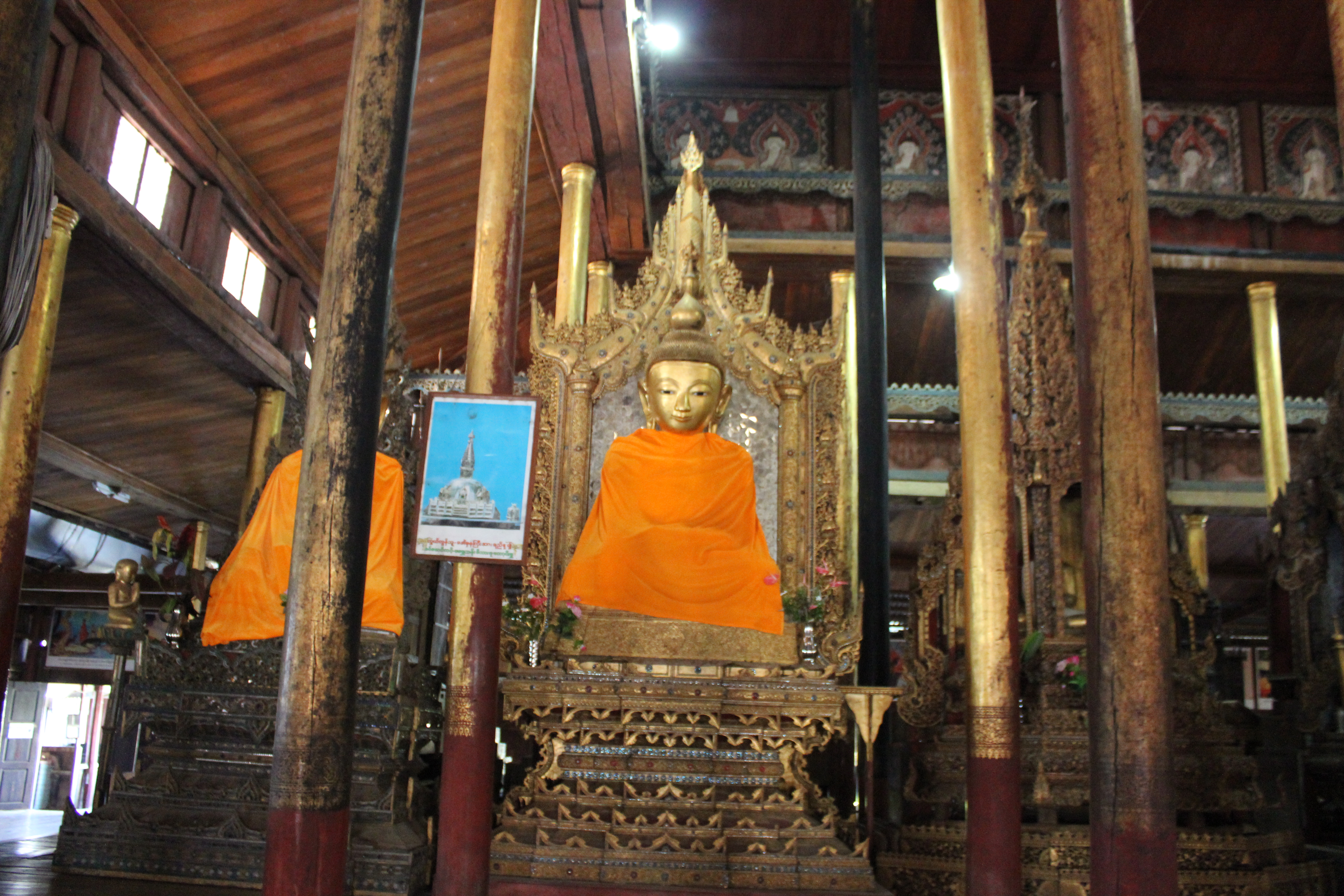
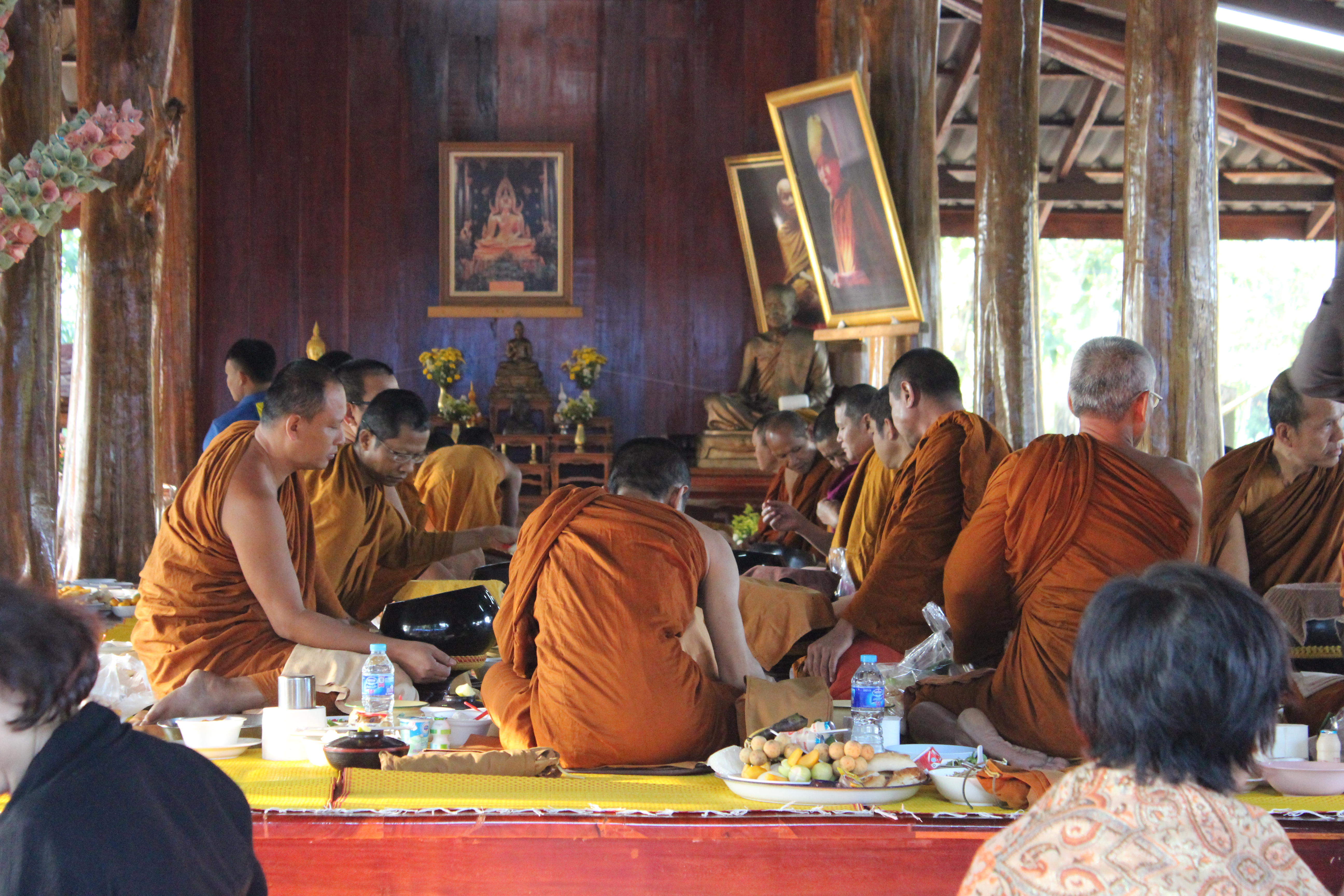
    Give more than you take. That will be more than enough, and the world will be a better place. That is the essence of almost all religions, Buddhism included, regardless of whether you consider Buddhism first and foremost a philosophy, as I tend to think. But philosophies don’t usually include a call to action, whereas religions usually do. Buddhism doesn’t do that, though, not specifically, but it is implicit in the practice, the original practice. That’s why you’ll see orange or yellow-robed shaved-head monks walking through the markets at daybreak in almost every Theravada country in SE Asia, requesting alms for subsistence, usually food. This giving is usually known as dana.

    This harkens back to an even earlier practice in India wherein long-haired rishis and sannyasins wearing similar saffron clothing but usually without a group of like-minds, would make similar rounds, a practice which continues to this day. The difference is not only that the former are Buddhist and the latter Hindu, but the former have rules and regular routes, and are often registered for this activity, whereas the latter are more likely free and on their own, often in the last phases of life according to the four Hindu ashramas of student, householder, forest dweller, and renunciant—nice.

    But the important thing is the giving. So, instead of seeing a renunciant as a societal parasite reduced to begging, we should see them as symbols of purity, offering laypersons the opportunity to experience the same bliss of renunciation that they not only symbolize but incarnate. It’s only ironic that they themselves often consider themselves—and call themselves—homeless, no pun intended. Because that is the little joke they play on all of us, that the poorest people of the West are linguistically identified with the holiest of the East. I only wish that Western practitioners would follow the same precepts. The food is usually pretty good, at least in Thailand.


     
  • Unknown's avatar

    hardie karges 5:07 am on September 10, 2023 Permalink | Reply
    Tags: , , mindlessness, miondfulness, , , rishi,   

    Buddhism 499: Washing Dishes… 

    I don’t wash dishes to wash dishes. I wash dishes to get them clean, over and over and over. It can be very meditative. And, of course, that’s what Thich Nhat Hahn meant in his famous quote about “washing dishes to wash dishes,” that that is a meditation in itself, every bit the equal of a walking meditation or even a guided meditation, if not the original cross-legged lotus-pose figure-eight (Thai) immortalized in countless imagery over the ears and centuries, showcasing rishis and maharishis and yogis and sannyasis and vairagis and countless other practitioners of eclectic ascetic disciplines who never wanted to be showcased in the first place. Most just want to be left alone to meditate.  

    But few have that luxury, since even the most renunciant of yogis still must eat sometime, even if that requires leaving the cave to go into town and beg for it. For most Theravada Buddhists, that is the stylized ritual that forms the foundation for their existence in society, if not the world itself, for which meditation is perhaps the precursor to all. And yes, that is usually best done in the silent and still sitting position, for which the only requirement is just that: be silent and be still. Whatever goes on in your mind is your business, unfortunately. But modern Buddhism has brought many new ways, and so the old ways must re-invent themselves, also, to stay relevant to new Buddhist adepts.  

    Thus, the TNH invocation to get your meditation wherever you can find it. Mindfulness must be careful not to drift into mindlessness, however, and ‘washing dishes to wash dishes’ comes dangerously close to that, as if there is nothing really to be accomplished in the world and all such efforts are equally destined to fail. The Buddha never said that. But many ‘non-dualists’ do. I don’t. That is a luxury I can’t afford. So, if TNH’s message is to take your meditation where you find it, my message is to make the world a better place, also, in your short time on this piece of earth. Don’t be obsessed with it and/or possessed by it, but don’t waste the opportunity, either. 

     
  • Unknown's avatar

    hardie karges 7:15 am on March 3, 2023 Permalink | Reply
    Tags: , , , , , , , rishi, ,   

    Buddhist Karma and the Middle Path to Salvation   

    You want good karma? Help a beggar to eat. That’s good karma. Because karma literally means ‘acts’ or ‘actions’, though it is often used almost synonymously with the English word ‘fate,’ as though it were all about some sort of predestination. But no, that’s a derivative meaning which may or may not always apply. The most important thing is right actions, or samma kammanta, as specified in the Eightfold Path that concludes the Four Noble Truths of Buddhism. 

    And that’s the important thing, to perform good acts, the other steps along the path, not unlike the Ten Commandments of Christianity, including right speech, right livelihood, and, of course, the basics: do not kill, do not steal, and for god’s sake don’t mess with your neighbor’s partner! Is nothing sacred? And if the Christians like to phrase that as ‘thou shalt not covet,’ then the Sanskrit is not so much different. They’re related languages and people, after all, and the Buddha puts ‘craving’ up there as the main cause of suffering. 

    But where East and West might truly differ, though, is in the speed and willingness to act. Because if we in the West see our active ‘go go go’ lifestyles as a normal and predictable outcome of our sojourn upon this planet, I can assure you that not everyone sees life and the world that way, least of all the rishis for which India is so famous, not to mention the pandits, gurus, swamis, and acharyas. And so, there’s a hidden message for them here also: Do something! After all, you can’t sit in a cave all your life, can you? Can you? 

     
  • Unknown's avatar

    hardie karges 12:03 pm on August 7, 2022 Permalink | Reply
    Tags: , , , , , , , , rishi, ,   

    Buddhism in a Hindu World: no Time for Selves and Souls… 

    You should be able to find a comfortable balance between low self-esteem on the one hand, and overt selfish egotism, on the other, in the Buddhist doctrine of anatta, non-self or no-self, same thing. But this is one of the more controversial and misunderstood of the Buddha’s teachings, and subject to much abuse by those who want to go too far in the opposite direction from egotism, by claiming that we are all ‘nobody,’ and should somehow be proud of that. And that’s fine, if that’s what you want, but that’s not what the Buddha said.

    Because in one very real sense, the Buddha’s Middle path is not just the original path between luxury and lack, or even the esoteric existence and non-existence of the later Mahayanists. It is also very much a Middle Path between the competing philosophies of Vedic Brahmanism and the Jainism of his day. Those two, in effect, defined a very real dichotomy between the lush and lavish celebratory rituals of the upper Brahmin class and the self-denial of the renunciant rishis who once made India famous as a religious center, and to some extent still do.

    So, the self vs. no-self controversy for Buddhists was never supposed to be a total refutation of all things selfie, such that we are individually nothing at all and should aspire to nothing more than the average leaf blowing in the wind. The Buddhist doctrine of anatta only means that there is no permanent eternal soul to aspire to union with the cosmic Brahmana principle, as Brahmanic Hinduism invokes, and so nothing to worry about on that count. Peace in this life in this world is to be found by knowing the truths of suffering, craving, and impermanence, and then acting accordingly. Now we can get on with our lives.

     
  • Unknown's avatar

    hardie karges 8:40 am on March 6, 2022 Permalink | Reply
    Tags: , , , , , rishi, Zeno;s Paradox   

    Buddhism in the Bardo: War is Hell 

    If you win an argument, then you haven’t really won much. If you win a battle, you’ve won even less. Nobody wins unless we all win. And this is especially true in times of war, when everything you love is on the table (“don’t swallow the cap”) and everything you love is out to sea (The National), and you’re lucky to even find a moment for a sniff between the tears, in which to catch your breath and convince yourself that life is worth living, despite any evidence to that effect.

    But instinct tells you to keep on keeping on, since to end it all is to end the process of deliberation, also, which is an unforgiveable sin, to end a narrative without closure, to end a story without a suitable reason for ending, which is tantamount to treason, and in violation of the ‘fourth-quarter clause’ which states that every game is winnable if given enough time and given enough grace, and given enough love scattered all over the place, such that any uncertain outcome at least carries with it the possibility of personal redemption, if not outright victory in battle.

    Or you could become a renunciant, in the purest sense, a rishi, or maybe a Jain, if you really need a name, in which none of these concerns should really concern us. After all, what could Putin do if Ukrainians simply refused to cooperate, letting him take whatever he wants, but ultimately refusing to cooperate in the slightest? If you’ve already renounced all family and possessions, then what leverage does he have over you? In this scenario, the ‘I’ at the center of your identity is nothing really, simply a pragmatic and conventional set of characteristics that makes it simpler to order dinner, without really proving much in the process.

    Or you could become a Buddhist, splitting the difference, until there is no difference left to split, like Zeno’s paradoxes, going halfway until you never really get anywhere, or at least not to any final destination. Because where is there to really go, now, anyway? So, you plant seeds in anticipation of a harvest, knowing full well and good that sometimes it doesn’t always work out that way, but so what? Sometimes thy cup runneth over, so hopefully it all balances out, if you know how to deal with that.

    Because the whole rap about ‘living in the present’ is so overblown as to remove much of its shine and luster, which is substantial. And it’s often credited to Buddhism, but I don’t remember the Buddha ever saying anything like that, though the lifestyle might imply it. But Jesus did, that rap about the birds not building barns, yet God still provides for them, EXCEPT that birds DO build barns, though we usually call them ‘nests.’ But that doesn’t mean that they have to be full.

    Our mantra in the West is to ‘live life to the fullest,’ and that is where we often go wrong. Because it neither has to be full nor empty. It merely has to be rewarding in its simplicity. But that is an act of consciousness. The recent discovery that most hippos die as virgins confirms the brute force with which the Alpha male often rules his little kingdom, and hams the harem, while the rest of us get sloppy seconds and a pocketful of tissues. But homo sapiens is defined by consciousness, so that won’t work. Now, somebody go tell Putin, before he kills us all. All he needs is Enlightenment…

     
  • Unknown's avatar

    hardie karges 12:36 am on October 20, 2019 Permalink | Reply
    Tags: , , , , rishi   

    Buddhist psychology and the meaning of religion… 

    To control yourself is a Buddhist virtue. To control others is a Communist sin. And this is central to the psychology, if not the precepts, of Buddhism, the act of self-control, much to the horror of many western Buddhists, looking for bliss and passion and a free ticket to Buddha Fest, that this thing that is all the rage, too cool for school, hipper than hip and groovier than most, is really quite the opposite, mostly just sitting and avoiding confrontation, even avoiding the world entirely in the most extreme circumstances, sitting in a cave for twenty years. That’s what rishis do, even to this day. So maybe you’re a good Buddhist and you’ve got your favorite Buddhist monk, either in person or online, reading his every word with admiration and waiting with bated breath to hear just a little more. But did you ever wonder who his culture heroes are? Often it’s these rishis, sitting in caves, such that the snarky phrase ‘contemplating his navel’ takes on new meaning. What’s the point? There is no point, other than liberation, and enlightenment, and freedom from the dictates of drudgery and public opinion. The problem occurs when the virtue of self-control gets twisted into the perverse logic of controlling others, as though this is a logical corollary, when nothing could be further from the truth. So Buddhist countries are some of the least free in the world, presumably because governments know they have a docile populace, and pervert that virtue into a deadly sin. That’s not religion. To see the world as a child is to see it with awe and wonder, open mouth optional, rapture not required. This is religion.

     
  • Unknown's avatar

    hardie karges 6:16 am on March 26, 2017 Permalink | Reply
    Tags: , , epiphany, , metropolis, rishi   

    Buddhist Epiphany: the Homeless Will Inherit the Earth… 

    img_1382

    The golden age of cities may be over and done, gone to the dogs, hard to believe that as recently as the 1980’s American teenagers could still get excited cruising down Hollywood Boulevards and Sunset Strips in gas-guzzling sedans and VW vans, gazing longingly upward at IHOP’s and Waffle Houses, Dunkin’ Donuts and KFC…

    …pale imitations of the City of Lights, Paris at the turn of the previous century, outshining dingy London stuck with gas lamps and starchy pies, dry humor and sticky dreams, pea soup and foggy skies, and so it is with Los Angeles and New York, different as black and white, day and night, New York city of unrepentant vampires and LA city of love-lost angels… (More …)

     
    • The Night Wytch's avatar

      Alexia Adder 11:39 pm on January 25, 2020 Permalink | Reply

      America’s capitalist culture is the descendant of feudalism. The Founding Fathers never meant for everyone to be free. Only certain people and especially not black people. Our culture being built on slavery and racism is problematic. All of these started as classism, evolved into sexism, racism, and other forms of discrimination.

      Since success in America is based on how much money and stuff you have, homeless people are often dehumanized as lowest of the low. It’s a caste system in another form. (Something that Buddha would be against.)

      • hardie karges's avatar

        hardie karges 7:44 am on January 26, 2020 Permalink | Reply

        Yes, I have to crack a smile when a Buddhist monk refers to himself as homeless. Thanks!

c
Compose new post
j
Next post/Next comment
k
Previous post/Previous comment
r
Reply
e
Edit
o
Show/Hide comments
t
Go to top
l
Go to login
h
Show/Hide help
shift + esc
Cancel