

The Buddhist Middle Path in an Imperfect World
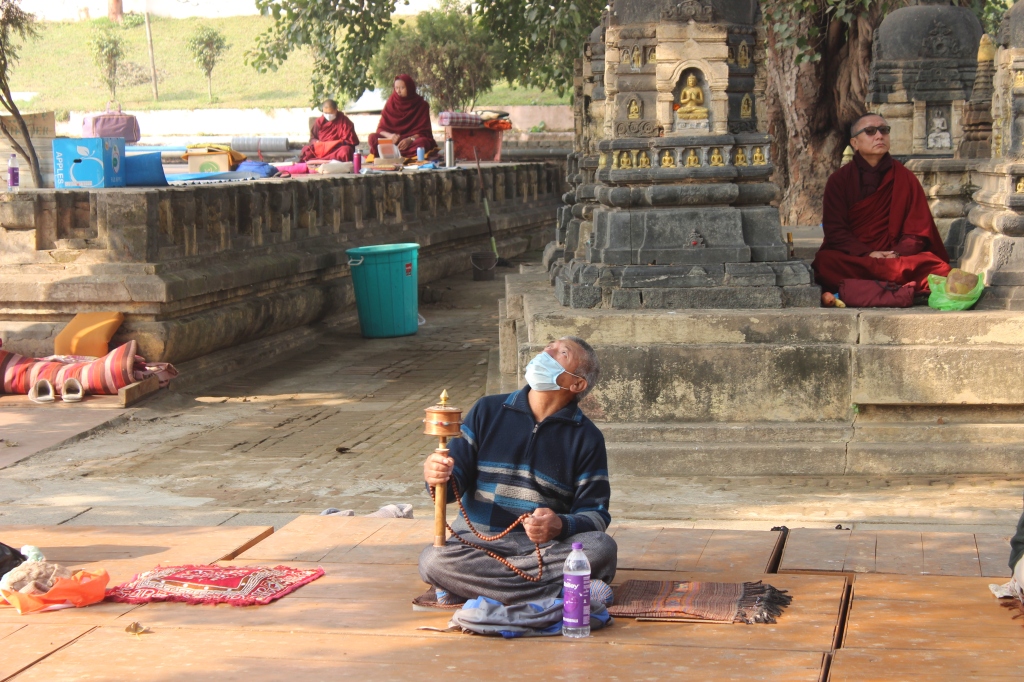
If there is a Middle Path, then there is a choice. And if there is a choice, then there is free will. That’s important, because if there is no free will, then there is no morality. And if there is no morality, then there is no right or wrong. The world is a jungle and anything goes, and if anything goes, then you can be assured that much of that will be bad. Because we may be a diverse group of unique individuals, or not, but I’m fairly sure tha the number of angels here is limited.
The Buddha made it clear, and I agree, that this is not a perfect world, i.e. there is suffering, the First Noble Truth. How was he, and we, so sure of that? No one gets out of here alive. That’s how we know. When that changes, then maybe it will be time for a new philosophy and a new religion, but until then, we do the best we can in an imperfect situation. We can mitigate that suffering by lowering our expectations and being open to change, but many needs will still be unresolved, and many changes will be difficult.
So, the Middle Path is not so hard, but it’s not so easy, either. That’s why it’s called the Middle Path. Because taking sides is easy, clear, and distinct, but often wrong. Following a narrow winding path is much more difficult, looking for signs to hopefully find the way through rugged terrain in troubling times. The important thing is to keep pushing forward and create a path if it’s not so obvious. Because the most obvious paths are like water, flowing downhill until they reach something bigger and better. Once you find flowing water, then you have found a path of little resistance, and there will be a way forward.


 hardie karges are discussing.


 Intent is the elephant in the courtroom of modern justice, beyond forensics and beyond genetics, the need to know what someone was thinking and why they thought it, at such-and-such a time and such-and-such a place. But isn’t this a system doomed to failure? And is it really necessary?
  streaming consciousness...
Reply