Tagged: Hardie Karges Toggle Comment Threads | Keyboard Shortcuts

  • Unknown's avatar

    hardie karges 7:05 am on April 17, 2022 Permalink | Reply
    Tags: , , , , Hardie Karges, , , , ,   

    Buddhist Metta in the Age of Social Media… 

    Metta is simple and one of the cornerstones of Buddhism: friendship, simple friendship. Or call it ‘loving-kindness’ if that reconciles you with the Hebrew chesed of your Judeo-Christian tradition. Just note that it is not the passion that is usually associated with Christian ‘loving-kindness,’ not even the passionate embrace of a mother and her child. There’s nothing necessarily wrong with that, but it’s not necessary. What’s necessary is that the child not experience fear and anger and other defilements and afflictions.

    But we Westerners, particularly Americans, are raised on a diet of emotional cocktails, roller-coasters and built-in toasters, speeding up and then putting on brakes, heating up and then cooling our feet, such that life is nothing but one vast mood swing, which we must then ‘shrink’ by repeated visits to the therapist of our choice. To be a ‘bad-ass’ is a compliment in the US of A, and it shows in our interactions with the world. We fight our enemies to the death on battlefields, while never questioning the enemy within.

    This is one reason why it’s so difficult for Americans to be good Buddhists. Because we look for enlightenment in dialogue and debate, rather than the silence that brilliantly illustrates Emptiness, if not strictly define it. Because we look for our meditation in the words of some endless rap from some best-selling app from the online app-store of one of the world’s richest men, rather than that same silence which the Buddha himself used, as do thousands of monks to this day.

    And whether those monks win or lose the debates that some “spiritual bad-asses” (actual quote) find so rewarding and illuminating is not important. What’s important is quieting the mind (i.e. consciousness) by the necessary hours of silent and still sitting that make life itself the only reward necessary for a rewarding existence. All the cars and bars and Hollywood stars on assorted sh*t-stained sidewalks are but illustrations in a magazine that most people can’t sit still long enough to actually read.

    Compared to these challenges, metta is a literal piece of cake, to be shared with friends on any given day, and maybe even twice on Sunday, or Christmas, or Easter. The world is our sangha, our community, and strangers are as much a part of that as family, friends, neighbors, and co-workers. In fact, that can be its greatest reward, communion with strangers as if they were lifelong friends. You can’t know that pleasure until you test those waters. The first rule of friendship is to be friendly, simple. Smile. Happy Easter. Happy Buddhist New Year.

     
  • Unknown's avatar

    hardie karges 6:54 am on April 10, 2022 Permalink | Reply
    Tags: , , , Dawn of Everything, , Hardie Karges, judgment, , , , ,   

    Buddhism 101: The Difference Between Cravings and Needs–and Karma… 

    Be careful with judgments. The craving for food of a wealthy person is different from the craving for food of a poor person. If that means that there are good cravings and bad cravings, then we are simply getting bogged down in words, because the craving to be avoided is for something beyond what is necessary. Thus, the craving for food of a starving person is not a craving in the sense that Buddhism abhors. That is a need, not a craving. The craving that Buddhism abhors is the incessant call for more, more, and more far beyond what is needed to sustain the life of someone and his significant others.

    This is implicit, of course, in the Middle Path between luxury and lack, which is at the heart of original Buddhism, before the re-birthers decided that it was always all about that: rebirth, past lives, and the generation-jumping karma of retribution. And that original impetus is definitely what we need now, in our economic stage of advanced capitalism, to be reminded that craving is at the heart of our problem. There is even some scientific evidence coming out now in the best-selling book ‘The Dawn of Everything’ that gluttony and craving are at the heart of certain violent and slave-trading cultures.

    Suddenly it all starts to make sense, doesn’t it? The lifestyles that reward gluttony and craving demand violence and other defilements to sustain them. The one feeds the other in a never-ending cycle of degradation, and our lives suffer as a result. Life is not so difficult, after all, certainly not as difficult as the ‘multiple feedback loops of karma’ invoked by some high priests of reincarnation might make you think. Just be kind, and gentle, and respectful to the rights and dignity of others. The rites and rituals can come and go, but what you don’t do is sometimes more important than what you do.

     
  • Unknown's avatar

    hardie karges 4:50 am on March 27, 2022 Permalink | Reply
    Tags: , , Hardie Karges, , , ,   

    Buddhism: Life in the Slow Lane… 

    It’s okay to enjoy life, even love it, and still be a good Buddhist, as long as you don’t pretend to possess or attach, crave or covet. Because, even if Buddhism is a religion of renunciation, at its origins, and at the core of its being, it is still pragmatic and rational in its acknowledgement that the average life, for the average householder, must be properly maintained and nourished if any of us are to even have anything to renounce. Renunciation, after all, is not poverty. It is a conscious rejection of the supercilious aspects of human existence that lend it its falseness, and which tend to reduce us to its servants, not its masters.

    Because the master of human existence is the one who can take it or leave it, in its fullness or its emptiness, each of which is valid and credible, neither of which is complete in and of itself, and both of which can serve as valuable paradigms toward fulfillment in the right place and in the right time, the details of which are to be established later. Because Buddhism is nothing if not a fertile middle ground for resettlement, after all the thrusts and forays of penetration and conquest have run their course. Those are but illusions, after all, while the real stuff of life is to be found not in articles of consumption, but in the abstract concepts that occupy thought, feeling, and action. There is nothing mystical about Buddhism in its essence. The Middle Path is all about rationality, ratios, and rations…

     
  • Unknown's avatar

    hardie karges 5:39 am on March 20, 2022 Permalink | Reply
    Tags: , , , , demmocracy, , Hardie Karges, triple religion   

    Caveat Emptor: Buddhism’s Fine Print… 

    You can spend your life pursuing objects of craving, or you can reduce your need for them. Christianity or Buddhism? Your choice. And yes, it’s really that simple, almost. The Buddhist Precepts and the Christian Ten Commandments are almost exactly the same, after all. And other differences purported if not actually reported are a little bit harder to define, like the bit about passion and dispassion. Now I fully trust my sense of that, but it is a harder point to sharpen, and anyway doesn’t make so much difference for the average individual living his daily life.

    Then there’s the question of a creator God, which is probably as much a thorn in the side of many Christians as the question of rebirth is for many Buddhists, which is the role of belief and superstition in the practice of either. And so, once again, the similarities abound. But the opposites are palpable. To crave or not? That’s a real difference, and lies at the heart of Buddhism, the disavowal of that. And the desire for that lies at the heart of the Triple Religion that we might call Christianity-Democracy-Capitalism, my term, not to be confused with the Triple Religion of Buddhism, Taoism, and Confucianism, which is often invoked for China and sometimes Vietnam, at least before Communism.

    But few choices are truly binary in real life, even if the issues involved often are. To desire or not desire? I think that I might be able to divide my time appropriately between the two. After all Buddhism is built on a Middle Path between extremes, the worst of either to be avoided, while the best of both are to be imbibed of judiciously, with neither lack nor excess. And if this ultimately involves the mixing of religions, then so be it, as long as it’s articulated, so that we’re not pretending that grace, forgiveness, and passion are at the heart of Buddhism. They aren’t. That’s Christianity. So mix in equal portions, like salt and pepper. And there might even be a new Triple Religion possible, Buddhism-Democracy-Socialism, sounds good to me.

     
  • Unknown's avatar

    hardie karges 7:46 am on February 27, 2022 Permalink | Reply
    Tags: , , , Hardie Karges, , ,   

    Advanced Buddhism: Silence is not Violence 

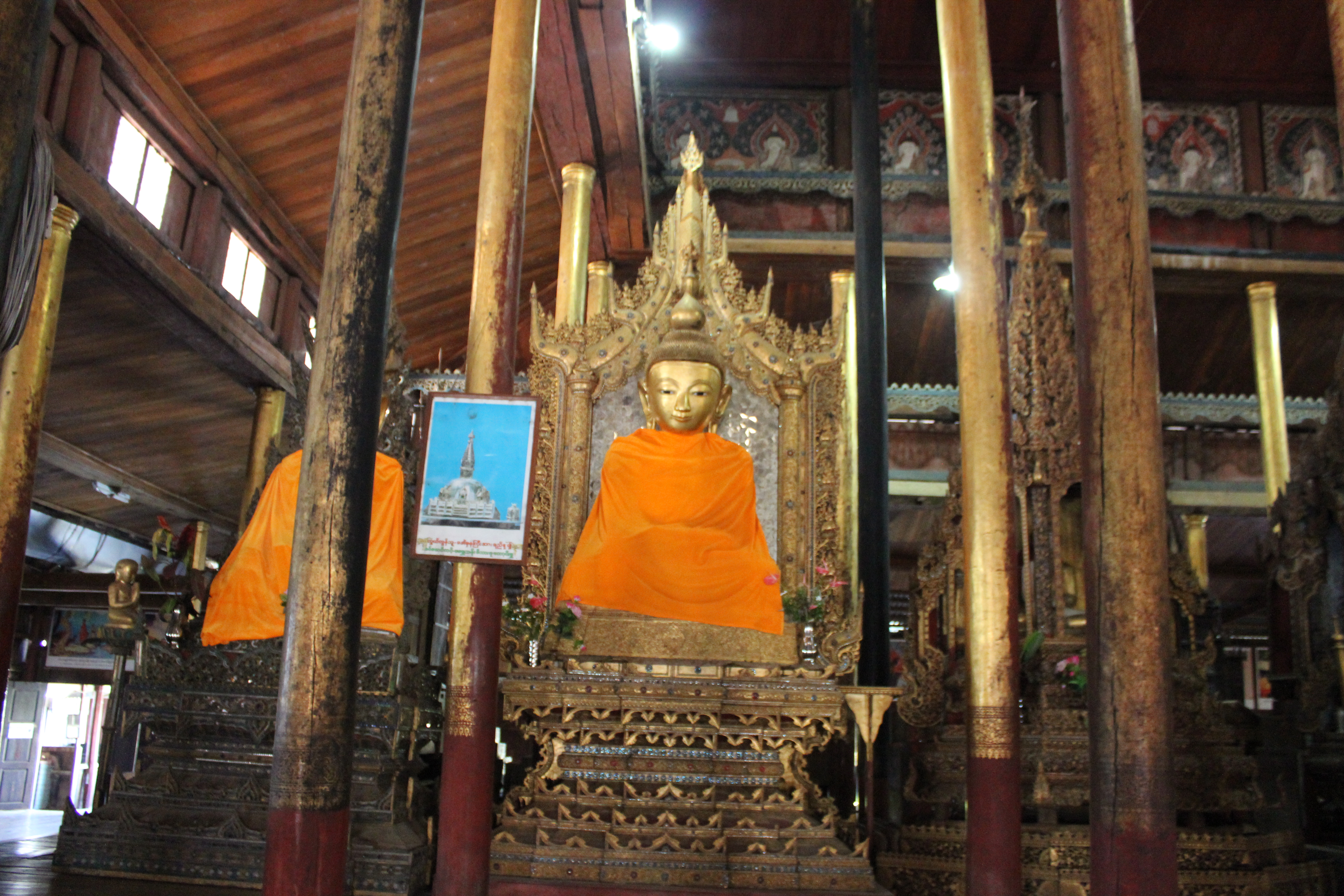
    Buddhism in Bhutan

    Words once spoken cannot be taken back. Actions once committed cannot be retracted. Silence is better than violence. But this contradicts one of the slogans of the Black Lives Matter movement, of course, that ‘Silence is Violence,’ which, no matter how much I sympathize with that movement, is simply mistaken, as a matter of fact, and definition, not opinion nor political orientation. Of course the BLM people were not thinking of meditative silence, so we’re discussing apples and oranges, really, no matter that silence is strictly still silence, no matter the circumstance. Emptiness is another matter. When the Russian figure skater said she felt ‘empty,’ she wasn’t talking about shunyata, I don’t think.

    It’s almost hard to believe now, but not so long ago, to ‘break the silence’ was a symbol of progress, the buzz of saws and the whir of wheels almost synonymous with the concept of progress, in fact. This was largely due to the influence of the Industrial Revolution, of course, the effects of which are still being calculated each and every day, though now perhaps in a more negative sense, given its almost single-handed cause of what we call Global Warming. Global Warmongering began long before and was probably far more brutal than anything that we can even imagine today, whole villages and towns raided and leveled for the lack of ability to hold ground against the superior technology—horses.     

    So, silence is the way of Buddhism, in more ways than one. Not only is it the foundation of meditation, bit it is the right hand to shunyata, the Emptiness that underlies all existence, the vessel that contains the stuff that we associate with reality, but which isn’t, not really. The vessel is more real than all the stuff inside, whether we call it that or call it light and gravity, or another quark for Mister Mark. The point is that there are things more fundamental to reality than all the stuff we see every day. And silence is more fundamental than all the noise we create. On a more personal level, you don’t need to be aggressive to show displeasure. I recommend the silent treatment. It’s better than the violent treatment.

     
  • Unknown's avatar

    hardie karges 8:07 am on December 19, 2021 Permalink | Reply
    Tags: Buddha-nature, , Hardie Karges, , Lin Chi,   

    First Precept of Buddhism: Thou Shalt not Kill… 

    If you meet the Buddha on the road, feed him. Now isn’t that better than the traditional Zen koan: “If you meet the Buddha on the road, kill him”? And I know, I know, there are approximately 1000 explanations and clarifications about what Lin Chi really meant, most of them veering toward the ever-popular non-dualistic trend, in the sense that the Buddha-nature (bodhicitta) is within us all, so that if you meet a Buddha that is separate from yourself, then it is likely an imposter—or not.

    After all, who really knows what Lin Chi meant, more than 1000 years ago, or all the other hundreds of koans that are supposed to lead to enlightenment, simply by twisting the mind, or thought, or language, so that there is no other option? Out of the confusion, enlightenment will come, when the limits of language are laid bare—or not. Because who really knows what any of the hundreds of Buddhist philosophers really meant? And who really understands ‘non-dualism’? And why is it important?

    Because what the Buddha himself taught was really quite simple, and I don’t remember non-dualism being part of it. That was Hinduism. What the Buddha taught was compassion, in response to great suffering, and the same commandments and precepts that they all teach. So, language is part of the deal, but so is silence, meditation. Language can’t always solve the problems that language creates, but silence often can, if you just give it a chance.

     
  • Unknown's avatar

    hardie karges 7:10 am on December 12, 2021 Permalink | Reply
    Tags: , Hardie Karges   

    Buddhism: Salvation Nirvana Love Magic… 

    Revenge is never sweet. Find a way to accept your enemy as your brother, and the world will be a better place. This is the social and societal side of Buddhism, which is seldom talked about, but which is fundamental to its value, with accent on the fun. Because, while much of Buddhism has to do with personal satisfaction and peace of mind, there is a tendency to overlook the underlying social function which makes it indispensable to cultures and countries the world over. This is its ‘First do no harm’ function of ahimsa, non-violence, that makes it so attractive across the broad board, beyond the mostly petty distinctions that divide Buddhism, and all religions, for that matter.

    So, when the Buddha on his death bed told his disciple to ‘be a light unto yourself,’ and Saint Paul said to be a light unto the world, the essential message is the same: do the right thing. But Buddha was playing a clever little word game in his message, since the Pali word dipa can mean both ‘light’ and ‘island,’ as in Dipavali, the festival of lights, and Lankadeepa, the island of Sri Lanka. And the light that the Buddha wants is one that is self-contained, like an island, while the light that Saint Paul wants to be shined upon the world is the word of God, received and transmitted.

    But this distinction, which is really and truly only a small distinction, also defines the difference between Theravada Buddhism and Mahayana Buddhism, with its Buddha-nature, Bodhisattvas, and shunyata, or Emptiness. This is the message to forego Nirvana until all of us are ready, and so project that Buddha-nature on to the world. Is that nature not a light to be shined? And that zero that defines emptiness also defines a center. Is that not the same distinction between us and the world, and so really a non-distinction? Of course it is, and it isn’t, so the only thing left to do is save yourself, and then save the world, simple if not easy.

     
  • Unknown's avatar

    hardie karges 4:22 am on November 28, 2021 Permalink | Reply
    Tags: , , , , , Hardie Karges, , , , , ,   

    Buddhist Enlightenment on the Installment Plan… 

    Buddhism in Bhutan

    Don’t worry about salvation. That implies a soul to be saved. Enlightenment is plenty. Sabbe dhamma anatta. That means that all dharmas are without self, the word ‘dharma’ usually translated as ‘phenomena’ when plural, an innovation of the Abhidharma era. So this is a bit different from the original singular dharma, often translated as the ‘law’ or simply the eternal teachings, presumably sublime if not subtle, whether those of the Buddha or those from the Vedic Brahmanism which preceded him. What we call ‘Hinduism’ is what they call ‘Sanatan(a) dharma.’ Dhamma is the Pali form of the Sanskrit dharma, the language in which the earliest Buddhist teachings appear.

    But somewhere along the way the concept of salvation appears, and certainly after the time of Christ, they famous for that concept, though that does not necessarily imply causality. Because it also seems to come from a different place, far from the Buddhist birthplace of Buddhism in India, though they, too, with an all-encompassing and soulful atman, which is no doubt the source of the Buddha’s inspiration, in opposition to that concept. I first noticed salvation with my study of Zen, which could give it an origin in China or Japan, China certainly with significant Christian influence early on with the Silk Road Nestorians, though Japan had its own Christian influences later. Japanese Zen even somehow twists the non-self skandha ‘heaps’ of conditions of which we are all composed into an ersatz perfection from which we are all carved, very Christian Scientist.

    Go figure. But somehow, it’s all still Buddhism, even if the Mahayana ‘tradition’ went two vastly different directions from the center, Zen with its Dadaist koans and meditative trances, while Tibetan Vajrayana Mantrayana Tantrayana allows magic, mantras, and even sex, but most of all devotion, and karma, to influence that sacred path to Enlightenment. And enlightenment is the key concept here, for even if it lends itself to some juju and some woo-woo, it’s still likely preferable to the dubious concept of Nirvana, with its close connections to death, no matter how parinirvana your nirvana. Seems Kurt Cobain hit it on the head, after all. The concept of Nirvana seems to contradict the concept of the Middle Path, without much further discussion, as does the concept of bliss, since one extreme almost always leads to the other, while the center is the sweet spot of deliverance. That sweet spot is my Buddhism, all extremes avoided.

     
  • Unknown's avatar

    hardie karges 4:11 am on November 21, 2021 Permalink | Reply
    Tags: , , , Hardie Karges, ,   

    Buddhism at the Crossroads: First Do no Harm… 

    ‘First do no harm’ is part of the Hippocratic Oath. It should also be part of the Buddhist Oath, or fundamental precepts. ‘Primum non nocere’ as later formulated, this is more than just a cute little saying. This is fundamental to Buddhist principles. Because there really is no call to action. If anything, the reality is almost the exact opposite. The cute aphorisms are numerous: ‘A wise man once said nothing.’ ‘Don’t just do something! Sit there!’ You get the idea. Buddhism is first and foremost a religion of renunciation, and that is a fact of history. Nothing can change that. Meditation is the practice of Buddhism, no matter your sect or sex.

    Other things do change, though, and Buddhism is an ongoing dialog and dialectic, which I think is good, for the most part, though, if it doesn’t Christianize Buddhism totally, haha. It goes both ways. There is Christian mindfulness now, also, just as there is Buddhist ‘lovingkindness.’ The world is getting small as populations grow and grow, and soon there will be no place to hide. Buddhism is made for an over-expansive world. It shows how to find peace within, even when there is little peace without. We are a young species and prone to failures. Time will only tell if we will eventually survive and thrive, now by doing less, rather than doing more. The hard stuff was easy. The easy stuff will be hard.

     
  • Unknown's avatar

    hardie karges 1:52 pm on November 14, 2021 Permalink | Reply
    Tags: , Hardie Karges   

    Buddhism 499: Emptiness Ain’t so Empty… 

    Sunyata is more than Emptiness, as Sunya, Zero, is more then the number 0. It is a sea of possibilities. We need only two digits: 0 + 1, just as Reality has two opposing aspects: Emptiness and Fullness. Nature usually lies somewhere in between. This is an important concept in Buddhism, and the source of much confusion. Because Emptiness has a bad connotation in western psychology, suggesting loneliness and depression, but that’s not what the Buddhist concept is all about. First and foremost, the concept is an extension of the original Buddhist concept of anatta, anatman, or non-self, which is something of a middle position between the Cosmic Self of Brahmanism and the total annihilation of Jainism.

    I think of sunyata as a mathematical reality, 0, in opposition to a hypothetical 1, in which the common-sense reality of myriad numbers find their places best described as fractions finding frequencies in which to exist as agents of solidity, or not, in multiple colors and sounds. I assume that this conceptual dichotomy is the foundation of F.S.C. Northrop’s distinction between the undifferentiated and differentiated aesthetic continuums, but I don’t think that this is a genuine dualism but merely a conceptual one, a mathematical one. Because the invention of the mathematical zero took many centuries, and it appears that Buddhist monks were at the heart of it all along, so not merely a concept bought or borrowed.

    But we Westerners are junkies for abundance and fullness, until our cups runneth over, and so skeptical of anything that might place a limit on that, and the absolute freedom implied. But aren’t the lights and sounds of everyday existence nothing but limits on the absolute fullness that would be pure white light on the one hand, or black-hole gravity on the other? Our existence is a phenomenon, and one that is hard to describe in words, and so math is the language of science. But words are the language of philosophy and religion, and so we do the best we can, given the limitations inherent. So, the best part of Emptiness is that it’s indeed boundless in its purity, so that’s a win for our ontological needs. But the beauty comes with its sublime limits, of light and sound, and that’s a big win for us aesthetically. Win-win? Nothing wrong with that.

     
c
Compose new post
j
Next post/Next comment
k
Previous post/Previous comment
r
Reply
e
Edit
o
Show/Hide comments
t
Go to top
l
Go to login
h
Show/Hide help
shift + esc
Cancel