Tagged: dharma Toggle Comment Threads | Keyboard Shortcuts

  • Unknown's avatar

    hardie karges 2:47 am on December 7, 2025 Permalink | Reply
    Tags: , dharma, , , , right actions,   

    Buddhism on the Curriculum: Learning to Give…  

    The best education comes from the most difficult schools. If the school is easy, then the education will be bad. This is foundational to the Vajrayana School of Buddhism, which sees a lesson in every encounter and a gift in every curse, according to the thinking of the Dalai Lama, he well-schooled in the arts of suffering at the hands of their Chinese hordes and masters. But Buddhism is not transactional, unlike many of the other affairs of life. It shouldn’t matter whether you will get anything from Buddhism or not. 

    The most important thing is what you can give. This is the essence of karma, samma kammanta, right actions. There are no right transactions or right deals. But right livelihood, right views, and right speech are at the heart of what matters in this life in this world. Because if you are looking to get something, then you will always be disappointed. But if you are looking to give something, then there will always be takers. If your intent is good and right, then don’t worry about theirs. 

    This is foundational and the primary act of faith on the part of the practitioner. And if the concept of faith sounds false, then be sure that it’s not. The best faith is based on facts, not fiction. The trick is to know the difference, first time and every time, hence the reliance on factuality, or the best guess. Like almost everything, intent is critical. If you are trying to be factual, then you will likely come close. Do that and leave the guessing games for the children. Dharma is simple. Don’t confuse issues.  

     
  • Unknown's avatar

    hardie karges 2:30 am on November 30, 2025 Permalink | Reply
    Tags: , , dharma, , , , , , , , ,   

    Buddhism and the discipline of the Discipline…  

    Our knowledge, our faith, our generosity, and our freedoms are only as good as our discipline. This is the not-so-secret to the practice of Buddhism, of course, the training of the mind and the resulting control of emotions so crucial to the success of the practice. Any Buddhist monk in Thailand can tell you that without thinking. The word Vinaya so crucial in the early years of Buddhism means ‘discipline’ in Modern Standard Thai, i.e. vinay.  

    That’s just as it did for Fa Xian and Xuanzang c.4-600 CE, when they made the long trek from Xi’an, China to east India VIA AFGHANISTAN to get the true and correct vinaya, so corrupted by the centuries and kilometers in distance from the original sourceMany westerners bring a Christian crutch with them into their knowledge of Buddhism, too, so might think of meditation as some otherworldly experience, but that is a fantasy. To be honest, many Thai laypeople often think the same.  

    But no Buddhist monk would ever be so silly. You’ll never see a monk laughing his a$$ off about anything, much less about matters of the dharma. But this is no feigned seriousness for the sake of poses and postures. The dharma is no joke, and these are not children. Most, but not all, monks dedicate their lives to the practice and dissemination of Buddhist truths and knowledge. Mutations occur in the transmission and relocation from place to place, but the essential truths are unchanged: we are slaves to what we crave, and the solution to our suffering comes with kindness, compassion, and right living. 

     
  • Unknown's avatar

    hardie karges 5:11 am on June 21, 2025 Permalink | Reply
    Tags: , , dharma, , , kuti, , ,   

    Buddhism on the Installment Plan: the Gift is in the Giving… 

    Don’t worry about what you can get from this life and this world. Give all that you can give, before it is too late. Too many people see this life and this world as transactional, i.e. what do I get? But, if you’re Buddhist, then that is the wrong question to ask, and anything obtained in that way is fraught with great risk. Because giving is the path of righteousness and the foundation of karmic justice, that somehow some way you will be rewarded for your generosity, details to be left to future generations to determine, whether that is truly necessary or not.

    It’s not. The only thing that is important is the act of giving itself, regardless of whether the outcome bears fruit or not. Because if everyone gives from the bottom of their hearts, then the outcomes can only be good. This is not the jungle, and the laws of the jungle no longer apply. This is the law of the dharma, and the dharma dictates dana, giving, Possessions are loaded with contradictions, anyway, after all, and the rewards are subject to interpretation. If you can’t take them with you, then why bother with them?

    The devil is in the details, of course, as always, and it’s no different here. Because the act of possession is the great conundrum of modern existence: the more we get and spend and squirrel away, the more miserable we are somehow some way. The math just doesn’t add up and it likely never will. It’s the modern curse, the high price of buying a house, but I often wonder if that’s not a curse but a blessing. It does signify the end of freedom, after all. So, there’s that. It also opens up the possibilities of other lifestyles that just might offer substantial benefits. A kuti in a Thai Forest Temple cost me nothing—nice.

     
  • Unknown's avatar

    hardie karges 3:12 am on June 8, 2025 Permalink | Reply
    Tags: Bharata, , dharma, , , , , , , ,   

    Buddhism: Dharma is a law of Nature… 

    Dharma is a law of Nature, not a law of men. That much must be acknowledged, even if the details are a little bit sketchy. After all, it would be much too easy just to call it the ‘law of the Buddha’, since it precedes that event by a thousand years or so, even if the details are still no less sketchy. But the Vedic Brahmanists used the word profusely, as if the meaning were obvious, and so we could probably surmise that the term meant something like Socrates’s ‘good life’ or just ‘living right.’

    Project that concept into the future Sanatana Dharma and you’ve got the phrase that traditional natives from India, Bharat(a), use to call the vast field of knowledge and belief that we call Hinduism. But I think that Buddhism refined the concept, even without limiting it, not really, as something analogous to the Middle Way, a path between luxury and lack. Add to that the early Buddhist association of dharma with jati, life, to refer to nature, dharmajati, and the symbiosis is complete.

    Dharma is irrevocably connected to nature, without much concern for who gets the credit. And that is the Holy Grail for modern creator-less religion, of course, something nature-based and at the same time rational and open to science. Bingo. That’s Buddhism without the superstition, meditation-based, Vipassana, discipline without all the deities. Now reference the Thai Forest Tradition, or any other forest tradition, and the circle is complete, also. Nature is our temple, and dharma is our practice.  

     
  • Unknown's avatar

    hardie karges 5:03 am on January 5, 2025 Permalink | Reply
    Tags: , , dharma, , , , , , , Robert Wright, The Matrix, ,   

    Book Review: ‘Why Buddhism is True’ by Robert Wright… 

    Okay, I owe this review to Robert Wright as payback, because, while others at my Buddhist college were ‘oohing’ and ‘aahing’ back in 2017 over the release of his book ‘Why Buddhism is True’, I was extremely skeptical—and quite vocal about it. Why? Well, first, there’s the title: ‘Why Buddhism is True’. It seemed phony to me, as phony as some rock-and-roll band calling themselves ‘Nirvana’. Don’t push my buttons. Then there’s the Matrix glom-on right in the First Chapter. Or was it the Introduction? Are you serious? That’s certain proof of amateur hour for me. Last, but not least, there’s professional jealousy. Wright is first and foremost a journalist. So, what makes him the best person to write this book?

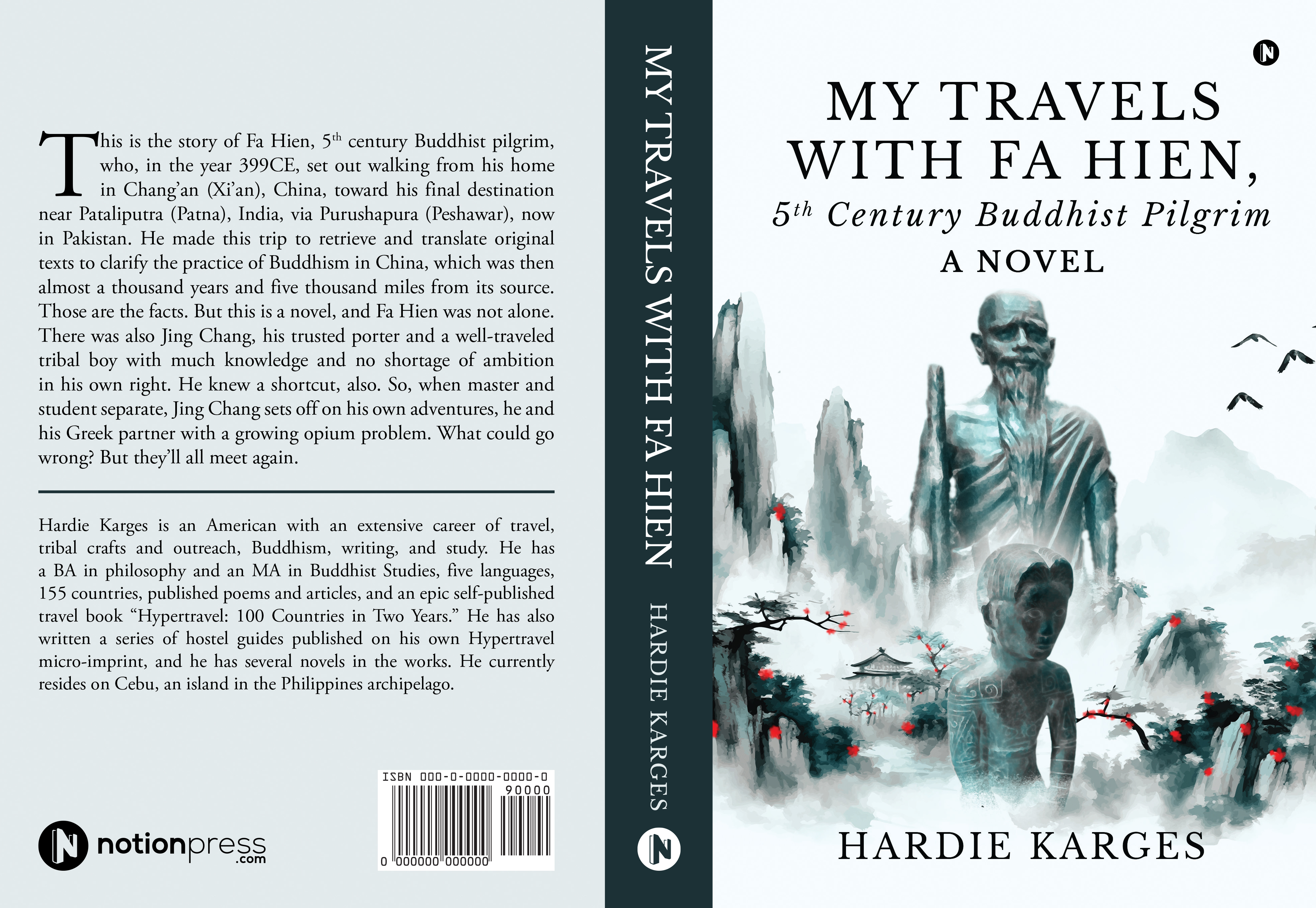
    Because, even back then, I knew that that’s the $64k question that any self-respecting literary agent would ask you before rejecting you, without telling you about the ‘journalist’s exemption’. Now I know, older but wiser (and with an MA in Buddhist Studies plus a recently published novel based on the travels of Buddhist pilgrim Fa Hien, hint hint). But his book is pretty darn good. So, I owe Mr. Wright a heartfelt apology. And that’s not a quick and easy decision, because he’s pressing his luck by reducing Buddhism to meditation, when many, if not most, of the world’s Buddhists, meditate very irregularly—IF EVER!

    But he pretty much left the Matrix references behind (‘Dharma film’, indeed!), and moved right on to other topics, some of which still stretched credulity, but served as some kind of Buddha’s Greatest Hits collection, if nothing else, so that’s probably a plus for the lightly initiated. After all, Buddhism has come a long way from its early Theravada discipline, Mahayana metaphysics of Emptiness, and Vajrayana mysticism. Now there are Vipassana, koans, and ‘crazy wisdom’, instead. Wright even devotes an entire chapter to ‘How Thoughts Think Themselves,’ one of my pet peeves in the modern Buddhist canon. But Wright handles it with journalistic equanimity, making clear that there are ways of justifying that attitude, without necessarily seeing all thoughts as falling into that category.

    But my favorite part of the book is the attention given to the possibilities of a simulated reality for us here in this life in this world, as alluded to in ‘Chapter 11: The Upside of Emptiness’, in which he argues that it is a psychological necessity to project ‘essence’ for long-term survival and human evolution. And while I would prefer to draw parallels between our neural simulations and the digital simulations of Virtual Reality, the bottom line is the same: it’s better than ‘illusion’ and nihilism is prohibited. Nirvana is similarly and summarily dismissed as the overriding raison-d’etre of Buddhism, while mentioning the unmentionable: we’re talkin’ ‘bout death here, y’all.

    Then there’s the title, which I assumed was editorial overreach on the part of Simon & Schuster, in the vein of the previously mentioned ‘Thoughts w/o Thinkers’, ‘Hardcore Zen’, ‘Universe in a Single Atom’, and other such pseudo-Buddho titular nonsense, but no: this is Wright’s chosen title, which he is prepared to defend as indicating its psychological appropriateness, something like samma ditthi, right view; nothing like absolute truth, so that’s cool. Wright is casual too, sometimes even funny, witness the title to Chapter 13: ‘Like Wow, Everything is One (at Most)’, haha. I like that. Bottom line: sometimes a well-traveled journalist is preferable to a star-spangled Rinpoche, especially when that guru is telling you to vote for the orange guy with the big bulge and the bankroll. I like honest brokers. Wright is worth the read. R.I.P. Kurt. The last Matrix movie sucked.
     
  • Unknown's avatar

    hardie karges 4:32 am on December 8, 2024 Permalink | Reply
    Tags: , , dharma, , , , , , , , , ,   

    Buddhism Basics: Metta and Karuna, Kindness and Compassion… 

    Kindness and compassion, metta and karuna, are not the path of weakness. They are the path of true strength, which may or may not coincide with the popular images of ‘big men’ and ‘strong men’ flexing muscles and making waves, but that is not the paradigm of the Buddhist monk in partial renunciation from the world. That is the paradigm of the world that the Buddhist must renounce, at least partially, the world of hatred, fear, and anger, often masquerading as bravado, strength, and victory.

    Ironically, many Buddhists may defer to such popular images of strength and victory while forgoing it themselves. Because they know that such phenomena are the manifestations of the world, samsara, over which they have little of no control. We can only control ourselves. But, if we can stay on the good side of those circumstantial strong men that the world spits out like so many celebrities for sale, then so much the better. That’s ‘skillful means.’ It doesn’t imply superior dharma or any kind of enlightenment on the part of the big man, just survival instincts on the part of the average bloke.

    But Buddhism is a path of kindness and compassion. That much is certain. The only question is how best to manifest that in our own private lives. As always, the Middle Path seems to offer the best clue. Don’t be too passive or too aggressive. There is a sweet spot right there in the middle somewhere, defined by an almost equal distance from the extremes that we must avoid. And if it seems like this is a path for losers and nondescript middlemen, then nothing could be farther from the truth. Living right is its own reward.

     
  • Unknown's avatar

    hardie karges 4:36 am on October 27, 2024 Permalink | Reply
    Tags: , asceticism, , , , , dharma, , , , , , , , Padmasambhava, , , , Upanishads, ,   

    Buddhism is the Middle Path between Jainism and Brahmanism… 

    Brahmanism is what we now call ‘Hinduism’, but that term didn’t really exist way back when, only recently applied by the Brits to the plethora of sects and devotions which now constitute Hinduism. But it was in the midst of the Upanishad era at the time of the Buddha, which would redefine the previously Indra-based fire rituals which had reigned during the Vedic times. And with the advent of the new Upanishadic orientation, the resulting resemblance to Buddhism was profound—but still distinct.

    And so was Jainism distinct from both of them, at the same time that it shares much with them. But remember, that the ‘Hinduism’ that the Jain reacted to in the 6th century BCE is not the same as modern Hinduism, either, and that is partly because of this same three-way dialogue. Jainism was largely a reaction against the Brahmanists’ fire sacrifices, they being extreme nonviolent vegetarians. But many modern Hindus are also vegetarians, with Buddhists characteristically somewhere ‘in between.’

    That’s the Middle Path, specifically between the extreme asceticism of the Jains and the lavish rituals of the ‘Hindus’, but also between the many gods of Hinduism and the total lack of them in Jainism. Technically Buddhists don’t really have them, either, but, you know… Later versions of Buddhism were not so strict about that, such as the Tibetan version of Vajrayana, which came direct from India sometime after the 5th century and attested by Padmasambhava in the 8th century.

    But both Jains and Hindus were crazy about souls, Jains finding them everywhere and Hindus finding them cosmic, Atman, preferably in union with the cosmic dharma principle Brahman. But Buddhism found little of value in any of that, and so chose non-self anatta. So, they all evolved into different sects with different orientations, and we generally all get along nicely. The main difference is that Hinduism tilted toward a nationalism which international Buddhism could never assimilate. And Jains, ‘winners’ in Sanskrit, were ultimately the losers.

     
  • Unknown's avatar

    hardie karges 4:23 am on August 23, 2024 Permalink | Reply
    Tags: dharma, , , , , , , , solitary confinement, , ,   

    Buddhism Loves a Sangha, but Loves Solitude, too… 

    Western psychology thinks solitary confinement is torture. Buddhism thinks it’s pretty nice—sometimes. Go figure. Because that’s exactly what meditation is, is it not? That and concentration, yes, exactly, at least in meditation’s original purest form, which is maintained to this day in Theravada Buddhism, so important there that it’s often called Vipassana by its association. And it’s true. I couldn’t believe it the first time I did a retreat in a Thai forest temple, laymen silent unflinching for hours, monks even longer.

    I haven’t witnessed that degree of meditative absorption in the Tibetan or Chinese temples where I have experience and knowledge, but it might certainly exist there. And Zen might be another level of attainment, since the name derives from dhyana, after all. All of which goes to make a distinction with the typical Western ‘guided’ meditation, which, whatever its benefits, I simply wouldn’t consider true meditation, maybe more like a ‘dharma talk’ if done well. But if it’s not a Buddhist meditation group, then it might not be a Buddhist talk. Hindus are still trying to reclaim Buddhism as their own.

    But the point is that, while solitude might be torture for some, it doesn’t have to be. And it’s more likely to be, I think, if you’re accustomed to living your life in crowds and constant confusion. For someone raised on a farm out in the countryside, what’s a little solitary confinement? Sounds like Sunday afternoon. Solitude can and should be something good, healthy, and productive. If they don’t teach meditation in prisons, then they certainly should. It just might save somebody’s life sometime.

     
  • Unknown's avatar

    hardie karges 2:50 am on June 16, 2024 Permalink | Reply
    Tags: , , , dharma, , , , , , , , Tiraatana, , Triratna   

    Buddhist Basics for Beginners: Three Gems… 

    Buddha, Dharma (teaching), and Sangha (community) are the three foundations of Buddhism. The Buddha, of course, is the one enlightened being to whom the inspiration for this teaching originally came and to whom we owe the effort at consolidation and collection of the diverse teachings into one coherent body of work. This happened at a time when such a thing had hardly been done before, and a paradigm hardly existed, so Buddha had to wing it. I’d say he did well. 

    The dharma, of course, is the teaching itself, which could arguably be considered the most important part of the practice. It is often translated as ‘law’ and that seems understandable, if we understand that the intention to commit as well as submit is central to the practice. The practice itself is somewhat novel in that you really don’t have to DO much of anything at all. This is perhaps best exemplified by the practice of meditation, something of a higher practice of Buddhism, not required but highly admired. 

    It’s much more important that you don’t do certain things, e.g lie, cheat, steal, kill, commit adultery, etc., very similar to the second half of the Biblical Ten Commandments (but don’t drink). All you really have to DO is be kind and peaceful. Unlike Christianity, though, which expects you to go forth and multiply, Buddhism is quite happy if you commit your life to meditation and contemplation. The object is to reduce suffering, not find bliss (sorry, Joseph C).  

    There are other dharmas, also, notably the Hindu sanatana dharma and Jainism, which are all similar, yet also quite different in specific details. The idea is to make the Sangha as large as possible, of course, the same as any religious practice, all of which work best when they have the largest number of members, for obvious reasons. If the majority of the world’s population could ever agree on anything, then that would be a notable accomplishment. If they could all agree to keep the peace at any cost, then so much the better. Buddhism is a good starting place. 

     
    • jmoran66's avatar

      jmoran66 8:38 pm on June 16, 2024 Permalink | Reply

      You just put Buddhism In A Nutshell in to a nutshell. Nicely done.

  • Unknown's avatar

    hardie karges 5:28 am on May 12, 2024 Permalink | Reply
    Tags: , , , dharma, , , , , , , , , ,   

    Buddhism in the Back Room: Doing Laundry to do Laundry… 

    Beware a path too easy, because it may be a false one. Maybe that goes without saying, but probably not, because most people assume that if they ever find an acceptable path in life, then hopefully it should at least be easy. And I get it, me too, but good luck finding that in real life, because real life is nothing if not a challenge. And Buddhism is no different. In fact, ease and benefit may be inversely proportional, i.e. the easier it is, the less benefit you’ll derive from it. Which almost seems too obvious, that you get what you work for, but sometimes it’s necessary to spell things out. 

    This goes to karma, of course, actions, and comes back around as a sort of fate, prescribed actions based on prior performance, anything but predetermined, even when that is what some people want in their religion above all else. Many people can see no reason to believe in a religion when it offers them nothing but freedom of choice. People want magic. Except when they want certainty. Don’t worry. When they know, you’ll know, and life will be nothing if not exciting in the process. 

    And isn’t that what most people want more than anything—excitement? Unfortunately, that is the case all too often. People are more desirous of drama than dharma, and who cares if the kids must figure out what’s right and wrong in their own free time and at their own limited initiative. But Buddhism is better than that. The Buddhist Five precepts are almost identical to the Christian’s second set of Five Commandments, everything except the alcohol. The first set of five are fundamentally Islamic. Then Buddhism only gets better: Emptiness, Consciousness, Kindness, and Goodness, the Four Nesses’ even nobler truth, IMHO. You heard it here first.  

     
c
Compose new post
j
Next post/Next comment
k
Previous post/Previous comment
r
Reply
e
Edit
o
Show/Hide comments
t
Go to top
l
Go to login
h
Show/Hide help
shift + esc
Cancel