

Buddhism: Religion, Philosophy, or what?

 Some people say Buddhism is not really a religion, though I know some monks who would beg to differ. Here’s what my dictionary says about religion:
1. the belief in and worship of a superhuman controlling power, especially a personal God or gods. 2. a particular system of faith and worship. 3. a pursuit or interest followed with great devotion.
The first definition certainly does not fit Buddhism, since there is no all-powerful superman waiting to part the waters, and the second only fits if we define what Buddhists do as worship—so maybe. The third one is frivolous, in the sense that ‘consumerism is the new religion’, but maybe somewhat accurate, especially in the case of ever-trendy Amerika, where Buddhism is currently a hot topic, but where much, if not most, of the information disseminated about it, is limited, or misapplied, or downright inaccurate… (More …)

 Terborn Zult, and
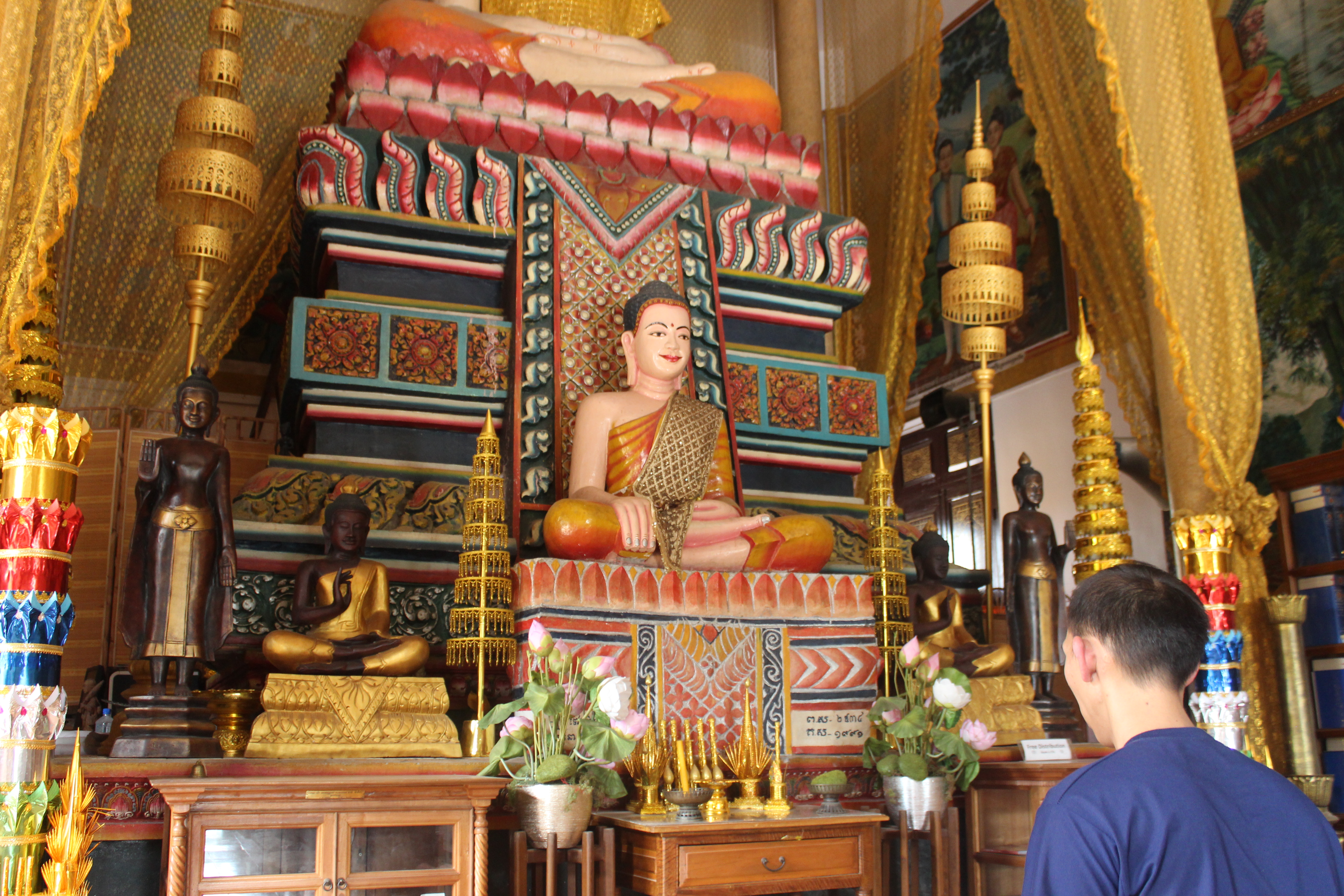
 There’s nothing cuter in Thailand than a picture of a young child bowing in obeisance, before a statue of the Buddha, grahping and saddhuing with the best of them, prostrate to unknown gods, long before his little prostate gland would even know the difference, that which supplies the raw materials for reproduction, but to a young infertile mind that yet has no clue to such things…


 RemedialEthics,

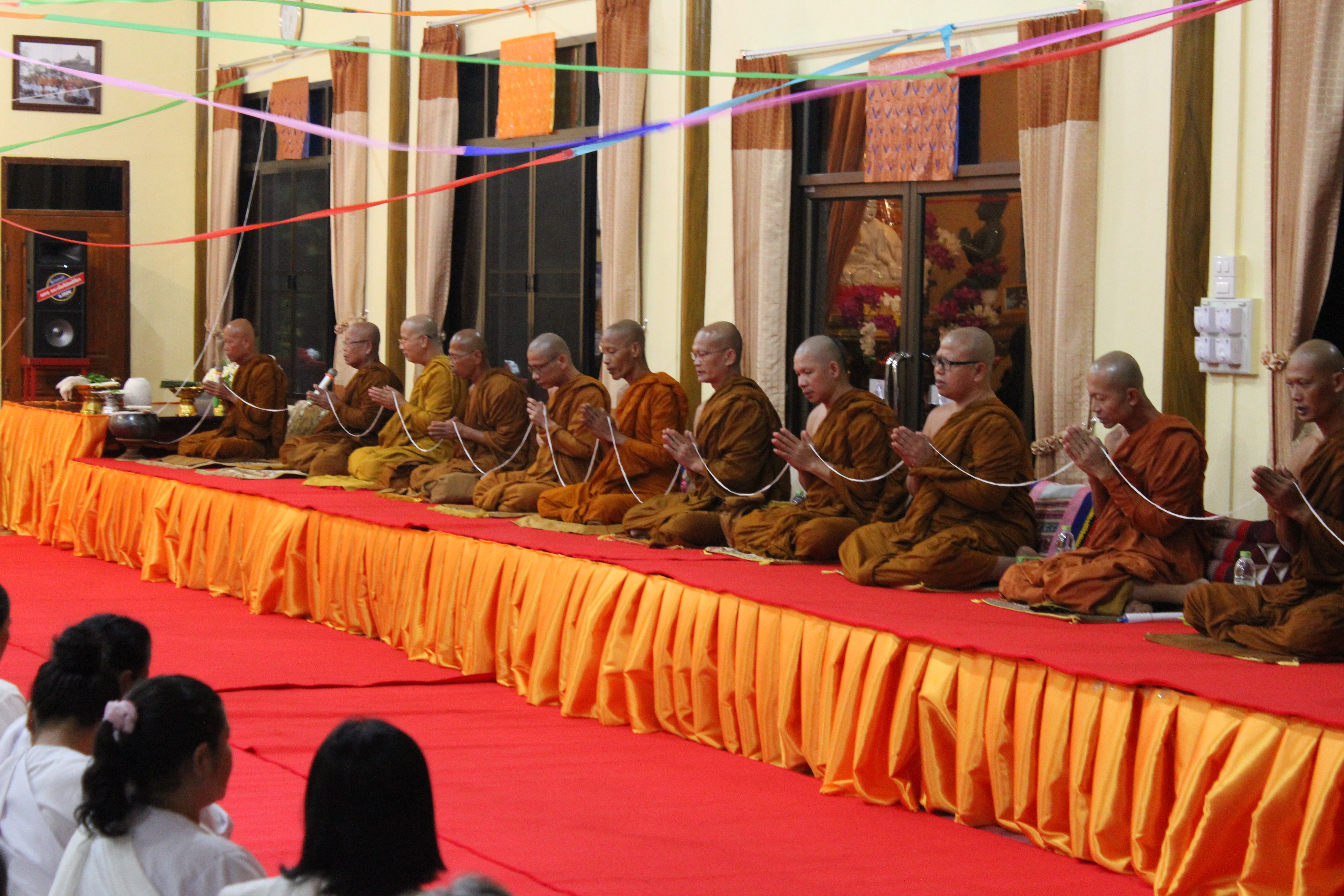
 Evam vadi: “Therefore, O Ananda, be ye lamps unto yourselves. Rely on yourselves, and do not rely on external help. Hold fast to the truth as a lamp. Seek salvation alone in the truth. Look not for assistance to any one besides yourselves.”
 Buddhism is the path of (ego) imperfection, the path of (ego) weakness, strength in numbers, especially zero, simultaneous voidness and infinity, emptiness implying that something is lacking, hopefully, that we are not hard cold single solitary free-standing proper nouns, but warm flexible adjectives, forever ready to be pressed into service to support the demands of solidity, wherever needed and as called for…


 …something, or other, maybe even the surcease of language, which is what you really want, and need, and find so hard to find, that preliterate programmer’s set-up state before the operating system made your life so easy and your choices so few, and so hard to do without now that you have it, a marriage of convenience but no more spontaneity, and mostly no more emptiness, so worth a stab at forced removal, or at least closure, or at least hibernate the machine with silence, for maybe an hour a day, the more the better…
 NO, this is not click-bait; this is Buddhism, and I’m dead serious.
  My name is Hardie and I am a workaholic. I started with the small stuff, house raisings and assorted cabin crew, sharp nails into wood and flesh, before moving on to the harder stuff—self-employment! And business!! Ouch!!! But that was just the warm-up to the true disease, a consistent and constant submission to the little man upstairs, who whispered in my ear little things like: “Have you ever heard of multi-tasking?” And that was my downfall, multiple jobs and multiple careers, all simultaneously and in synchronicity—more or less…


Dave Kingsbury 2:57 pm on January 15, 2018 Permalink |
I like the resonance between ‘unattainable’ and ‘aim-able’ – the whole piece is down-to-earth and easy to relate to. Science, according to the guy who wrote The Golden Bough, superseded Magic because both offer ways of influencing the world – where Religion asks for the intercession of higher forces. Not sure where Buddhism fits in to that, suppose it depends which variety one goes for …
hardie karges 7:51 pm on January 15, 2018 Permalink |
“Before Joseph Campbell became the world’s most famous practitioner of comparative mythology, there was Sir James George Frazer…(and) The Golden Bough”, been on my ‘to-read’ list for 50 years, maybe I should do that now as part of some MA research, thx, Dave. No, there need be no disputes between Science and Buddhism, or any religion, for that matter IMHO. I don’t want to have to make a choice… and that is the great challenge, to make those details fit. It won’t be easy, but I do think that Buddhism has the ability to do it, what with its flexible doctrine, if it only has the will to do it. Predestination is attractive–and easy, just not a defensible position for me…
Terborn Zult 2:57 pm on January 28, 2018 Permalink |
Not bad; the progression from religion(s) to one or several non-religious belief systems is already a step in the right direction, because it allows the “believer” to be in favor of certain principles without having to submit to some entity that is supposed to be somehow intrinsically “higher” than humans or human thinking. So, it’s a step away from mental slavery. If this step is done seriously and systematically, it not only leads to kicking out all superstition, but also to seeing the simple fact that, after all, non-religious ethical “belief” boils down to nothing more than having a certain preference for some principles and guidelines over others. With no mysticism needed to “justify” those principles and guidelines.
However, care needs to be taken to avoid religious mysticism’s sneaking back in through the backdoor. Any assorted principles and guidelines adorned with a halo of absolute value or truth would risk becoming a new religion, as any claim of absoluteness is a sure-fire indicator of creeping religification and transformation into a new mysticism.
Already during the 19th century, then during the first few post-WWII decades, there was a danger of religification of science in the mind of the general (non-scientific) public, frequently promoted by preposterous “science” journalists and other (usually financial) wannabe profiteers from scientific success. Whereas all serious science is a completely relative enterprise, with no fix points being fixed eternally.
In other words, after the downfall of open and direct religion, it is necessary to oppose covert and indirect religion, i.e., all forms of religification, be they applied to scientific methods and results, philosophical considerations, cultural, political, economic or ecologic theories and principles, moral principles, or whatever. Sooner or later, any re-religification would result in fresh mental slavery – by sliding the “believer” back to “self-imposed immaturity” (see I. Kant: “Enlightenment is man’s emergence from his self-imposed immaturity’). Of course, reading and analyzing religious texts and traditions with a critical mind is neither religion nor mysticism; nor is the extraction of inspirations from those.
Since the word “belief” is still tainted by its religious past, it would be preferable to use a different word for all forms of non-religious “belief”. Something like “conviction”, “convincement”, “opinion”, “paradigm” or so would be less ambiguous, because none of these should invoke submission to anything other than critical human reasoning. Because the latter is the most fundamental baseline of all attempts to understand “why are we here? Where did we come from? What do we do now?” – if that’s really the goal (as pointed out in the post above). The rest is history.
hardie karges 3:12 am on January 29, 2018 Permalink |
We’re pretty much on the same page then. Yes, I would like to see Buddhism get rid of all superstitions and irrational ‘beliefs’, especially since that was one of the great selling points 2500 years ago, back when the Hindus were still sacrificing animals. Rebirth is the tough one, for some reason. It seems people are very attached to their past and future lives. Being diplomatic about it, I plead ignorant, and agnostic, in order to promote ‘this life’ Buddhism. Thanks for your comments.