

Tagged: Thailand Toggle Comment Threads | Keyboard Shortcuts
-
hardie karges
-
hardie karges
Buddhism and the discipline of the Discipline…

Our knowledge, our faith, our generosity, and our freedoms are only as good as our discipline. This is the not-so-secret to the practice of Buddhism, of course, the training of the mind and the resulting control of emotions so crucial to the success of the practice. Any Buddhist monk in Thailand can tell you that without thinking. The word Vinaya so crucial in the early years of Buddhism means ‘discipline’ in Modern Standard Thai, i.e. vinay.
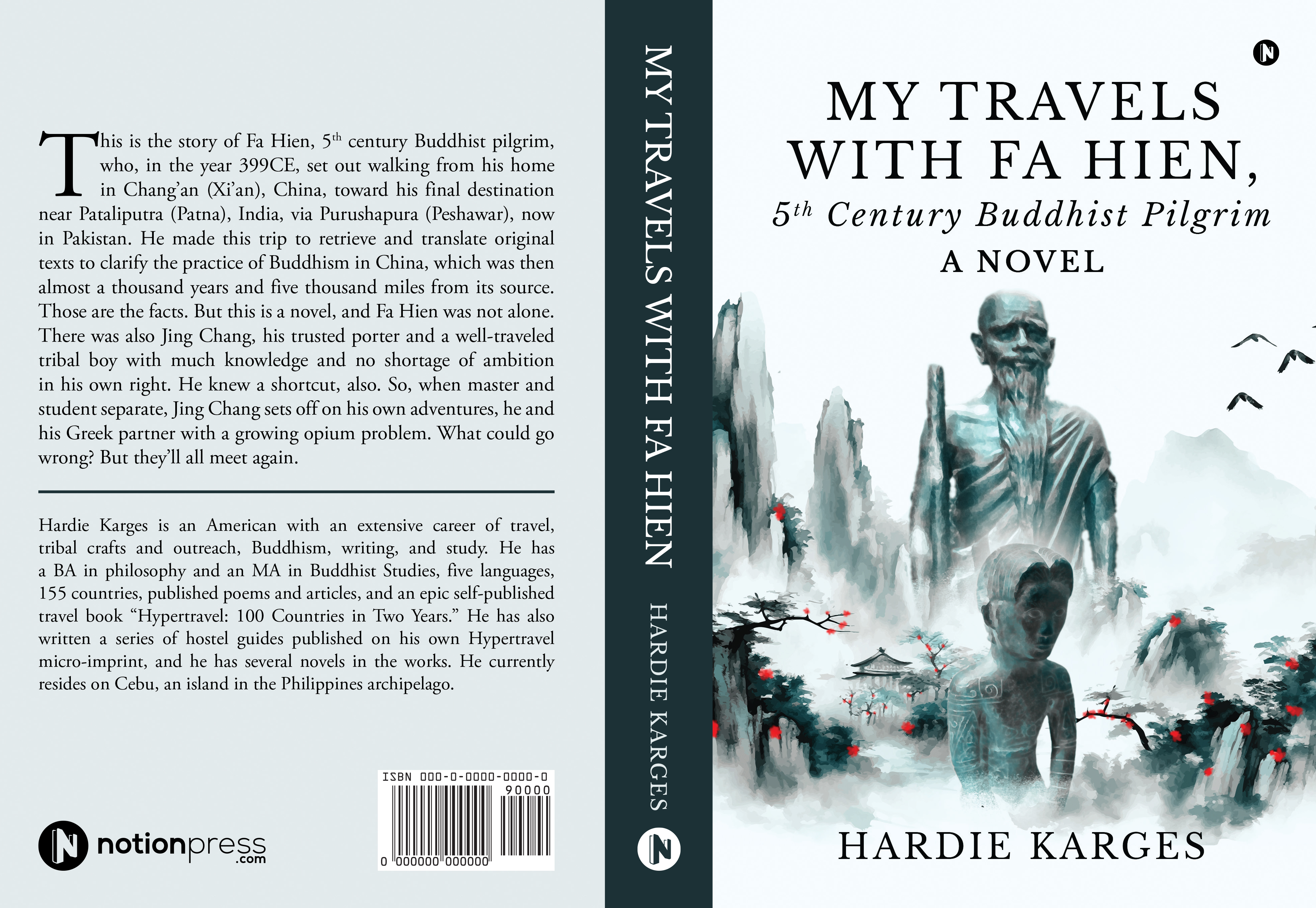
That’s just as it did for Fa Xian and Xuanzang c.4-600 CE, when they made the long trek from Xi’an, China to east India VIA AFGHANISTAN to get the true and correct vinaya, so corrupted by the centuries and kilometers in distance from the original source. Many westerners bring a Christian crutch with them into their knowledge of Buddhism, too, so might think of meditation as some otherworldly experience, but that is a fantasy. To be honest, many Thai laypeople often think the same.
But no Buddhist monk would ever be so silly. You’ll never see a monk laughing his a$$ off about anything, much less about matters of the dharma. But this is no feigned seriousness for the sake of poses and postures. The dharma is no joke, and these are not children. Most, but not all, monks dedicate their lives to the practice and dissemination of Buddhist truths and knowledge. Mutations occur in the transmission and relocation from place to place, but the essential truths are unchanged: we are slaves to what we crave, and the solution to our suffering comes with kindness, compassion, and right living.
-
hardie karges
Buddhist Middle Path: Hold Your Applause
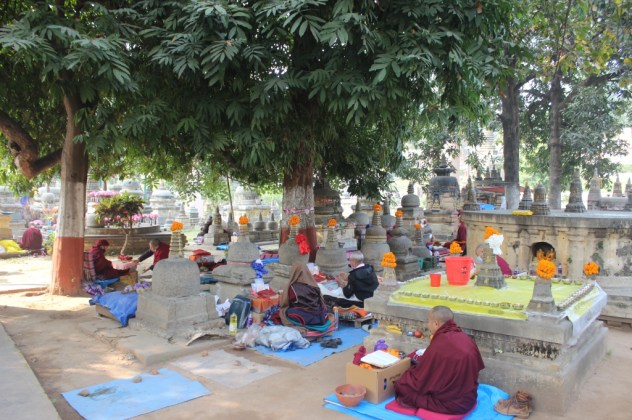
All you need is kindness. Compassion is good, too. These are the Buddhist foundational concepts known in the Pali language as metta and karuna, often combined in modern standard Thai language as mettakaruna. I guess that’s similar to the Christian compound word ‘lovingkindness’, but without all the gratuitous emotion, please. That’s more Christian than Buddhism has ever aspired to, and largely by design.
Christians need to hug and kiss, often, while Buddhists could usually care less. Christians are emotion junkies, while Buddhists are cool as cukes, usually, salad dressing optional. So, Christians deliberately took that word from the Hebrew Chesed and translated it to lovingkindness to make a point. Then, when Buddhism came to the West, many practitioners figure what’s good for the goose… you know. But, by then, Buddhism has changed its character, and not necessarily for the better.
But that’s one way to fight the charge of pessimism and nihilism: slather the special sauce, and Bam! Thailand becomes like the Philippines, all of a sudden, fiery and passionate. I suppose there’s no real harm, but it’s really not what Buddhism is in its essence–just the opposite. Emotions go up and down as if by design, while the Buddhist path steers towards the middle always. That’s not a hard rigid path, but it’s not seeking peak emotion, either. That’s American Photography Course 101, always seeking ‘peak emotion’. Good luck with that. I’ll follow the Middle Path.
-
hardie karges
Buddhism Meditation and Emptiness

Meditation is the art of open heart and open mind, closed mouth, eyes optional. To me it’s almost amazing how many Theravada Buddhists don’t meditate at all, but I suppose that speaks to the time and the place as much as anything, as well as the ultimate goals and prime motives. Because a Thai citizen or resident doesn’t really need a motive to be Buddhist, except to be good and be social and contribute to the overall well being of the populace. If you’re already Buddhist, then you don’t really need a reason to be Buddhist.
But a Westerner needs a reason to be Buddhist, and so for many of us that’s long been a choice of Zen or Vajrayana (Tibetan), two of the more exotic versions of the field, and so an attraction to those for whom an attraction is helpful. The only problem is that the Buddha himself might not recognize either of them as representative of his teachings. For us street-corner philosophers, that’s plenty of motivation by itself, the simplicity and veracity of the original message. So, now that Theravada is re-branding itself as Vipassana, pure and simple, that accomplishes a necessary goal, to get Buddhism back to its root without worrying about word games and past lives.
Because Theravada Buddhists were always the best meditators, even if many never did it. And meditation can accomplish with practice what precepts and concepts can only suggest with words. You can talk about shunyata—emptiness—all day and not know much more than what you started with. Or you can sit silent unflinching for an hour while concentrating on breath and know quite a great deal, without uttering a word. It’s an acquired taste.
-
hardie karges
Buddhism and Mindfulness, Language and Life…

‘Mindfulness’ is a tricky term, full of modern marketing. I prefer ‘consciousness,’ the original meaning to the same word in Pali, sati. Now that may seem like a minor quibble, but I prefer to keep superstitions and general ‘woowoo’ and ‘joojoo’ to a minimum for easier acceptance. Because I don’t want Buddhism to be something magical and mystical, even if that brings in some fervent fanatics full of vim and vigor. But it rules out science and that is the problem for me. Religion and science should be perfectly compatible, and that is best accomplished by staying off each other’s turf.
Maybe it’s an impossible task, I suppose, but it’s still worth trying, I think. Because already a certain stratum of words has been ‘Buddhafied’ and elevated to a meaning that doesn’t conform to that of the ordinary world and its ordinary usage of the word. I’m not worried about the extra work of cataloging two meanings in my mind, but I’m concerned that we’re losing something by avoiding that original meaning. So, when samsara comes to mean ‘endless cycle of rebirths’, rather than its original meaning as simply ‘the world’ (e.g. in modern Nepali), well, something has changed, and not always for the better. You can check to see if that original meaning still works in every case, and it does AFAIK, but with a difference—authenticity.
Only rarely does a word totally change meaning within the historical period, like the English word ‘passion’, for instance, once suffering, now a kind of special love, for us silly westerners, of course. In modern standard Thai, the word that now means ‘mindfulness’ is sati, from the Pali, but there it simply means consciousness. When I was lying on the side of the road after a motorcycle accident near Wiang Papao, no one was asking if I was mindful. They were asking if I was conscious. There’s a difference. Original early Buddhism was very down to earth. Transcendence came later. For me mindfulness is the opposite of mindlessness, pure if not simple.
-
hardie karges
Buddhism 399: Homelessness and the Joy of Giving…

Give more than you take. That will be more than enough, and the world will be a better place. That is the essence of almost all religions, Buddhism included, regardless of whether you consider Buddhism first and foremost a philosophy, as I tend to think. But philosophies don’t usually include a call to action, whereas religions usually do. Buddhism doesn’t do that, though, not specifically, but it is implicit in the practice, the original practice. That’s why you’ll see orange or yellow-robed shaved-head monks walking through the markets at daybreak in almost every Theravada country in SE Asia, requesting alms for subsistence, usually food. This giving is usually known as dana.
This harkens back to an even earlier practice in India wherein long-haired rishis and sannyasins wearing similar saffron clothing but usually without a group of like-minds, would make similar rounds, a practice which continues to this day. The difference is not only that the former are Buddhist and the latter Hindu, but the former have rules and regular routes, and are often registered for this activity, whereas the latter are more likely free and on their own, often in the last phases of life according to the four Hindu ashramas of student, householder, forest dweller, and renunciant—nice.
But the important thing is the giving. So, instead of seeing a renunciant as a societal parasite reduced to begging, we should see them as symbols of purity, offering laypersons the opportunity to experience the same bliss of renunciation that they not only symbolize but incarnate. It’s only ironic that they themselves often consider themselves—and call themselves—homeless, no pun intended. Because that is the little joke they play on all of us, that the poorest people of the West are linguistically identified with the holiest of the East. I only wish that Western practitioners would follow the same precepts. The food is usually pretty good, at least in Thailand.
-
hardie karges
Buddhism in the Bardo: Survival of the Species…
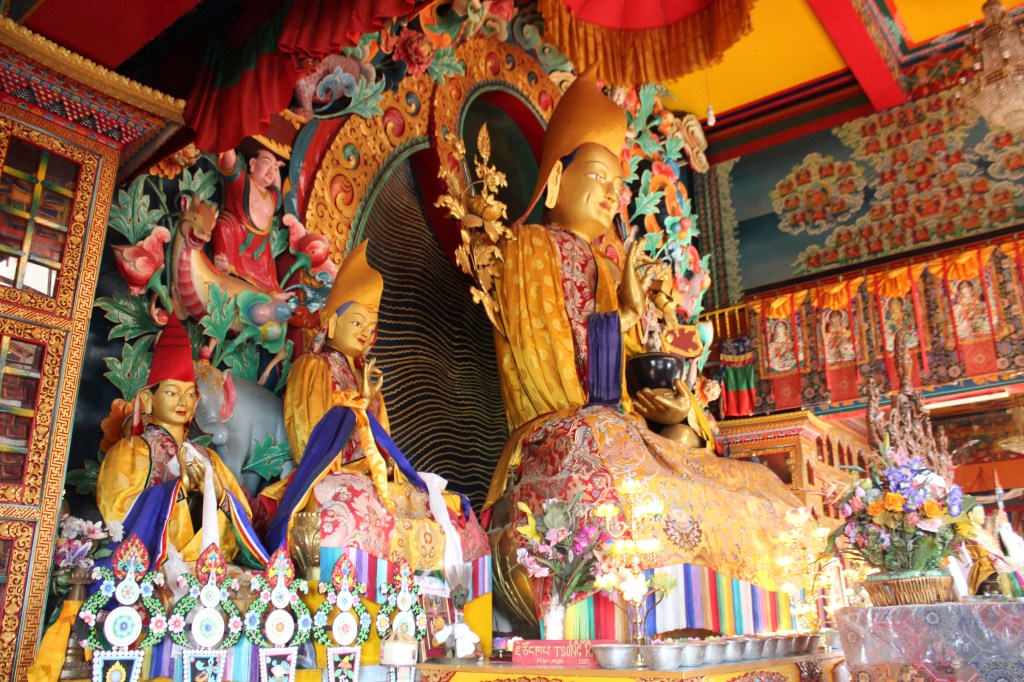
Some people might laugh at a monk in meditation, wasting his life away, but I laugh at the silly fools who cause global warming. Because, after living a long time in Thailand, that’s the main reason that I was reluctant to get involved with Buddhism, the perception that it was too passive, and incapable of dealing with the issues that face the world. So, for me that was an early premonition of what I might now call something like ‘socio-spiritual bypassing,’ i.e. the avoidance of social obligations by invoking the spiritual primacy of renunciation.
But at some point, I realized that renunciation was probably a greater tool than all the political action in the world, and, at least on some ways, likely to produce the greater impact, also. Because, for all our sociopolitical posturing, little is accomplished along those lines, and much of the developed world may soon be crisscrossed with windmills, without any detectable difference in our addiction to rapid locomotion, despite the visible degradation of our relationship to Nature. With a population of more than eight billion souls, renunciation may soon be the only avenue of survival.
And, if that’s a bitter pill to swallow, then so be it. Because the writing has been on the wall for at least sixty to eighty years now, and we’ve only sunk deeper in our denial of the likely results, as Elon exhorts us to make more babies, so that he can rake in more gazillions. And that’s maybe the saddest part, that the only way that we can show our love for these people on this planet is to create more babies, who must then shoulder the burden of our conundrum.
So suddenly renunciation is not a bad option at all, and the disappearance of the y-chromosome only seconds that emotion. Because, whatever the numbers of our reproduction and its proliferation, or not, it’s impossible to live in a world without love. But we might need to change that meaning. And that’s where Buddhism comes in, because love comes in many forms and flavors. Metta, or lovingkindness, is the preferred Buddhist flavor, and the world community is the intended recipient. That’s Buddhism.
-
hardie karges
Buddhism and Language: Inner Space and Outer Space…

How can I quiet the voices in my head, when I can’t quiet the voices all around me? That’s what meditation is for, silent meditation, no app necessary. This is the conquering conundrum for much of Buddhism, of course, as when I knowingly posted pictures on Facebook this week of my search for the Buddha ‘out there, somewhere,’ roaming in the Thai countryside. I did that just to see how many people would advise me to change my search and look inward, which is the correct approach, of course, and which they did. And that’s possibly even true of any religion, though probably more so for Buddhism.
But it’s especially true for the practice of meditation, regardless of the religion, particularly when the meditation is of the traditional silent type, no apps necessary nor any commentary by Russell Brand, haha, the only likely difference being that where religion might give answers, meditation would only bring calmness. Vipassana claims insight, and that may be true, but ultimately unpredictable, and unnecessary, and I would rather not place the burden of proof upon the method of inquiry.
Because that is not the traditional goal of meditation, nor should it be, meditation being defined as that activity erasing the slate of its burden of language, whereas insight is usually defined by the language that accompanies it. That’s why I tend to avoid guided meditation, except as a form of ‘dharma talk,’ it not really producing the ‘calm abiding’ that I expect from meditation, if I expect anything. I go there to get away from language, not to add more to it. But maybe that’s just me. For me language is just too important to ignore.
-
hardie karges
Buddhist Self-Sufficiency Trumps Christian Abundance

Overflowing abundance is a myth, but there is always enough, just enough. And that’s probably an act of faith, also, but preferable to the call for gluttony. Because that’s what abundance signifies: more than enough, all you can eat, sky is the limit, all that Christian mythology that spurs capitalism, Protestant individualism, global warming and war, as if winner takes all in a zero-sum game. But why would that be the case, since it clearly is contradictory?
If there are unlimited resources, then there should be plenty to go around for everybody, but that’s not the way it works, apparently. It seems that it doesn’t really count until counted. Until then it’s just religion, myth and ritual, designed to encourage the gods as much as to propitiate them, since they are the gatekeepers of these mythical resources. So, Christianity shoots itself in the foot by trying to claim more than it can realistically access. Abundance, i.e. unlimited resources, are useless if not freely available.
Buddhism makes no such outrageous claims, but ‘just enough’ can be easily surmised if not statistically proven, with much better results than the Christian hubristic assertion. And that’s what the previous king of Thailand did with his theory of self-sufficiency, พอเพียง, ‘just enough,’ which, from a Buddhist standpoint, is a self-adjusting mechanism as much as a statistical reality. Whatever there is, it’s ‘just enough,’ as long as you can adjust your desires accordingly. This is classic Buddhism at its best, and a win-win situation for all. Don’t be greedy.
-
hardie karges
Buddhism 499: Suffering doesn’t have to be so sad…


Suffering does not mean sadness, maybe in Nepali language, but not in Buddhism. This is one of the lessons, and this is one of the discussions, about what the word ‘dukkha’ really means, and what that means for us. Many pandits try to redefine it variously as ‘stress,’ ‘disappointment,’ ‘dissatisfaction,’ ‘spot of bother,’ haha, or various and sundry other things, but in most modern SE Asian languages the word indeed is usually best translated as ‘suffering,’ however minor or apparently insignificant, which sometimes earns Buddhism the rap as pessimistic.
What IS significant is that you will one day die, or simply expire, from this life in this world, and whether anything goes on after that is a matter of sober conjecture. But that IS a limit to your free will and your open skies and your desire for the Christian myth of abundance. For if there is indeed an infinity and/or an eternity, then it is surely empty, and that can indeed be beautiful, just as can the various limits placed upon it. For what is a work of art if not a limit, or definition, of reality, and what is a song? They are nothing if not sublime limits placed upon an undefined eternity.
Thus, suffering need not be so cruel. For me it is little more than life in passive voice as much or more than active, if those grammatical terms still have meaning for you. They do for English language literary agents, I assure you, and passive voice is largely prohibited, while in Asian academic circles, it is almost required. Go figure. But I’m not advocating passivity, and that is what kept me from Buddhism for many years, the passivity that I perceived in Thailand. As always, the truth lies in the Middle Path, and the subtle balance between aggression and renunciation. There is always a way forward without resorting to extremes…


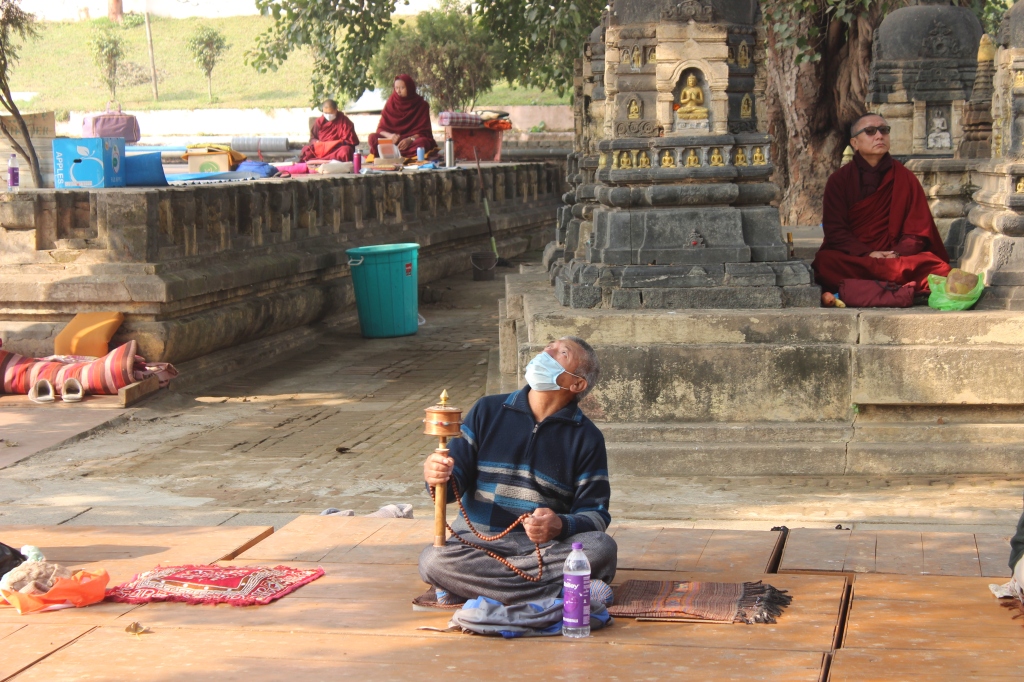


 streaming consciousness...
Reply