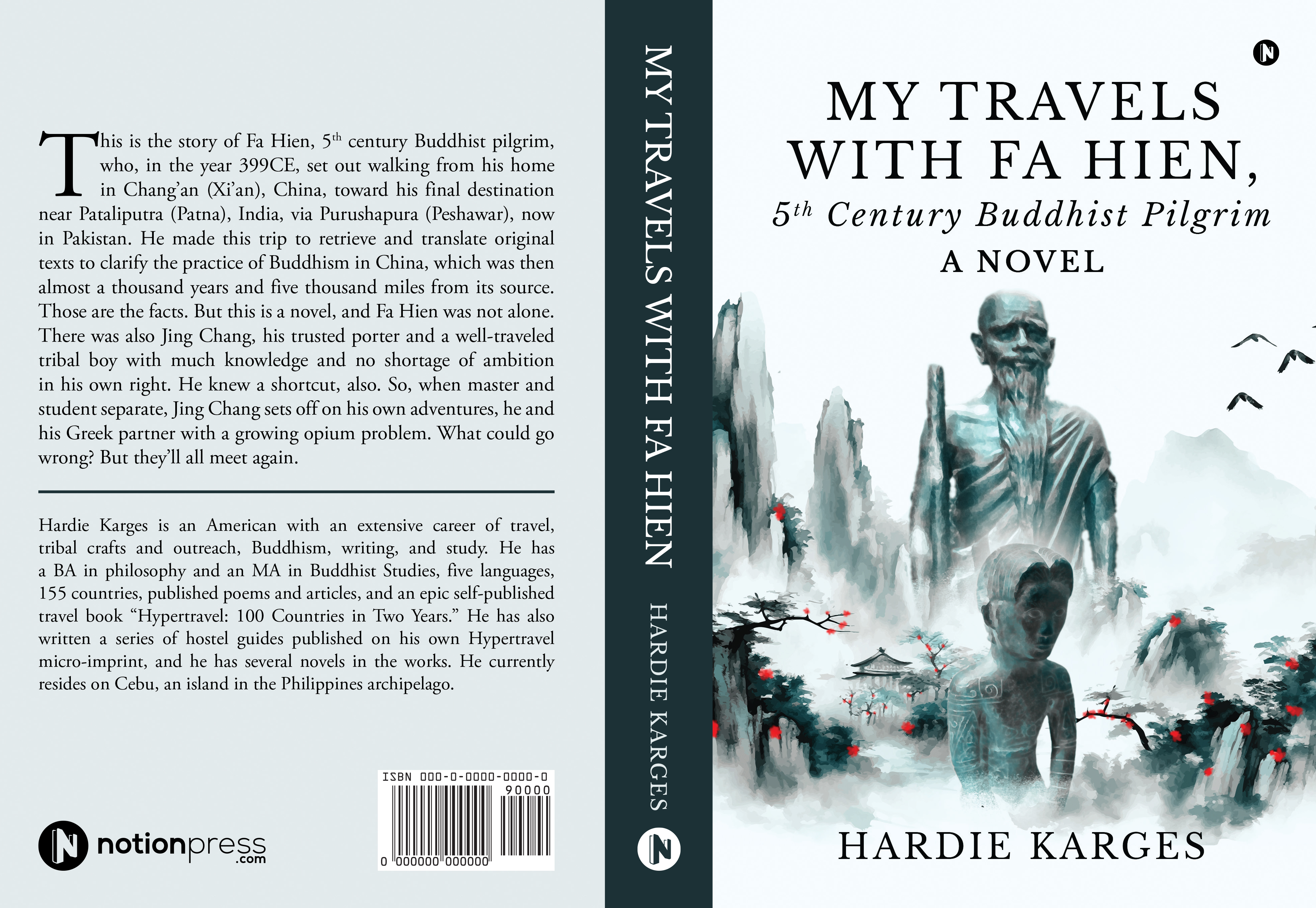


The Meeting of West and East, Christianity and Buddhism, Passion and Passivity…

If you can’t change the world, then change your thoughts toward it. But try to change the world first. And this simple dichotomy describes the philosophical difference between East and West in a nutshell, in the traditional sense, in which Asia is more passive and the West is more aggressive. Much of that has changed as the two worlds have collided and combined over the last centuries, but much of it hasn’t, either. And that is probably best represented by the West’s predominant Christian religion and the East’s predominant Buddhism, Hinduism, and Taoist philosophy. Because if Christianity doesn’t explicitly promote aggressiveness, it certainly allows it, especially with the transition from its original Rome-centered Catholicism to its later Westward-bound Protestantism.
So, it’s no accident that this occurred exactly at the same time as the rise of Science, Capitalism, and the Industrial Revolution. Meanwhile the East mixed its Buddhism and Taoism with heavy doses of Socialism and Communism, until it realized that it was losing a lot of wars that way (and Japan proved that a country didn’t have to be Western to be Capitalist). Note also that Eastern Orthodox Christianity largely avoided the sectarian splintering that plagued the far West (except for some largely geographical distinctions). But there was another aspect to this dichotomy that doesn’t get much mention and that is the emulation also of the traditional roles of men and women.
Thus, Western churches are defined by long sharp-pointed steeples, while Buddhism is traditionally symbolized by round bulbous stupas. I don’t think that anyone could miss the stupa’s resemblance to female breasts rising in supine submission. Contrast that with the more macho Hinduism’s steeple-like symbolism. And the virgin Mary’s preeminence in early Christianity is long gone in Protestantism. But Buddhism encapsulates the ethos of submission and adaptation perfectly. And while I don’t necessarily think that this is prima facie evidence of Buddhism’s superiority to Christianity, I do think that Buddhism is more appropriate for these times of crowds, confusion, and chaos. Buddhism is all about teaching men to be more like women: kinder and gentler, less violent…
 Buddhism is the path of (ego) imperfection, the path of (ego) weakness, strength in numbers, especially zero, simultaneous voidness and infinity, emptiness implying that something is lacking, hopefully, that we are not hard cold single solitary free-standing proper nouns, but warm flexible adjectives, forever ready to be pressed into service to support the demands of solidity, wherever needed and as called for…
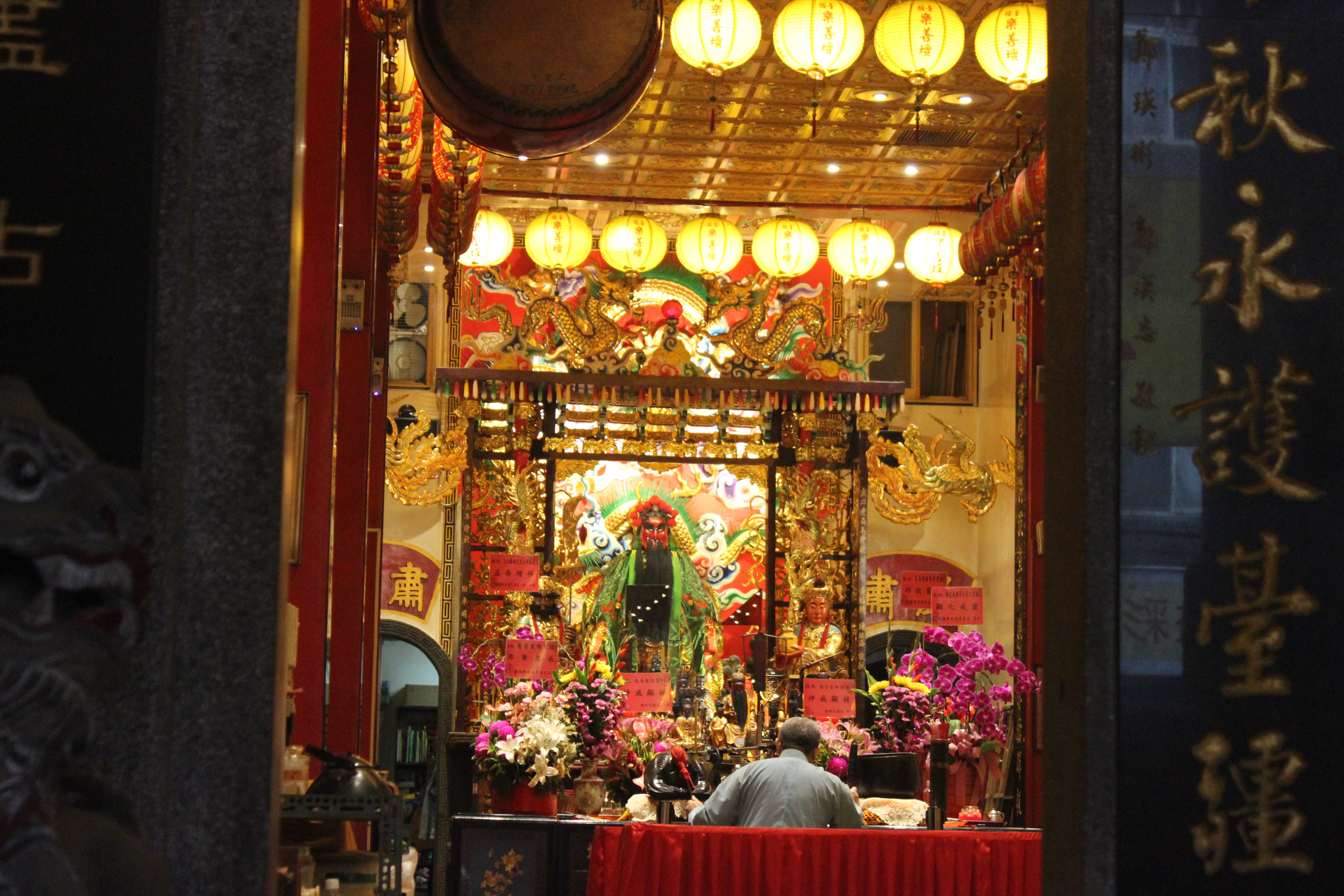 By ‘Christianity’, of course, I mean the entire Christianity-Capitalism-Democracy (CCD) complex, aka ‘Military-Industrial-Consumer’, that will one day put this entire civilization on its knees, and begging for sweet mercy, if it hasn’t already, because of the fact that most people want their cars, and NOW, rather than some vague undefined future with or without cars, that may or may not drive themselves…


 The 60’s took ‘it’ to the streets. We were young; we were hip. We knew more than ‘they’ did. ‘They’ were over-30, therefore suspect of collusion with ‘the man’, ‘pigs’, ‘whitey’, Nixon. That’s the name that came to be associated with the forces of repression more than any other. He just looked the part. The ‘movement’ had its anti-Christ. It all started innocently enough in the early 60’s with racial integration and affluence. Here was the strongest country in the world, lecturing the rest of the world on the evils of repressive Communism and Socialism, maintaining a system of apartheid that contradicted its own stated goals and ideals. This was a country once the symbol of freedom in the world, bathed in the fire of revolution, playing FTSE with some of the most repressive regimes the world has ever seen, i.e. Mississippi, Alabama, Arkansas, etc. The symbolism was not to be lost on everyone, certainly not on New York ‘beatniks’ and intellectuals inspired by folk music and high on the ideal of equality. The US was affluent now; there was money to spare, and therefore money to share.
 streaming consciousness...
Reply