


Buddhism 399: Homelessness and the Joy of Giving…

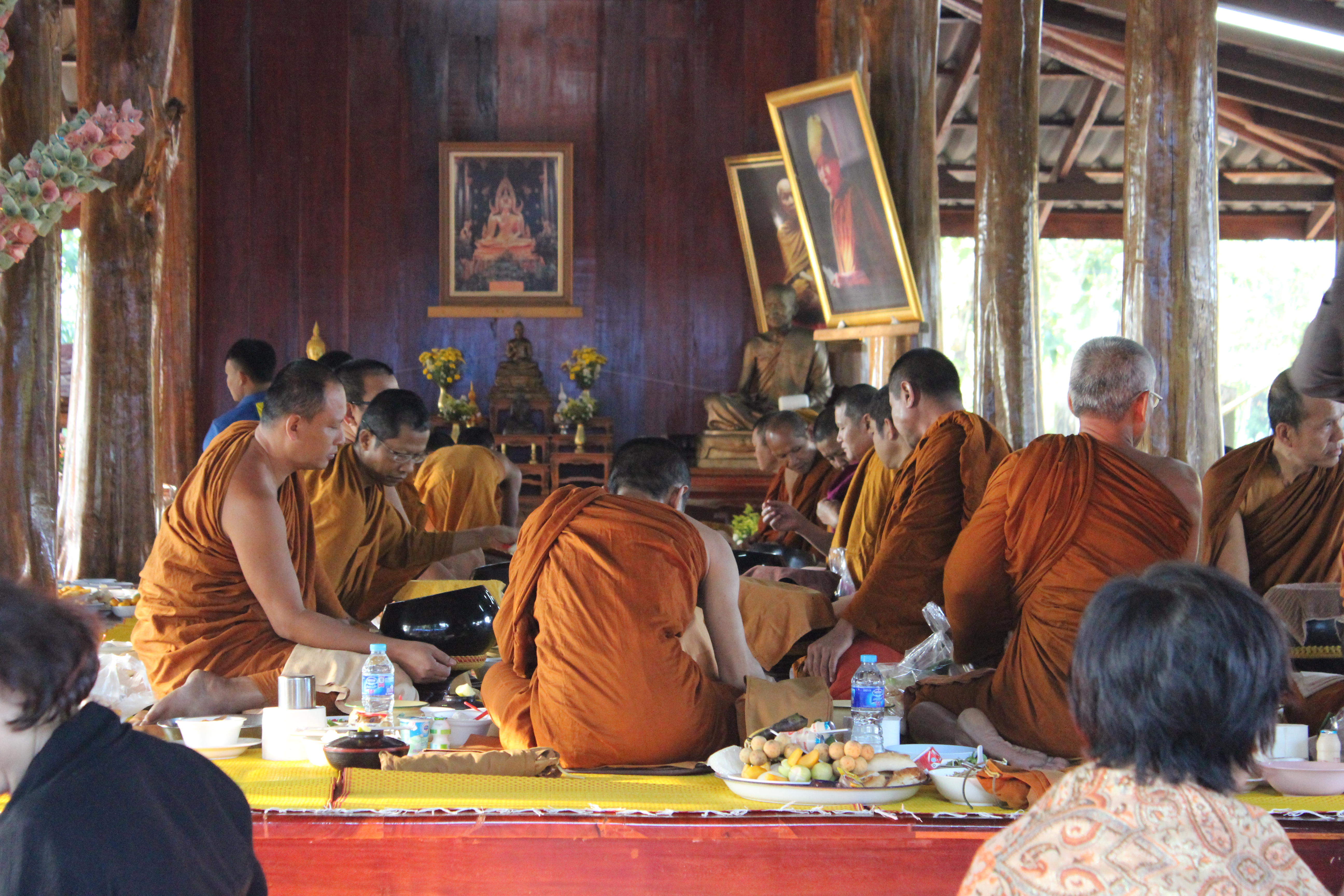
Give more than you take. That will be more than enough, and the world will be a better place. That is the essence of almost all religions, Buddhism included, regardless of whether you consider Buddhism first and foremost a philosophy, as I tend to think. But philosophies don’t usually include a call to action, whereas religions usually do. Buddhism doesn’t do that, though, not specifically, but it is implicit in the practice, the original practice. That’s why you’ll see orange or yellow-robed shaved-head monks walking through the markets at daybreak in almost every Theravada country in SE Asia, requesting alms for subsistence, usually food. This giving is usually known as dana.
This harkens back to an even earlier practice in India wherein long-haired rishis and sannyasins wearing similar saffron clothing but usually without a group of like-minds, would make similar rounds, a practice which continues to this day. The difference is not only that the former are Buddhist and the latter Hindu, but the former have rules and regular routes, and are often registered for this activity, whereas the latter are more likely free and on their own, often in the last phases of life according to the four Hindu ashramas of student, householder, forest dweller, and renunciant—nice.
But the important thing is the giving. So, instead of seeing a renunciant as a societal parasite reduced to begging, we should see them as symbols of purity, offering laypersons the opportunity to experience the same bliss of renunciation that they not only symbolize but incarnate. It’s only ironic that they themselves often consider themselves—and call themselves—homeless, no pun intended. Because that is the little joke they play on all of us, that the poorest people of the West are linguistically identified with the holiest of the East. I only wish that Western practitioners would follow the same precepts. The food is usually pretty good, at least in Thailand.
 hardie karges and


 streaming consciousness...
Reply