


Freud and the Buddha, ego and self…
Life is too short to waste time in pathetic displays of ego, though many of our so-called leaders offer litle guidance in that regard. And ego is one of the traditional pet peeves of Buddhism, though I doubt that the Buddha or anyone else in his time could really conceive of it the way we do in our post-Freudian world. Even if the discipline of psychology has largely been transformed from the science of the mind to the science of behavior, his tripartite division of ‘the mind’ into the three paradigms of id, ego and superego still linger in the consciousness of those of us who studied him, though such distinctions may now seem quaint, fanciful and downright misleading in our post-rational era of particles, genomes and information bits and bytes. But that classical era of psychology shines a light on the Buddhist role of psychology as analogy and metaphor, with many such ‘mental formations’ as self, soul, permanence and eternity serving as linguistic conveniences where no such observable entities may truly exist. But if it feels good, then we do it, and even the Buddha was sympathetic to such machinations and intellectual short-cuts if the results are beneficial to society and the individual in perpetual limbo and looking for a path forward where such is a trail with few markings. We spend half our lives being born and half our lives dying, gathering moments for memories all along the way, and looking for signposts to mark our progress…
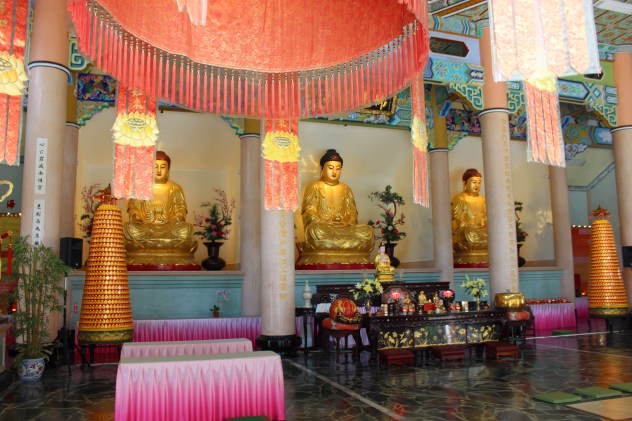 I don’t know: so maybe you’ll forego your pride, like a good Christian? I notice that the prouder one is, the more ‘optimistic’ that person also is, most likely assured that whatever good fortune has come to him as a result of superior skill and talent will surely repeat itself infinitely and indefinitely, since the world is a vast abundant field of untold and uncalculated riches, the sky is truly the limit, and YOU are the master of this world, right front and center—uh huh, yeah right…
 The godlike Robert and


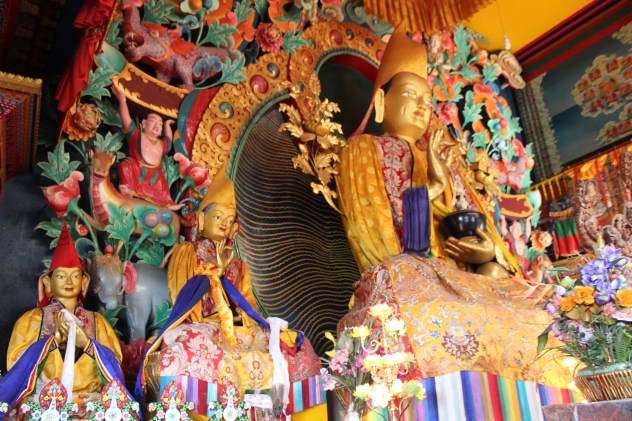 Control, unwavering control, of yourself, or even better: non-self, if you can manage it, easy enough but for the vicissitudes of will, that one part of the (s)kandhas that escapes easy categorization and refuses to fall blindly into place as but one of the ‘heaps’ that comprise our personalities and personas and persons that we oftentimes think of as ‘self’, or ‘selves’ if you’re bi-polar, or even ‘soul’ if you have long-term plans, or God forbid ‘ego’ if you can think of little else…


 In the old days of Nikaya Buddhism, in India, before the Common Era, there were at least seventeen schools of Buddhism, chiefly Sthviravada-derived (including Theravada, Sammatiya, Sautrantika, Savarvastivada, Mulasarvastivada, etc.), and Mahasanghika-derived (Yogacara, Madhyamika, etc.), before finally settling into the three broad Theravada, Mahayana, and Tibetan-Esoteric-Vajrayana-Mantrayana ‘schools’ that we know today. Get the picture? Buddhists are not known for doctrinal agreement…
 streaming consciousness...
Reply