


Buddhism in the Balance: Karma Chases Dogma
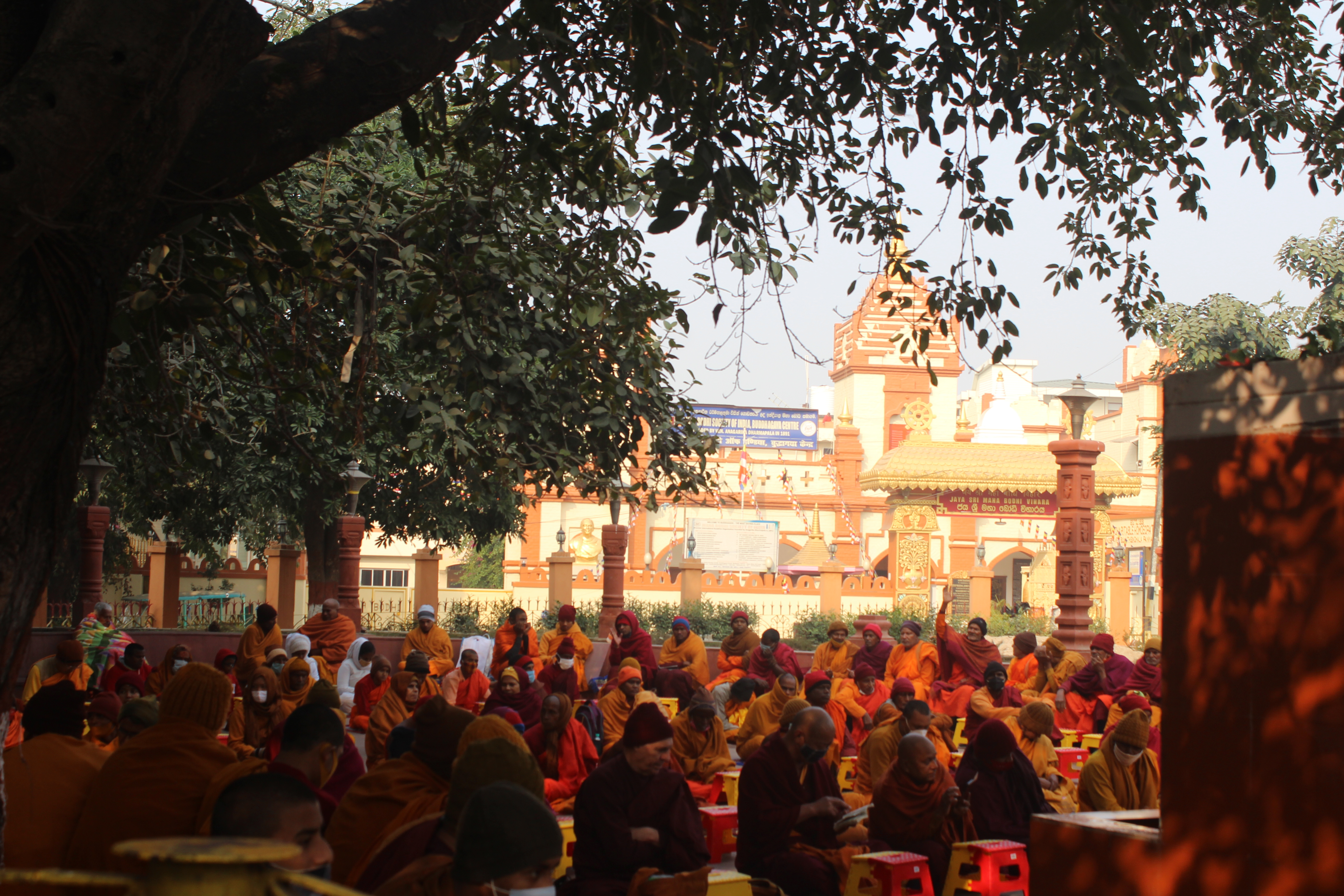
Karma is not just simple cause and effect. That’s Newton’s Third Law of Motion. With karma the effect is not reciprocal; it’s indirect. If you hit someone and they hit you back, that’s not karma. That’s a fistfight. And if it involves money, then that’s business, haha. So, no, it’s not so simple as it seems on the surface, and not so simple as it’s often defined: cause-and-effect. But that doesn’t mean that it’s as complicated as some people, especially monkish scholars, would like to make it, either, with ‘multiple feedback loops’ often extending over generations. Since this life in this world is all we really know, then everything else is wild speculation.
But karma, rebirth, and past lives have largely taken over a once-simple Buddhist discipline of meditation, moderation, and self-control, that apparently needed more magic to sell it upstream to the late-comers and Tibetans. So Buddhist temples in Nepal often share space with their Hindu counterparts, and the official line of Hinduism vis a vis Buddhism is that the latter is merely one of the many branch offshoots of the former, which is not an unreasonable position to take, especially considering the vastly different Vajrayana tradition, which was state-of-the-art Buddhism in the 8th century CE.
That is when it became the official religion of Tibet, and entered its last days of importance in India, before the Mughals finally gave it the coup de grace a few centuries later. That’s also one of the most popular forms of Buddhism in the West, also, along with Zen, though the original meditation-based Theravada is finally making some much-deserved headway, after being reinvented as ‘Vipassana.’ That’s my brand, closest to the original, preferably without all the past lives and subsequent debates about rebirth.
But I still make some room for karma, albeit ‘karma lite,’ i.e. this life only, with effects largely subjective and internal to the actor and perceiver. So, in this view, if you do bad things, nothing will hit you over the head, not immediately, but you will set in motion a chain of events that will make your life increasingly more miserable in direct proportion to the misery which you have caused to others. If that sounds like only a toothier version of the Golden Rule, “do unto others as you would have them do unto you,” that’s because, well, it is. The karmic version only calls direct attention to the fact there WILL be consequences. But you will have to be the judge of that, though I can attest to it.
 streaming consciousness...
Reply